
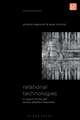
The New-Wave Cinema: Evolution of Society’s Art System: Thinking Media
Autor Golnaz Sarkar-Farshien Limba Engleză Hardback – 7 sep 2026
Scrisă de Golnaz Sarkar-Farshi, cercetătoare la Universitatea din Marburg cu o expertiză solidă în teoria sistemelor sociale și filosofia media, The New-Wave Cinema propune o schimbare de paradigmă în studiul filmului. Autoarea fundamentează această lucrare pe teoria sistemelor a lui Niklas Luhmann, oferind o perspectivă sociologică asupra modului în care arta cinematografică reacționează la conflictele societății. Spre deosebire de abordările clasice ale istoricilor de artă, această analiză tratează cinema-ul ca pe un subsistem al artei care evoluează prin „rupturi” estetice colective, declanșate de contradicțiile sociale.
Apreciem rigoarea cu care lucrarea este structurată în două părți esențiale. Prima secțiune stabilește cadrul teoretic necesar înțelegerii filmului ca sistem, în timp ce a doua parte aplică acest model pe trei mișcări majore: Noul Cinema German, Noul Hollywood și Noul Cinema Iranian. Această abordare comparativă pe trei continente subliniază universalitatea tezei autoarei, demonstrând că „noul val” nu este o decizie deliberată a regizorilor, ci o rezonanță sistemică la crizele epocii. Volumul completează perspectiva oferită de The Age of New Waves, adăugând un cadru sociologic abstract acolo unde James Tweedie s-a concentrat pe urbanizare și piața globală ca factori catalizatori.
Textul este dens, academic, dar extrem de bine susținut vizual prin cele 61 de ilustrații incluse, facilitând înțelegerea conceptelor prin exemple concrete. Prin examinarea modului în care estetica cinematografică se transformă sub presiunea socială, The New-Wave Cinema devine o resursă indispensabilă pentru cercetătorii care doresc să depășească analizele pur formale sau naționale, oferind o viziune teoretică integrată asupra evoluției sistemului artistic global.
Din seria Thinking Media
- 37%
 Preț: 559.36 lei
 - 46%
 Preț: 906.77 lei
 - nou
 Preț: 587.62 lei
 - 34%
 Preț: 916.57 lei
 - 17%
 Preț: 265.37 lei
 - 24%
 Preț: 256.68 lei
 - 24%
 Preț: 186.96 lei
 -
![Eigenvalue: On the Gradual Contraction of Media in Movement; Contemplating Media in Art [Sound Image Sense]](https://i2.books-express.ro/bs/9781501363177/eigenvalue.jpg) Preț: 229.80 lei
Preț: 229.80 lei - 27%
 Preț: 234.68 lei
 - 25%
 Preț: 222.17 lei
 - 27%
 Preț: 201.89 lei
 - 32%
 Preț: 202.30 lei
 - 26%
 Preț: 206.59 lei
 - 32%
 Preț: 200.29 lei
 - 27%
 Preț: 205.72 lei
 - 27%
 Preț: 195.40 lei
 - 26%
 Preț: 200.41 lei
 - 29%
 Preț: 197.76 lei
 - 26%
 Preț: 200.19 lei
 - 29%
 Preț: 198.79 lei
 - 33%
 Preț: 564.57 lei
 - 27%
 Preț: 196.76 lei
 - 27%
 Preț: 194.71 lei
 - 33%
 Preț: 557.89 lei
Preț: 557.39 lei
Preț vechi: 837.12 lei
-33% Precomandă
Carte nepublicată încă
Specificații
Pagini: 272
Ilustrații: 61 bw illus + 3 line drawings
Dimensiuni: 140 x 216 x 25 mm
Greutate: 0.45 kg
Editura: Bloomsbury Publishing
Colecția Bloomsbury Academic
Seria Thinking Media
Locul publicării:New York, United States
V-ar putea interesa
-
 -27%Preț: 178.20 lei242.55 lei
 -
 French Cinema: A Very Short IntroductionDudley Andrew-21%Preț: 53.85 lei68.01 lei
 -
 The Language of New MediaLev Manovich-8%Preț: 268.18 lei290.19 lei
 -
 FilmquakeIan Haydn Smith-17%Preț: 76.11 lei92.06 lei
 -
 Preț: 117.97 lei
 -
 Traditions in World CinemaLinda Badley-17%Preț: 198.73 lei240.32 lei
 -
 -23%Preț: 542.82 lei704.97 lei
 -
 French New Wave: A Revolution in DesignTony Nourmand-17%Preț: 318.37 lei383.68 lei
 -
 Indian Art Cinema and its Cultural ElitesJyotika Virdi-33%Preț: 529.49 lei792.63 lei
 -
 Network Theory and NashvilleZachary Tavlin-18%Preț: 124.55 lei151.12 lei
 -
 50 Film Ideas You Really Need to KnowHelen O’Hara-28%Preț: 48.53 lei67.87 lei
 -
 Film Fourth Edition: A Critical IntroductionMaria Prammaggiore-25%Preț: 259.20 lei343.87 lei
 -
 Nouvelles FemmesEricka Knudson-13%Preț: 176.36 lei203.60 lei
 -
 The French New Wave: Critical LandmarksPeter Graham-25%Preț: 169.59 lei225.91 lei
 -
 NashvilleHeather Hendershot-34%Preț: 62.65 lei94.35 lei
 -
 Signs and Meaning in the CinemaPeter Wollen-25%Preț: 173.89 lei233.19 lei
 -
 -39%Preț: 734.39 lei1203.31 lei
 -
 A Short History of Film, Fourth EditionWheeler Winston DixonPreț: 329.39 lei
 -
 -25%Preț: 159.86 lei212.81 lei
De ce să citești această carte
Recomandăm această carte cercetătorilor și studenților la studii media care caută o fundamentare teoretică solidă pentru fenomenul noului val. Cititorul câștigă o înțelegere profundă a legăturii dintre crizele sociale și inovația estetică, beneficiind de o analiză comparativă rară între cinematografia iraniană, germană și americană. Este un instrument esențial pentru a vedea filmul nu doar ca artă, ci ca un sistem social dinamic.
Descriere
The term "new-wave cinema," historically attributed by film critics to specific film collections within different societies, has lacked universal applicability in film scholarship. This book identifies the defining criterion of the new wave not solely within its specific aesthetics but in the transformative "break" that these aesthetic properties effectuate upon the prevailing filmic communication. This "break" extends beyond singular films, manifesting within a substantial cohort, thereby justifying the label "wave." Notably, this "wave" does not materialize as a result of a collective decision by filmmakers but rather in correlation with the societal "contradictions and conflicts" prevailing during the emergence of new-wave films.
This book delineates how the resonance of societal contradictions and conflicts in films, as a subsystem of art, can catalyze three different reactions to existing aesthetic and narrative traditions, thereby giving birth to new cinematic waves. The analysis concentrates on three paradigmatic new-wave cinemas spanning three continents, namely New German Cinema, New Hollywood, and New Iranian Cinema, illustrating the universality of its thesis despite the aesthetic differences among the cinematic movements commonly labeled as "new wave" in film scholarship.
Cuprins
Preface
Acknowledgements
Introduction
Part 1: A Systems-Theoretical Perspective on Film
1.1. Introduction to Systems Theory of Society
1.2. Film as a Subsystem of Art
Part 2: The Wave-Like Evolution of Film Art
2.1. New German Cinema
2.2. New Hollywood
2.3. New Iranian Cinema
Conclusion
References
Filmography
Notes
Index