
The Makioka Sisters
Autor Junichiro Tanizakien Limba Engleză Paperback – 12 iul 1993
Preț: 63.73 lei
Preț vechi: 77.66 lei
-18%
Puncte Express: 96
Carte disponibilă
Livrare economică 21-27 mai
Livrare express 01-07 mai pentru 42.35 lei
Specificații
ISBN-13: 9780749397104
ISBN-10: 0749397101
Pagini: 576
Dimensiuni: 130 x 198 x 43 mm
Greutate: 0.41 kg
Editura: Vintage Publishing
Locul publicării:United Kingdom
ISBN-10: 0749397101
Pagini: 576
Dimensiuni: 130 x 198 x 43 mm
Greutate: 0.41 kg
Editura: Vintage Publishing
Locul publicării:United Kingdom
V-ar putea interesa
-
 The Contortionist's HandbookCraig ClevengerPreț: 81.17 lei
 -
 DermaphoriaCraig ClevengerPreț: 61.61 lei
 -
 Some Prefer NettlesJunichiro Tanizaki-29%Preț: 48.00 lei67.53 lei
 -
 In Praise of ShadowsJunichiro Tanizaki-37%Preț: 41.84 lei66.90 lei
 -
 Our Horses in EgyptRosalind BelbenPreț: 110.33 lei
 -
 Between Each BreathAdam ThorpePreț: 118.50 lei
 -
 QuicksandJunichiro Tanizaki-21%Preț: 53.56 lei67.84 lei
 -
 The Accordionists SonBernardo AtxagaPreț: 111.44 lei
 -
 In the DarkDeborah Moggach-20%Preț: 55.04 lei68.74 lei
 -
 Diary of a Bad YearJ. M. Coetzee-21%Preț: 54.18 lei68.21 lei
 -
 To SiberiaPer PettersonPreț: 109.57 lei
 -
 Staring at the SunJulian Barnes-21%Preț: 53.75 lei67.94 lei
 -
 Cross ChannelJulian Barnes-20%Preț: 54.73 lei68.54 lei
 -
 Snow CountryYasunari Kawabata-22%Preț: 52.81 lei67.40 lei
 -
 Life for SaleYukio Mishima-28%Preț: 53.61 lei74.47 lei
 -
 StarYukio Mishima-36%Preț: 21.52 lei33.86 lei
 -
 The Tale of GenjiLady MurasakiPreț: 43.40 lei
 -
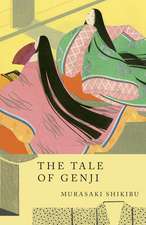 The Tale of GenjiMurasaki ShikibuPreț: 92.87 lei
 -
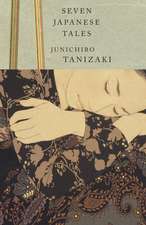 Seven Japanese TalesJunichiro TanizakiPreț: 89.31 lei
 -
 The Setting SunOsamu DazaiPreț: 79.22 lei
 -
 One Piece, Vol. 76Eiichiro Oda-20%Preț: 44.32 lei55.16 lei
 -
 One Piece, Vol. 77Eiichiro Oda-19%Preț: 44.82 lei55.47 lei
 -
 One Piece, Vol. 78Eiichiro Oda-20%Preț: 44.32 lei55.14 lei
 -
 One Piece, Vol. 79Eiichiro Oda-11%Preț: 49.13 lei55.00 lei
 -
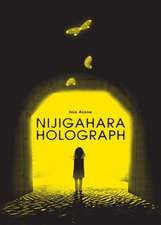 Nijigahara HolographMatt Thorn-24%Preț: 170.25 lei223.29 lei
 -
 OtogizoshiOsamu DazaiPreț: 63.53 lei
 -
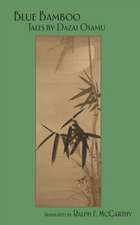 Blue BambooOsamu DazaiPreț: 84.99 lei
Notă biografică
Junichiro Tanizaki was born in Tokyo in 1886 and lived there until the earthquake of 1923, when he moved to the Kyoto-Osaka region, the scene of his novel The Makioka Sisters (1943-48). Among his works are Naomi (1924), Some Prefer Nettles (1928), Quicksand (1930), Arrowroot (1931), A Portrait of Shunkin (1933), The Secret History of the Lord of Musashi (1935), modern versions of The Tale of Genji (1941, 1954, and 1965), Captain Shigemoto's Mother (1949), The Key (1956), and Diary of a Mad Old Man (1961). By 1930 he had gained such renown that an edition of his complete works was published, and he was awarded Japan's Imperial Prize in Literature in 1949. Tanizaki died in 1965.
Recenzii
Praise for Junichiro Tanizaki's The Makioka Sisters
“A masterpiece of great beauty and quality.” –Chicago Tribune
“Skillfully and subtly, Tanizaki brushes in a delicate picture of a gentle world that no longer exists.” –San Francisco Chronicle
From the Hardcover edition.
“A masterpiece of great beauty and quality.” –Chicago Tribune
“Skillfully and subtly, Tanizaki brushes in a delicate picture of a gentle world that no longer exists.” –San Francisco Chronicle
From the Hardcover edition.