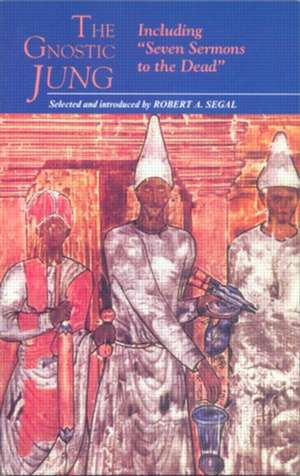
The Gnostic Jung: Including <Seven Sermons to the Dead>
Autor C. G. Jung Editat de Robert Segalen Limba Engleză Paperback – oct 1992
Sub îngrijirea lui C. G. Segal, o autoritate recunoscută în studiul mitologiei, acest volum publicat de Princeton University Press oferă o perspectivă riguroasă asupra legăturii organice dintre gnosticism și psihologia analitică. Suntem de părere că selecția operată de Segal în The Gnostic Jung – Selections From The Writings of C.G. Jung and His Critics este esențială pentru a înțelege cum Jung nu doar a interpretat textele gnostice, ci le-a folosit drept validare empirică pentru propriile concepte despre psihic. Robert Segal fundamentează lucrarea pe o cercetare extinsă a corpusului jungian, identificând gnosticismul și alchimia drept precursorii principali ai teoriilor despre sine. Descoperim în această ediție din seria Mythos: The Princeton/Bollingen Series in World Mythology o structură care facilitează accesul la texte dificile, incluzând atât „Simboluri gnostice ale Sinelui”, cât și „Șapte predici către morți”. Un element distinctiv este includerea eseurilor semnate de Victor White și Gilles Quispel, acesta din urmă fiind disponibil aici pentru prima dată în traducere, oferind o critică necesară asupra modului în care Jung ar fi putut reinterpreta sau chiar deforma miturile antice pentru a se potrivi modelului său clinic. Această lucrare extinde cadrul propus de Psychology and Alchemy cu date noi despre procesul de individuație privit ca o formă modernă de gnoză. Spre deosebire de The Search for Roots de Alfred Ribi, care se concentrează pe biografia spirituală a lui Jung în contextul Cărții Roșii, volumul de față prioritizează analiza comparativă a sistemelor de gândire. Ritmul lecturii este unul academic, susținut de o introducere densă în care Segal discută statutul lui Jung de „gnostic contemporan”. Recomandăm această ediție pentru rigoarea cu care tratează analogia dintre eliberarea scânteii divine și integrarea inconștientului, oferind un instrument de lucru indispensabil pentru cercetătorii istoriei ideilor și ai psihologiei profunzimilor.
Preț: 335.19 lei
Carte indisponibilă temporar
Specificații
ISBN-10: 041508038X
Pagini: 284
Dimensiuni: 138 x 216 x 15 mm
Greutate: 0.35 kg
Ediția:1
Editura: Taylor & Francis
Colecția Routledge
Locul publicării:Oxford, United Kingdom
V-ar putea interesa
-
 Thinking, Fast and SlowDaniel Kahneman-27%Preț: 90.79 lei123.57 leiRecomandat
 -
 -23%Preț: 477.97 lei620.73 lei
 -
 Preț: 517.40 lei
 -
 David Daube: A Centenary CelebrationErnest MetzgerPreț: 97.88 lei
 -
 The Gospel of ThomasRobert WolfePreț: 85.59 lei
 -
 Religion of the Semites: The Fundamental InstitutionsWilliam Smith-18%Preț: 1150.52 lei1403.06 lei
 -
 How to Win Friends and Influence PeopleDale CarnegiePreț: 76.97 lei
 -
 Rabbi, Tell Me...Peter FerraroPreț: 75.18 lei
 -
 Your Personal History Content GuideRoberta SegalPreț: 149.75 lei
 -
 Preț: 162.35 lei
 -
 The Gospel of The GnosticsDuncan GreenleesPreț: 168.84 lei
 -
 The Gnosis or Ancient Wisdom in the Christian ScripturesWilliam KingslandPreț: 110.83 lei
 -
 The Gospel of the Prophet ManiDuncan GreenleesPreț: 364.41 lei
 -
 The Gnostic BibleMarvin Meyer-28%Preț: 255.13 lei356.19 lei
 -
 Preț: 129.10 lei
 -
 Pistis SophiaG. R. S. MeadPreț: 110.77 lei
 -
 -18%Preț: 89.17 lei108.86 lei
 -
 The Gnostic GospelsAlan JacobsPreț: 72.86 lei
 -
 The Mystical Journey From Jesus to ChristMuata AshbyPreț: 176.23 lei
 -
 The Gnostic 2Andrew Phillip SmithPreț: 108.88 lei
 -
 The Esoteric Teachings of the GnosticsFrances SwineyPreț: 92.41 lei
 -
 The Way of ThomasJohn R. MabryPreț: 102.64 lei
 -
 Preț: 169.16 lei
 -
 Preț: 190.94 lei
 -
 Corpus HermeticumRune ØdegaardPreț: 343.03 lei
 -
 Mythologie in 30 SekundenRobert A SegalPreț: 105.84 lei
Public țintă
General and Professional Practice & DevelopmentDe ce să citești această carte
Recomandăm acest volum cititorilor care doresc să înțeleagă rădăcinile ezoterice ale psihologiei analitice. Prin selecția de texte originale și comentarii critice, C. G. Segal clarifică modul în care miturile gnostice au prefigurat concepte precum Sinele și inconștientul colectiv. Este o resursă academică solidă ce transformă o temă complexă într-o structură coerentă, ideală pentru studenții la psihologie sau istoria religiilor.
Descriere scurtă
Included in this volume are both Jung's sole work devoted entirely to Gnosticism, "Gnostic Symbols of the Self," and his own Gnostic myth, "Seven Sermons to the Dead." The book also contains key essays by Father Victor White and Gilles Quispel, whose "C.G. Jung und die Gnosis" is here translated for the first time. In his extensive introduction Segal discusses the parallel for Jung between ancient Gnostic and contemporary Jungian patients, the Jungian meaning of Gnostic myths and of the Seven Sermons, Jung's possible misinterpretation of Gnosticism, and the common characterization of Jung himself as a Gnostic.