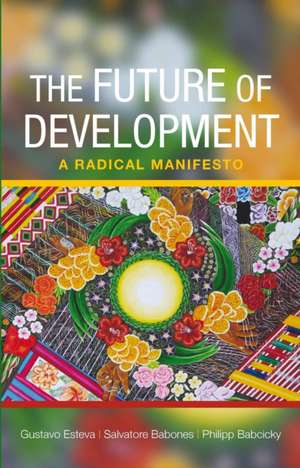
The Future of Development: A Radical Manifesto
Autor Gustavo Esteva, Salvatore Babones, Philipp Babcickyen Limba Engleză Paperback – 15 oct 2013
Notăm cu interes apariția volumului The Future of Development, o lucrare care propune o ruptură radicală față de paradigma economică dominantă. Această ediție aduce în prim-plan o perspectivă critică asupra eșecului proiectului de dezvoltare internațională lansat în 1949, evidențiind faptul că, în ciuda deceniilor de intervenții, procentul populației considerate „subdezvoltate” a rămas neschimbat. În loc să accepte rețetele standard ale instituțiilor internaționale, autorii propun o deconstrucție a statisticilor oficiale, expunând limitările acestora în reflectarea calității reale a vieții.
Descoperim aici o structură riguroasă, organizată în șapte capitole care ghidează cititorul de la geneza istorică a conceptului de subdezvoltare către alternativele la „cultul creșterii”. The Future of Development completează perspectiva oferită de Buen Vivir as an Alternative to Sustainable Development, adăugând o dimensiune politică mai tranșantă prin propunerea concretă de a reorganiza societatea în jurul comunităților și al resurselor comune, mai degrabă decât în jurul individului autosuficient. Această abordare rezonează cu temele explorate anterior de Gustavo Esteva în Grassroots Postmodernism, unde acesta ataca pilonii modernității, dar aici accentul este pus pe o soluție constructivă: recuperarea spațiului comun (the commons).
Putem afirma că volumul reprezintă o sinteză a „reflecției în acțiune” a lui Esteva, integrând experiența sa de activist în Mexic cu o analiză academică a economiei politice. Textul nu se limitează la critică, ci oferă un glosar terminologic și un cadru pentru practicieni și cercetători, facilitând tranziția de la dezvoltarea impusă de sus în jos la inițiativele organice, izvorâte din nevoile reale ale populațiilor marginalizate.
Preț: 207.04 lei
Carte disponibilă
Livrare economică 17 noiembrie-01 decembrie
Specificații
ISBN-10: 1447301080
Pagini: 152
Dimensiuni: 140 x 216 x 15 mm
Greutate: 0.23 kg
Ediția:New.
Editura: Bristol University Press
Colecția Policy Press
V-ar putea interesa
-
 Common WealthJeffrey SachsPreț: 94.31 lei
 -
 Left BehindPaul CollierPreț: 93.10 lei
 -
 GrowthDaniel SusskindPreț: 93.52 lei
 -
 Development: A Very Short IntroductionIan Goldin-19%Preț: 57.96 lei71.42 lei
 -
 Preț: 202.50 lei
 -
 The Mismeasure of Progress: Economic Growth and Its CriticsStephen J. MacekuraPreț: 195.62 lei
 -
 Harris, M: All We WantMichael HarrisPreț: 105.52 lei
 -
 The Poverty of GrowthOlivier De SchutterPreț: 105.31 lei
 -
 Preț: 136.52 lei
 -
 The Development Dictionary: A Guide to Knowledge as PowerWolfgang Sachs-18%Preț: 166.74 lei203.77 lei
 -
 Violent Saviours: The West, the Rest, and Capitalism Without ConsentWilliam Easterly-24%Preț: 105.49 lei138.79 lei
 -
 A Liveable Future is PossibleNoam ChomskyPreț: 78.95 lei
 -
 -42%Preț: 54.48 lei93.40 lei
 -
 The Companion to Development StudiesVandana Desai-8%Preț: 543.23 lei590.48 lei
 -
 International DevelopmentMichael WoolcockPreț: 154.81 lei
 -
 -27%Preț: 888.56 lei1210.37 lei
 -
 Preț: 65.38 lei
 -
 -21%Preț: 162.48 lei205.41 lei
 -
 Slow Down or Die: The Economics of DegrowthTimothée Parrique-19%Preț: 98.77 lei122.14 lei
 -
 How to Fall in Love with the FutureRob HopkinsPreț: 158.80 lei
De ce să citești această carte
Această carte este esențială pentru specialiștii în sociologie și științe politice care caută o alternativă viabilă la modelele economice extractive. Cititorul câștigă o înțelegere profundă a conceptului latino-american „buen vivir”, învățând cum poate fi structurată o societate pe principii de solidaritate comunitară. Este un manifest necesar pentru oricine dorește să depășească limbajul de lemn al statisticilor de dezvoltare în favoarea unor soluții sustenabile reale.
Despre autor
Gustavo Esteva a fost un autor și activist de bază, recunoscut la nivel internațional pentru colaborările sale cu Universidad de la Tierra din Mexic și pentru sprijinul acordat mișcărilor indigene. Opera sa este marcată de o critică acerbă la adresa colonialismului intelectual și a modelelor de dezvoltare occidentale. Prin lucrări precum Mayan Lives, Mayan Utopias și eseuri publicate de-a lungul a peste jumătate de secol, el a promovat decolonizarea gândirii și auto-organizarea comunităților, devenind o figură centrală în curentul post-dezvoltării.
Descriere scurtă
Demystifying the statistics that international organizations use to measure development, the authors introduce the alternative concept of buen vivir: a state of living well. They contend that everyone on the planet can achieve this state, but only if we all begin living as communities rather than individuals and nurture our respective commons. With their unique take on a famously difficult issue, they offer new hope for the future of development—and of humankind.
Notă biografică
Cuprins
Preface
1 The birth of development and underdevelopment
2 Development statistics and what they tell us
3 Alternatives to the cult of growth
4 There is enough for everyone
5 Reorganizing society from the bottom up
6 The reclamation of the commons
7 Epilogue: A role for the development of scholars and practitioners
Glossary
Index