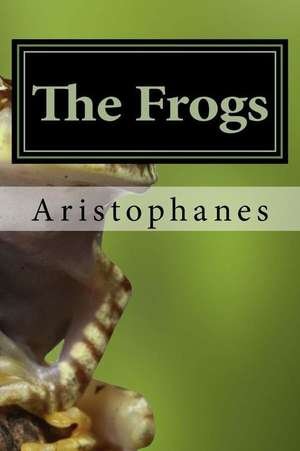
The Frogs
Autor Aristophanesen Limba Engleză Paperback
Preț: 52.25 lei
Cartea nu mai face parte din oferta noastră
Specificații
ISBN-10: 1540428648
Pagini: 70
Dimensiuni: 152 x 229 x 4 mm
Greutate: 0.1 kg
V-ar putea interesa
-
 -30%Preț: 65.01 lei93.16 lei
 -
 The Birds and Other PlaysAristophanes-31%Preț: 63.00 lei91.48 lei
 -
 The New SpaniardsJohn Hooper-30%Preț: 66.03 lei93.99 lei
 -
 -14%Preț: 262.20 lei305.21 lei
 -
 -33%Preț: 726.64 lei1090.84 lei
 -
 -15%Preț: 56.73 lei66.79 lei
 -
 Birds and Other PlaysAristophanesPreț: 71.62 lei
 -
 Preț: 176.89 lei
 -
 Preț: 233.58 lei
 -
 Clouds. Wasps. PeaceAristophanesPreț: 234.93 lei
 -
 Preț: 232.87 lei
 -
 FragmentsAristophanesPreț: 234.61 lei
 -
 The Age of OrionDavid ReadePreț: 343.22 lei
 -
 North American Xb-70 in ColorJohn M CampbellPreț: 118.83 lei
 -
 Lost Plays of Old ComedyMatthew C. Farmer-30%Preț: 502.83 lei720.37 lei
 -
 The Frogs and Other PlaysAristophanesPreț: 54.15 lei
 -
 AristophanesAristophanesPreț: 44.37 lei
 -
 The AcharniansAristophanesPreț: 36.73 lei
 -
 The CloudsAristophanesPreț: 36.31 lei
 -
 Medea and Other PlaysEuripidesPreț: 43.30 lei
 -
 The Three Theban PlaysSophoclesPreț: 45.74 lei
 -
 Under Drake's FlagG. A. HentyPreț: 85.87 lei
 -
 Lysistrata, Women at the Thesmophoria, FrogsAristophanes-15%Preț: 148.78 lei174.92 lei
Descriere
The Frogs follows interpersonal conflicts between men and women, Greek gods, and the natural and supernatural. Using extraordinary circumstances, the author provides commentary on multiple public figures spanning religion, politics and literature. The Frogs is one of Aristophanes' most notable works. The story centers on Dionysus, the god of fertility and wine, who's also known as a patron of the arts. In an effort to restore Greek tragedy to its former glory, Dionysus travels to the underworld to bring the late playwright Euripides back to life. While on this mission he encounters other prominent figures such as Aeschylus, the "Father of Tragedy," and Heracles, the Greek demigod. Aristophanes' work is filled with biting humor and colorful commentary that has stood the test of time. Unlike his peers, a portion of his plays (11 out of 40) survived his death and remain fully intact. The Frogs offers a glimpse into the impressive catalog that made Aristophanes one of the greatest playwrights of his era. With an eye-catching new cover, and professionally typeset manuscript, this edition of The Frogs is both modern and readable.