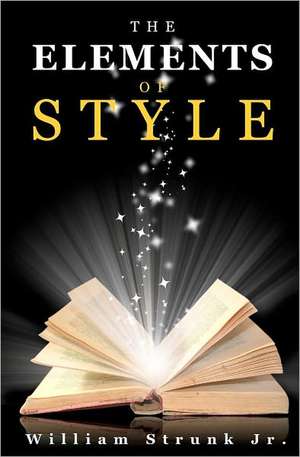
The Elements of Style: The Science of Getting Rich, the Science of Being Great & the Science of Being Well
Autor William Strunk Jren Limba Engleză Paperback – 30 sep 2011
Nivel de studiu: licență și referință profesională. The Elements of Style rămâne pilonul central al scrierii academice și creative în limba engleză, fiind un manual esențial pentru oricine dorește să stăpânească rigoarea exprimării. Observăm în această ediție păstrarea structurii originale concepute de William Strunk Jr, care prioritizează claritatea absolută în detrimentul ornamentelor inutile. Volumul este organizat meticulos în secțiuni ce acoperă regulile gramaticale fundamentale — cum ar fi posesivul substantivelor sau utilizarea corectă a virgulei în serii — și principii de compoziție care ghidează cititorul spre construcția unor paragrafe coerente.
Descoperim aici chintesența filozofiei lui Strunk: „Omit needless words” (omite cuvintele inutile). Această instrucțiune, devenită celebră, definește întregul parcurs al cărții, de la regula vocii active până la utilizarea unui limbaj specific și concret. Reținem că, deși este un text de dimensiuni reduse, impactul său asupra stilisticii moderne este imens, oferind soluții practice pentru 49 de expresii utilizate frecvent greșit și 57 de cuvinte cu ortografie problematică.
Cititorii familiarizați cu The Elements of Style by William Strunk jr. & How To Speak And Write Correctly by Joseph Devlin - Special Edition vor aprecia focalizarea strictă a acestui volum pe textul original al lui Strunk, fără adăugirile ulterioare care pot dilua mesajul inițial. Față de edițiile care includ glosare extinse de termeni gramaticali moderni, acest manual se menține fidel viziunii din 1918, fiind un instrument de lucru rapid și eficient. Această lucrare reprezintă fundamentul pentru toate versiunile ulterioare ale The Elements of Style William Strunk Jr., consolidând statutul autorului de autoritate incontestabilă în lingvistica prescriptivă americană.
Preț: 61.28 lei
Carte tipărită la comandă
Livrare economică 08-22 decembrie
Specificații
ISBN-10: 1612931103
Pagini: 54
Dimensiuni: 133 x 203 x 3 mm
Greutate: 0.07 kg
Editura: Tribeca Books
V-ar putea interesa
-
 Zen in the Art of WritingRay Bradbury-35%Preț: 50.47 lei77.80 lei
 -
 The Elements of Style - IllustratedWilliam StrunkPreț: 112.31 lei
 -
 The Elements of Style: United States EditionWilliam StrunkPreț: 98.59 lei
 -
 The Elements of StyleWilliam StrunkPreț: 175.16 lei
 -
 The Writer's Diet: A Guide to Fit ProseHelen SwordPreț: 130.20 lei
 -
 Writing Science in Plain English, Second EditionAnne E. GreenePreț: 138.84 lei
 -
 -16%Preț: 131.02 lei155.40 lei
 -
 Writing Tools: 50 Essential Strategies for Every WriterRoy Peter Clark-24%Preț: 70.34 lei93.13 lei
 -
 Style 5/EJoseph Williams-19%Preț: 521.70 lei644.08 lei
 -
 Sin and SyntaxConstance Hale-18%Preț: 82.13 lei100.33 lei
 -
 English Grammar For Dummies, UK EditionGeraldine WoodsPreț: 140.94 lei
 -
 -17%Preț: 131.50 lei159.14 lei
 -
 Essential English for Journalists, Editors and WritersCrawford Gillan-19%Preț: 99.56 lei122.32 lei
 -
 The Blue Book of Grammar and PunctuationLester KaufmanPreț: 111.42 lei
 -
 Elements of Style, TheWilliam StrunkPreț: 149.73 lei
 -
 Brilliant Writing Tips for StudentsJulia Copus-10%Preț: 58.67 lei65.22 lei
 -
 -17%Preț: 54.31 lei65.39 lei
 -
 Writing Wrongs: Common Errors in EnglishRobert M. Martin-23%Preț: 174.64 lei225.50 lei
 -
 Dreyer's English: An Utterly Correct Guide to Clarity and StyleBenjamin Dreyer-25%Preț: 64.88 lei85.98 lei
 -
 Writing with Style: The Economist GuideLane Greene-18%Preț: 69.95 lei85.75 lei
De ce să citești această carte
Această carte este indispensabilă pentru studenții și profesioniștii care scriu în limba engleză și doresc să își rafineze stilul. Cititorul câștigă o înțelegere clară a regulilor de punctuație și compoziție, învățând să elimine redundanța. Este un ghid practic care transformă scrierea haotică într-o comunicare precisă și de impact, fiind considerat de peste un secol „biblia” stilului englezesc.