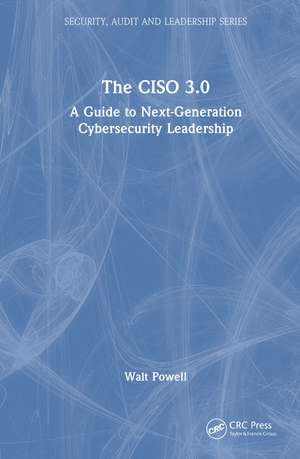
The CISO 3.0: A Guide to Next-Generation Cybersecurity Leadership: Security, Audit and Leadership Series
Autor Walt Powellen Limba Engleză Hardback – 4 aug 2025
This book challenges the traditional perception of CISOs as technical leaders, advocating for a strategic shift toward business alignment, quantitative risk management, and the embrace of emerging technologies like artificial intelligence (AI) and machine learning. It empowers CISOs to transcend their technical expertise and evolve into business-savvy leaders who are fully equipped to meet the rising expectations from boards, executives, and regulators. This book directly addresses the increasing demands from boards and regulators in the wake of recent high-profile cyber events, providing CISOs with the necessary skills and knowledge to navigate this new landscape.
This book isn’t just about theory but also action. It delves into the practicalities of business-aligned cybersecurity through real-life stories and illustrative examples that showcase the triumphs and tribulations of CISOs in the field. This book offers unparalleled insights gleaned from the author’s extensive experience in advising hundreds of successful programs, including in-depth discussions on risk quantification, cyber insurance strategies, and defining materiality for risks and incidents. This book fills the gap left by other resources, providing clear guidance on translating business alignment concepts into practice.
If you’re a cybersecurity professional aspiring to a CISO role or an existing CISO seeking to enhance your strategic leadership skills and business acumen, this book is your roadmap. It is designed to bridge the gap between the technical and business worlds and empower you to become a strategic leader who drives value and protects your organization’s most critical assets.
Din seria Security, Audit and Leadership Series
-
 Preț: 418.53 lei
 - 8%
 Preț: 445.18 lei
 - 11%
 Preț: 635.66 lei
 -
 Preț: 414.87 lei
 -
 Preț: 430.76 lei
 - 8%
 Preț: 445.74 lei
 - 20%
 Preț: 405.06 lei
 - 20%
 Preț: 1197.18 lei
 -
 Preț: 326.44 lei
 -
 Preț: 415.48 lei
 - 20%
 Preț: 379.78 lei
 - 20%
 Preț: 685.25 lei
 - 20%
 Preț: 418.05 lei
 - 15%
 Preț: 472.42 lei
 - 20%
 Preț: 506.49 lei
 - 20%
 Preț: 535.60 lei
 - 20%
 Preț: 299.76 lei
 - 20%
 Preț: 1629.80 lei
 -
 Preț: 345.94 lei
 - 20%
 Preț: 526.36 lei
 -
 Preț: 384.37 lei
 -
 Preț: 219.16 lei
 - 20%
 Preț: 492.86 lei
 - 20%
 Preț: 527.83 lei
 - 20%
 Preț: 1308.63 lei
 - 20%
 Preț: 354.29 lei
 - 20%
 Preț: 374.75 lei
 - 20%
 Preț: 1030.95 lei
 - 20%
 Preț: 530.01 lei
 - 20%
 Preț: 573.71 lei
 - 20%
 Preț: 349.28 lei
 -
 Preț: 350.55 lei
 - 20%
 Preț: 311.00 lei
 - 20%
 Preț: 715.46 lei
 - 20%
 Preț: 488.00 lei
 -
 Preț: 297.38 lei
 -
 Preț: 391.02 lei
 - 20%
 Preț: 316.61 lei
 -
 Preț: 424.04 lei
 -
 Preț: 346.21 lei
 - 20%
 Preț: 327.92 lei
 - 20%
 Preț: 1112.87 lei
 - 20%
 Preț: 520.36 lei
Preț: 1151.18 lei
Preț vechi: 1438.98 lei
-20%
Puncte Express: 1727
Carte tipărită la comandă
Livrare economică 01-15 decembrie
Livrare prin curier în România Termenul estimat este afișat lângă disponibilitate.
Transport gratuit pentru acest produs Plată online sau ramburs, în funcție de opțiunile comenzii.
Retur gratuit în 14 zile Comandă securizată și suport în română.
Specificații
ISBN-13: 9781032823515
ISBN-10: 1032823518
Pagini: 486
Ilustrații: 112
Dimensiuni: 156 x 234 x 31 mm
Greutate: 0.85 kg
Ediția:1
Editura: CRC Press
Colecția CRC Press
Seria Security, Audit and Leadership Series
ISBN-10: 1032823518
Pagini: 486
Ilustrații: 112
Dimensiuni: 156 x 234 x 31 mm
Greutate: 0.85 kg
Ediția:1
Editura: CRC Press
Colecția CRC Press
Seria Security, Audit and Leadership Series
V-ar putea interesa
-
 Preț: 198.58 lei
 -
 The Modern Security Operations CenterJoseph Muniz-20%Preț: 341.06 lei426.32 lei
 -
 -20%Preț: 533.03 lei666.29 lei
 -
 Principles of Information SecurityHerbert Mattord-23%Preț: 603.92 lei787.47 lei
 -
 The Psychology of Cybersecurity: Hacking and the Human MindTarnveer SinghPreț: 320.10 lei
 -
 Systematic Security: A CISO’s PlaybookTimur Qader-20%Preț: 367.98 lei459.97 leiRecomandat
 -
 Tribe of Hackers Security LeadersMarcus J Carey-20%Preț: 115.60 lei144.49 lei
 -
 Preț: 348.77 lei
 -
 Enterprise Risk ManagementBetty Simkins-23%Preț: 633.13 lei822.24 lei
 -
 The CISO Evolution: Business Knowledge for Cyberse curity ExecutivesKyriakos Lambros-20%Preț: 260.39 lei325.50 lei
 -
 -20%Preț: 105.29 lei131.61 lei
 -
 Executive's Guide to Cyber RiskSiegfried Moyo-20%Preț: 197.76 lei247.20 lei
 -
 -20%Preț: 117.34 lei146.68 lei
 -
 -35%Preț: 134.23 lei206.56 lei
 -
 Preț: 143.09 lei
 -
 Cybersecurity - Politics, Governance and Conflict in CyberspaceAaron F. BrantlyPreț: 157.60 lei
 -
 -18%Preț: 65.03 lei79.50 leiRecomandat
 -
 -36%Preț: 282.74 lei439.76 lei
 -
 Boardroom CybersecurityDan Weis-20%Preț: 232.36 lei290.44 lei
 -
 Preț: 104.71 lei
Public țintă
Professional Practice & Development, Professional Reference, and Professional TrainingCuprins
1. Introduction. Part 1: The Changing Role of the Security Leader. 2. What Is a CISO 3.0?. 3. The Evolving Regulatory Landscape. Part 2: Business and Risk Alignment. 4. The Language of Business. 5. Ownership and Boards of Directors. 6. Risk. Part 3: Risk Treatment. Part 3A: Transfer, Avoid, and Accept Risk. 7. Cyber Liability Insurance. 8. Self-Insurance and Risk Financing. Part 3B: Risk Mitigation. 9. Developing a 3.0 Program Strategy. 10. Security Tactics and Capabilities. 11. Leading Effective Teams. 12. Security Tactics. 13. Modern Cyber Resilience. 14. AI and the Future of the CISO Role. Part 4: Bringing It All Together. 15. Developing Modern Metrics. 16. Board-Level Communication. 17. Materiality and Disclosures. 18. The CISO 3.0: The Future of Cybersecurity Leadership.
Notă biografică
Walt Powell is an experienced executive coach and CISO advisor who has extensive experience working with countless CISOs and developing cybersecurity programs. Walt helped pioneer the role of Field CISO and is a founding member of the Global Security Strategy Office at CDW. Walt now leads a team of Field CISOs, composed entirely of former executives, who bring a wealth of experience and knowledge to their clients, underpinned by unique insights gained from contributing to and learning from the strategies of hundreds of chief information security officers (CISOs) and chief information officers (CIOs) across every size of organization and vertical. Walt and his team leverage this wealth of knowledge and experience to provide executive coaching, support, and mentorship to elevate other CISOs, their programs, and organizations, sharing lessons and providing strategic guidance that would typically take several careers to acquire.
Prior to his role at CDW, Walt was the owner and vCISO at Left Brain Security, which is now Left Brain Security Media. He has served as an award-winning cybersecurity leader, advisor, architect, and pre-sales engineer and has also served as a professor of networking and security at Wright College. Walt firmly believes in the importance of giving back to the industry, which is why he taught in CISSP and CISM boot camps and contributes as a certification exam development committee member for numerous organizations. He holds an impressive array of professional certifications, including CISSP, CISM, CCISO, Carnegie Mellon CISO, and the Stanford Advanced Cybersecurity Certificate, and numerous technical and sales certifications from leading cybersecurity firms. Walt also leads a cybersecurity book club, which is being launched as a podcast.
A proud Mensa member and futurist, Walt is deeply invested in exploring the implications of emerging technologies on cybersecurity. He actively contributes to the cybersecurity community by writing and speaking at industry conferences such as BSides, CypherCon, and CrowdStrike Fal.Con; sharing white papers; and authoring articles on critical security topics. Beyond his professional life, Walt is a former professional musician and multi-instrumentalist who cherishes spending quality time with his children, traveling, and learning new languages.
Prior to his role at CDW, Walt was the owner and vCISO at Left Brain Security, which is now Left Brain Security Media. He has served as an award-winning cybersecurity leader, advisor, architect, and pre-sales engineer and has also served as a professor of networking and security at Wright College. Walt firmly believes in the importance of giving back to the industry, which is why he taught in CISSP and CISM boot camps and contributes as a certification exam development committee member for numerous organizations. He holds an impressive array of professional certifications, including CISSP, CISM, CCISO, Carnegie Mellon CISO, and the Stanford Advanced Cybersecurity Certificate, and numerous technical and sales certifications from leading cybersecurity firms. Walt also leads a cybersecurity book club, which is being launched as a podcast.
A proud Mensa member and futurist, Walt is deeply invested in exploring the implications of emerging technologies on cybersecurity. He actively contributes to the cybersecurity community by writing and speaking at industry conferences such as BSides, CypherCon, and CrowdStrike Fal.Con; sharing white papers; and authoring articles on critical security topics. Beyond his professional life, Walt is a former professional musician and multi-instrumentalist who cherishes spending quality time with his children, traveling, and learning new languages.
Recenzii
The CISO 3.0 is written with clarity and authority, and charts the transition of the CISO from a technical guardian to a strategic leader shaping enterprise resilience in our digital age. What stands out is the book’s ability to frame cybersecurity not as a siloed IT concern, but as an integral part of business governance, risk management, and long-term value creation. This is particularly relevant in a world where cyber incidents are no longer operational setbacks but national and economic security crises.
From a practitioner’s perspective, the book offers deep insight into the practical realities of leadership at the cyber frontier. It draws on lived experience to highlight how CISOs can align security with enterprise strategy, influence boards and executives, and create cultures of accountability and trust. Importantly, it doesn’t just prescribe theoretical frameworks; it provides actionable guidance, case studies, and leadership principles that CISOs can apply immediately in their own organizations. For those navigating the constant tension between compliance obligations and resilience imperatives, this book provides both perspective and practical pathways forward.
Perhaps the greatest inspiration lies in its vision of the CISO 3.0 archetype - a leader who blends technical mastery with strategic acumen, policy awareness, and the ability to mobilize entire organizations around cyber resilience. This evolution reflects the reality that tomorrow’s CISOs will be judged not only on how well they defend infrastructure, but on how effectively they enable innovation, trust, and continuity in the face of relentless change. For CISOs worldwide, this book is not just a guidebook - it is a call to embrace a more ambitious, impactful, and sustainable model of leadership in cybersecurity.
Jessamy Perkins, Principal Security Adviser, National Strategic Solutions, Australia
The CISO 3.0 succeeds as a strategic field manual for CISOs and senior security leaders looking to elevate their influence in the boardroom and integrate cybersecurity into enterprise value creation. It will particularly resonate with those transitioning from a compliance-driven “CISO 2.0” model toward business-first leadership.
This is not a hands-on technical guide, and it assumes baseline cybersecurity literacy, but for its intended audience, it delivers a clear, actionable, and timely playbook. Recommendation: Highly recommended for current and aspiring CISOs, senior security executives, and governance professionals seeking to strengthen the business alignment and strategic impact of their security programs.
Peter J. Hillier, CD, CISSP, ISO27001 Auditor
President - Hillier Information Protection Solutions Inc.
Ottawa, Ontario
Walt Powell’s The CISO 3.0 presents a roadmap for security leaders to grow beyond technical expertise and step fully into the business arena. It highlights the need for CISOs to speak the language of finance, quantify risk, and engage with boards. The book raises the right conversations around areas such as risk quantification, cyber insurance, and AI governance. It reinforces the point that cybersecurity should be seen as a driver of business resilience and value rather than only as a cost.
At the same time, the vision described is ahead of where many organizations operate today. The content often assumes a maturity in areas like risk modeling and AI adoption that many programs do not yet have in place. For teams still working on basics such as role clarity, culture, and legacy technology, the practical steps can feel light. The real strength of this book is as a directional guide. It sets the aspiration, but readers will need to adapt it to their own level of readiness and focus on building the groundwork required to reach the CISO 3.0 stage.
Some of the useful takeaways include:
Framing security investments in business and financial terms that resonate
with executives.
Using risk quantification techniques to prioritize decisions and resources.
Treating cyber insurance and self-insurance as part of the overall risk
strategy.
Building metrics and board reporting that go beyond compliance checklists.
Exploring how AI can both strengthen defenses and introduce new
governance risks.
Brian Albertson, GRC Technical Architect at State Farm
The CISO 3.0 prepares cybersecurity leaders for Web3 and disruptive innovation not by focusing on specific technologies, but by fundamentally reshaping how CISOs think, decide, and lead in environments defined by uncertainty, decentralization, and rapid change. This distinction is essential because Web3 challenges are less about tools and more about governance, risk ownership, and business alignment—areas where traditional security leadership models often fall short.
The CISO 3.0: A Guide to Next-Generation Cybersecurity Leadership by Walt Powell offers a clear and practical examination of how the CISO role must evolve in today’s business and regulatory environment. Powell is upfront that this is not a technical “how-to” guide or a compliance checklist. Instead, the book focuses on what many security leaders struggle with most: operating as business leaders who can communicate risk, value, and strategy in terms that resonate with executives and boards.
One of the book’s greatest strengths is how Powell frames the evolution of the CISO role—from the technically focused CISO 1.0, to the compliance-driven CISO 2.0, and ultimately to the CISO 3.0. He makes a convincing case that many organizations remain stuck in earlier versions in which security is treated as a cost center and risk is discussed qualitatively rather than financially. Powell’s emphasis on risk quantification, materiality, and fiduciary responsibility closely aligns with the realities CISOs now face amid increasing regulatory scrutiny and heightened board expectations.
Powell’s impressive background strengthens the book’s credibility. As a longtime executive coach and CISO advisor, he has worked with hundreds of CISOs and CIOs across organizations of all sizes and industries. He helped pioneer the Field CISO role and is a founding member of CDW’s Global Security Strategy Office, where he leads a team of former executives advising security leaders in the field. His experience as a vCISO, professor, and award-winning practitioner is evident throughout the book, particularly in the practical guidance on governance, budgeting, and executive communication.
Powell’s writing is direct and experience-driven. He avoids theory for its own sake and instead focuses on real challenges CISOs face—earning trust at the board level, justifying investment decisions, and building capability-driven security programs rather than tool-centric ones. The reflection questions included at the end of each chapter further enhance the book’s value for leadership development and graduate-level study.
Overall, The CISO 3.0 is a timely and valuable read for current and aspiring CISOs who want to move beyond operational security and into authentic strategic leadership. It provides a realistic, business-aligned framework for navigating modern cybersecurity expectations and serves as a strong resource for security leaders, risk professionals, and educators alike.
Dr. Tim Godlove
Written by the cybersecurity industry's top authority, Walt Powell, CISO 3.0: A Guide to Next-Generation Cybersecurity Leadership is a timely and highly practical examination of the evolution of the CISO's role from a purely technical function to a true business leader. Powell makes a very strong argument that cybersecurity leaders have to be able to speak the language of finance, of governance, of risk management, and of what's going on at the board level. The book's core concept of moving from “CISO 1.0” to “CISO 3.0” is useful for understanding the evolution of the CISO role as cyber threats have increased, regulatory regimes have tightened, and expectations of executives have risen.
The book is well-balanced between the strategic level and the level of actionable advice. In Powell's discussions, he isn't just talking theory, he's making his recommendations based on actual situations where things are changing in the regulation, cyber insurance, quantitative risk analysis, and executive accountability. The chapters on articulating cybersecurity in business terms and training CISOs to be effective communicators with boards and regulators are especially captivating. The material is especially timely for the day's security leaders facing increased legal and operational pressures resulting from SEC disclosure rules, the concept of fiduciary duty, and incidents such as SolarWinds and Uber.
It is not just for present-day CISOs, it is also an ideal map for new executives seeking to enter the cybersecurity field. The style of Powell's writing is accessible, straightforward and informed by his wide range of hands-on experience advising a variety of organisations across a wide range of industries. Instead of cybersecurity being a purely technical field, he sees it as a key business enabler that's related to resilience, innovation, and enterprise value. Rather, the CISO 3.0 is a visionary leadership framework that calls on security practitioners to question the impact and the role they play in the present-day enterprise.
The CISO 3.0 is a informative and very applicable book, offering a mindset and handbag for cybersecurity leaders to succeed in this increasingly complex enterprise and threat landscape.
Mohammad AlQudah, PhD Fintech, and Cybersecurity
If you are a current or aspiring CISO, you must check out the full reviews by Andrew Chrostowski and Arron J.: https://lnkd.in/gEjxX7Xr
"Walt Powell □□□□ □□ □□□□□□□□□□□□□□□□□□□□, □□□□□□□□□□□□□□□□□□ □□□□□□□□□□□□□□□□□□□□□□□□, □□□□□□ □□□□□□□□□□□□□□ □□□□ □□□□□□ □□□□□□□□□□□□□□ □□□□□□ □□□□□□□□ 3.0 □□□□ □□ □□□□□□□□□□□□□□□□□□□□□□□□□□ □□□□□□□□□□□□□□□□□□□□ □□□□ □□□□□□□□□□□□□□□□ □□□□□□□□ □□□□ □□□□□□ □□□□□□□□□□□□ □□□□□□□□□□□□□□ □□□□ □□□□□□□□□□ □□□□ □□□□□□□□□□□□□□, □□□□□□□□□□□□□□ □□□□□□ □□□□□□□□□□□□." - Arron Johnson
"□□□□ □□□□□□□□□□□□□□□□□□□□ □□□□□□□□□□□□□□□□ □□□□□□□□□□□□□□□□□□□□□□□□□□ □□□□ □□□□□□□□ □□□□□□□□□□□□ □□□□□□□□□□□□□□□□□□ □□□□□□□□□□□□□□□□ □□□□□□ □□□□□□□□□□□□□□□□ □□□□□□□□□□□□□□□□□□□□□□□□□□ □□□□ □□ □□□□□□□□□□□□□□□□ □□□□□□□□□□□□□□ □□□□□□□□□□□□ □□□□□□□□ □□ □□□□□□□□ □□□□□□□□□□□□. □□□□□□□□□□□□□□ □□□□□□□□□□ □□□□□□□□□□□□□□□□□□□□, □□□□□□□□□□□□□□□□□□□□□□□□ □□□□□□□□□□□□□□□□, □□□□□□ □□□□□□□□□□□□□□-□□□□□□□□□□□□□□ □□□□□□□□□□□□□□□□ □□□□ □□□□□□□□□□□□□□□□□□□□ □□□□□□ □□□□□□□□□□□□□□□□□□□□, “□□□□□□ □□□□□□□□ 3.0” □□□□□□□□□□□□ □□ □□□□□□□□□□□□□□□□□□□□□□□□□□ □□□□□□□□□□□□□□ □□□□□□ □□□□□□□□□□□□□□□□□□□□□□□□□□ □□□□□□□□□□□□□□ □□□□□□□□□□□□□□ □□□□ □□□□□□□□□□□□□□ □□□□ □□□□□□ □□□□□□□□□□□□□□ □□□□□□□□□□□□ □□□□ □□□□□□□□□□ □□□□□□□□□□□□□□□□□□□□□□□□□□." - Andrew Chrostowski
From a practitioner’s perspective, the book offers deep insight into the practical realities of leadership at the cyber frontier. It draws on lived experience to highlight how CISOs can align security with enterprise strategy, influence boards and executives, and create cultures of accountability and trust. Importantly, it doesn’t just prescribe theoretical frameworks; it provides actionable guidance, case studies, and leadership principles that CISOs can apply immediately in their own organizations. For those navigating the constant tension between compliance obligations and resilience imperatives, this book provides both perspective and practical pathways forward.
Perhaps the greatest inspiration lies in its vision of the CISO 3.0 archetype - a leader who blends technical mastery with strategic acumen, policy awareness, and the ability to mobilize entire organizations around cyber resilience. This evolution reflects the reality that tomorrow’s CISOs will be judged not only on how well they defend infrastructure, but on how effectively they enable innovation, trust, and continuity in the face of relentless change. For CISOs worldwide, this book is not just a guidebook - it is a call to embrace a more ambitious, impactful, and sustainable model of leadership in cybersecurity.
Jessamy Perkins, Principal Security Adviser, National Strategic Solutions, Australia
The CISO 3.0 succeeds as a strategic field manual for CISOs and senior security leaders looking to elevate their influence in the boardroom and integrate cybersecurity into enterprise value creation. It will particularly resonate with those transitioning from a compliance-driven “CISO 2.0” model toward business-first leadership.
This is not a hands-on technical guide, and it assumes baseline cybersecurity literacy, but for its intended audience, it delivers a clear, actionable, and timely playbook. Recommendation: Highly recommended for current and aspiring CISOs, senior security executives, and governance professionals seeking to strengthen the business alignment and strategic impact of their security programs.
Peter J. Hillier, CD, CISSP, ISO27001 Auditor
President - Hillier Information Protection Solutions Inc.
Ottawa, Ontario
Walt Powell’s The CISO 3.0 presents a roadmap for security leaders to grow beyond technical expertise and step fully into the business arena. It highlights the need for CISOs to speak the language of finance, quantify risk, and engage with boards. The book raises the right conversations around areas such as risk quantification, cyber insurance, and AI governance. It reinforces the point that cybersecurity should be seen as a driver of business resilience and value rather than only as a cost.
At the same time, the vision described is ahead of where many organizations operate today. The content often assumes a maturity in areas like risk modeling and AI adoption that many programs do not yet have in place. For teams still working on basics such as role clarity, culture, and legacy technology, the practical steps can feel light. The real strength of this book is as a directional guide. It sets the aspiration, but readers will need to adapt it to their own level of readiness and focus on building the groundwork required to reach the CISO 3.0 stage.
Some of the useful takeaways include:
Framing security investments in business and financial terms that resonate
with executives.
Using risk quantification techniques to prioritize decisions and resources.
Treating cyber insurance and self-insurance as part of the overall risk
strategy.
Building metrics and board reporting that go beyond compliance checklists.
Exploring how AI can both strengthen defenses and introduce new
governance risks.
Brian Albertson, GRC Technical Architect at State Farm
The CISO 3.0 prepares cybersecurity leaders for Web3 and disruptive innovation not by focusing on specific technologies, but by fundamentally reshaping how CISOs think, decide, and lead in environments defined by uncertainty, decentralization, and rapid change. This distinction is essential because Web3 challenges are less about tools and more about governance, risk ownership, and business alignment—areas where traditional security leadership models often fall short.
The CISO 3.0: A Guide to Next-Generation Cybersecurity Leadership by Walt Powell offers a clear and practical examination of how the CISO role must evolve in today’s business and regulatory environment. Powell is upfront that this is not a technical “how-to” guide or a compliance checklist. Instead, the book focuses on what many security leaders struggle with most: operating as business leaders who can communicate risk, value, and strategy in terms that resonate with executives and boards.
One of the book’s greatest strengths is how Powell frames the evolution of the CISO role—from the technically focused CISO 1.0, to the compliance-driven CISO 2.0, and ultimately to the CISO 3.0. He makes a convincing case that many organizations remain stuck in earlier versions in which security is treated as a cost center and risk is discussed qualitatively rather than financially. Powell’s emphasis on risk quantification, materiality, and fiduciary responsibility closely aligns with the realities CISOs now face amid increasing regulatory scrutiny and heightened board expectations.
Powell’s impressive background strengthens the book’s credibility. As a longtime executive coach and CISO advisor, he has worked with hundreds of CISOs and CIOs across organizations of all sizes and industries. He helped pioneer the Field CISO role and is a founding member of CDW’s Global Security Strategy Office, where he leads a team of former executives advising security leaders in the field. His experience as a vCISO, professor, and award-winning practitioner is evident throughout the book, particularly in the practical guidance on governance, budgeting, and executive communication.
Powell’s writing is direct and experience-driven. He avoids theory for its own sake and instead focuses on real challenges CISOs face—earning trust at the board level, justifying investment decisions, and building capability-driven security programs rather than tool-centric ones. The reflection questions included at the end of each chapter further enhance the book’s value for leadership development and graduate-level study.
Overall, The CISO 3.0 is a timely and valuable read for current and aspiring CISOs who want to move beyond operational security and into authentic strategic leadership. It provides a realistic, business-aligned framework for navigating modern cybersecurity expectations and serves as a strong resource for security leaders, risk professionals, and educators alike.
Dr. Tim Godlove
Written by the cybersecurity industry's top authority, Walt Powell, CISO 3.0: A Guide to Next-Generation Cybersecurity Leadership is a timely and highly practical examination of the evolution of the CISO's role from a purely technical function to a true business leader. Powell makes a very strong argument that cybersecurity leaders have to be able to speak the language of finance, of governance, of risk management, and of what's going on at the board level. The book's core concept of moving from “CISO 1.0” to “CISO 3.0” is useful for understanding the evolution of the CISO role as cyber threats have increased, regulatory regimes have tightened, and expectations of executives have risen.
The book is well-balanced between the strategic level and the level of actionable advice. In Powell's discussions, he isn't just talking theory, he's making his recommendations based on actual situations where things are changing in the regulation, cyber insurance, quantitative risk analysis, and executive accountability. The chapters on articulating cybersecurity in business terms and training CISOs to be effective communicators with boards and regulators are especially captivating. The material is especially timely for the day's security leaders facing increased legal and operational pressures resulting from SEC disclosure rules, the concept of fiduciary duty, and incidents such as SolarWinds and Uber.
It is not just for present-day CISOs, it is also an ideal map for new executives seeking to enter the cybersecurity field. The style of Powell's writing is accessible, straightforward and informed by his wide range of hands-on experience advising a variety of organisations across a wide range of industries. Instead of cybersecurity being a purely technical field, he sees it as a key business enabler that's related to resilience, innovation, and enterprise value. Rather, the CISO 3.0 is a visionary leadership framework that calls on security practitioners to question the impact and the role they play in the present-day enterprise.
The CISO 3.0 is a informative and very applicable book, offering a mindset and handbag for cybersecurity leaders to succeed in this increasingly complex enterprise and threat landscape.
Mohammad AlQudah, PhD Fintech, and Cybersecurity
If you are a current or aspiring CISO, you must check out the full reviews by Andrew Chrostowski and Arron J.: https://lnkd.in/gEjxX7Xr
"Walt Powell □□□□ □□ □□□□□□□□□□□□□□□□□□□□, □□□□□□□□□□□□□□□□□□ □□□□□□□□□□□□□□□□□□□□□□□□, □□□□□□ □□□□□□□□□□□□□□ □□□□ □□□□□□ □□□□□□□□□□□□□□ □□□□□□ □□□□□□□□ 3.0 □□□□ □□ □□□□□□□□□□□□□□□□□□□□□□□□□□ □□□□□□□□□□□□□□□□□□□□ □□□□ □□□□□□□□□□□□□□□□ □□□□□□□□ □□□□ □□□□□□ □□□□□□□□□□□□ □□□□□□□□□□□□□□ □□□□ □□□□□□□□□□ □□□□ □□□□□□□□□□□□□□, □□□□□□□□□□□□□□ □□□□□□ □□□□□□□□□□□□." - Arron Johnson
"□□□□ □□□□□□□□□□□□□□□□□□□□ □□□□□□□□□□□□□□□□ □□□□□□□□□□□□□□□□□□□□□□□□□□ □□□□ □□□□□□□□ □□□□□□□□□□□□ □□□□□□□□□□□□□□□□□□ □□□□□□□□□□□□□□□□ □□□□□□ □□□□□□□□□□□□□□□□ □□□□□□□□□□□□□□□□□□□□□□□□□□ □□□□ □□ □□□□□□□□□□□□□□□□ □□□□□□□□□□□□□□ □□□□□□□□□□□□ □□□□□□□□ □□ □□□□□□□□ □□□□□□□□□□□□. □□□□□□□□□□□□□□ □□□□□□□□□□ □□□□□□□□□□□□□□□□□□□□, □□□□□□□□□□□□□□□□□□□□□□□□ □□□□□□□□□□□□□□□□, □□□□□□ □□□□□□□□□□□□□□-□□□□□□□□□□□□□□ □□□□□□□□□□□□□□□□ □□□□ □□□□□□□□□□□□□□□□□□□□ □□□□□□ □□□□□□□□□□□□□□□□□□□□, “□□□□□□ □□□□□□□□ 3.0” □□□□□□□□□□□□ □□ □□□□□□□□□□□□□□□□□□□□□□□□□□ □□□□□□□□□□□□□□ □□□□□□ □□□□□□□□□□□□□□□□□□□□□□□□□□ □□□□□□□□□□□□□□ □□□□□□□□□□□□□□ □□□□ □□□□□□□□□□□□□□ □□□□ □□□□□□ □□□□□□□□□□□□□□ □□□□□□□□□□□□ □□□□ □□□□□□□□□□ □□□□□□□□□□□□□□□□□□□□□□□□□□." - Andrew Chrostowski
Descriere
The CISO 3.0 isn't just a book; it's a roadmap for the next generation of cybersecurity leadership. In an era where cyber threats are more sophisticated and the stakes are higher than ever, CISOs can no longer rely solely on technical expertise.