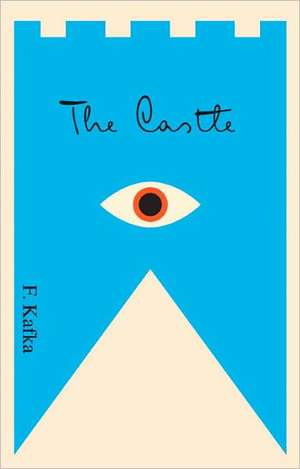
The Castle
Autor Franz Kafka Traducere de Willa Muir, Edwin Muiren Limba Engleză Paperback – 15 dec 1998
Preț: 100.09 lei
Puncte Express: 150
Carte disponibilă
Livrare economică 16-30 noiembrie
Livrare prin curier în România Termenul estimat este afișat lângă disponibilitate.
Transport gratuit de la 400.00 lei Plată online sau ramburs, în funcție de opțiunile comenzii.
Retur gratuit în 14 zile Comandă securizată și suport în română.
Specificații
ISBN-13: 9780805211061
ISBN-10: 0805211063
Pagini: 352
Dimensiuni: 202 x 129 x 18 mm
Greutate: 0.35 kg
Editura: Random House LLC US
Colecția Schocken
Locul publicării:United States
ISBN-10: 0805211063
Pagini: 352
Dimensiuni: 202 x 129 x 18 mm
Greutate: 0.35 kg
Editura: Random House LLC US
Colecția Schocken
Locul publicării:United States
V-ar putea interesa
-
 The Complete NovelsFranz Kafka-25%Preț: 103.16 lei138.39 lei
 -
 Kafka: A Very Short IntroductionRitchie Robertson-20%Preț: 55.70 lei69.81 lei
 -
 The CastleFranz KafkaPreț: 59.46 lei
 -
 The Metamorphosis and Other StoriesFranz KafkaPreț: 51.77 lei
 -
 The Metamorphosis and Other StoriesFranz Kafka-19%Preț: 23.12 lei28.58 lei
 -
 Best Short StoriesFranz Kafka-19%Preț: 71.47 lei88.51 lei
 -
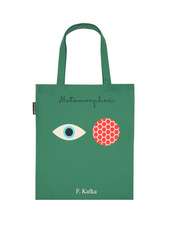 Franz Kafka Metamorphosis & Castle Tote BagOut Of PrintPreț: 150.63 lei
 -
 The Complete Short StoriesFranz Kafka-28%Preț: 68.19 lei94.91 lei
 -
 The Complete StoriesFranz KafkaPreț: 118.06 lei
 -
 In the Penal Colony and Other StoriesFranz KafkaPreț: 57.38 lei
 -
 A Country DoctorFranz KafkaPreț: 47.70 lei
 -
 The TrialFranz KafkaPreț: 43.19 lei
 -
 The MetamorphosisFranz KafkaPreț: 32.68 lei
 -
 The Castle: A NovelSeth RogoffPreț: 107.99 lei
 -
 Metamorphoses: In Search of Franz KafkaKarolina Watroba-19%Preț: 63.97 lei78.90 lei
 -
 The Unhappiness of Being a Single ManFranz KafkaPreț: 71.60 lei
 -
 Best of Kafka (Collector's Edition)Franz KafkaPreț: 78.69 lei
 -
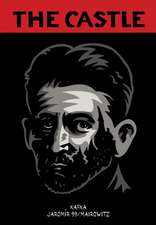 The CastleDavid Zane-11%Preț: 80.44 lei90.74 lei
 -
 Lovers of Franz K.Burhan Sonmez-20%Preț: 74.64 lei92.88 lei
Notă biografică
The son of a well-to-do merchant, Franz Kafka was born in Prague in 1883 and died of tuberculosis in a sanitorium near Vienna in 1924. After earning a law degree in 1906, he worked most of his adult life at the Workers Accident Insurance Company for the Kingdom of Bohemia in Prague. Only a small portion of his writings were published during his lifetime; most of them, including the three unfinished novels, Amerika, The Trial, and The Castle, were published posthumously.
Mark Harman holds a Ph.D. from Yale University and has taught German and Irish literature at Oberlin and Dartmouth. In addition to writing scholarly essays on Kafka and other modern authors, he has edited and co-translated Robert Walser Rediscovered: Stories, Fairy-Tale Plays, and Critical Responses and has translated Soul of the Age: Selected Letters of Hermann Hesse, 1891-1962. He teaches literature at the University of Pennsylvania.
Mark Harman holds a Ph.D. from Yale University and has taught German and Irish literature at Oberlin and Dartmouth. In addition to writing scholarly essays on Kafka and other modern authors, he has edited and co-translated Robert Walser Rediscovered: Stories, Fairy-Tale Plays, and Critical Responses and has translated Soul of the Age: Selected Letters of Hermann Hesse, 1891-1962. He teaches literature at the University of Pennsylvania.
Descriere
Descriere de la o altă ediție sau format:
A darkly comic novel from one of the greatest writers of the twentieth century, The Castle follows a man grappling with his inscrutable new master's authority, now freshly repackaged for the Union Square & Co. Signature Classics Line. Published posthumously in 1926, The Castle is Franz Kafka's final, unfinished novel, and a dark, surrealistic exploration of bureaucracy and alienation. Known or its absurdity and labrinthine plot, the novel follows a land surveyor known as "K" who, after moving for work, is drawn to a mysterious yet inaccessible castle that governs his new village. Irving Howe praised the book as projecting "a greater strength of will than we have encountered in Kafka’s earlier writings—an effort to overcome the muteness of existence.”
A darkly comic novel from one of the greatest writers of the twentieth century, The Castle follows a man grappling with his inscrutable new master's authority, now freshly repackaged for the Union Square & Co. Signature Classics Line. Published posthumously in 1926, The Castle is Franz Kafka's final, unfinished novel, and a dark, surrealistic exploration of bureaucracy and alienation. Known or its absurdity and labrinthine plot, the novel follows a land surveyor known as "K" who, after moving for work, is drawn to a mysterious yet inaccessible castle that governs his new village. Irving Howe praised the book as projecting "a greater strength of will than we have encountered in Kafka’s earlier writings—an effort to overcome the muteness of existence.”
Recenzii
“Of all Kafka’s fiction this is the most personal. K. is not of course a mouthpiece for Kafka–he lacks Kafka’s grave intelligence and humor–but his inner conflict between a taste for ordinary life and the demands imposed by his quest were in good part shared by Kafka . . . The Castle projects a greater strength of will than we have encountered in Kafka’s earlier writings–an effort to overcome the muteness of existence.” –from the Introduction by Irving Howe