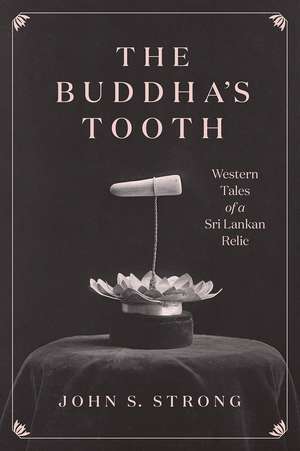
The Buddha's Tooth: Western Tales of a Sri Lankan Relic: Buddhism and Modernity
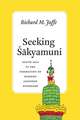
Autor Professor John S. Strongen Limba Engleză Paperback – 22 oct 2021
Bazându-ne pe arhivele istoriografice ale perioadelor coloniale din Asia de Sud, The Buddha's Tooth oferă o examinare riguroasă a modului în care puterile occidentale au manipulat obiectele sacre pentru a-și consolida controlul politic. Autorul Professor John S. Strong investighează două studii de caz fundamentale care au modelat percepția europeană asupra budismului. Ne-a atras atenția modul în care autorul deconstruiește narațiunile despre distrugerea publică a unui dinte de către portughezi în secolul al XVI-lea și, ulterior, saga administrativă britanică a relicvei Daḷadā, din 1815 până la vizita Reginei Elisabeta a II-a în 1954. Structura volumului este binară și cronologică: prima parte analizează sursele portugheze și procesul simbolic al relicvei, în timp ce a doua parte se concentrează pe 'dintele cosmopolit' sub administrație britanică, evidențiind convenția din Kandy și opoziția misionară. Comparabil cu Theravada Buddhism and the British Encounter de Elizabeth Harris în rigurozitate, volumul de față este actualizat pentru a include o perspectivă mai largă asupra modernității religioase, integrând detalii despre modul în care aceste relicve au devenit puncte de tensiune între secularismul colonial și identitatea locală. Stilul este academic, specific seriei Buddhism and Modernity, utilizând ilustrații și tabele pentru a clarifica evoluția istorică a acestor legende occidentale.





Preț: 241.64 lei
Carte disponibilă
Livrare economică 13-27 mai
Livrare express 29 aprilie-05 mai pentru 34.39 lei
Specificații
ISBN-10: 022680173X
Pagini: 352
Ilustrații: 9 halftones, 2 tables
Dimensiuni: 152 x 229 x 36 mm
Greutate: 0.51 kg
Editura: University of Chicago Press
Colecția University of Chicago Press
Seria Buddhism and Modernity
V-ar putea interesa
-
 Why Airplanes Crash: Aviation Safety in a Changing WorldClinton V. Oster-27%Preț: 860.38 lei1173.67 lei
 -
 Relics of the BuddhaJohn S. Strong-23%Preț: 531.01 lei689.62 lei
 -
 The Legend and Cult of UpaguptaJohn S. Strong-19%Preț: 417.73 lei515.71 lei
 -
 -18%Preț: 1194.62 lei1456.84 lei
 -
 The Freudian ReadingLis Møller-11%Preț: 451.13 lei506.88 lei
 -
 Explorations Into Urban StructureMelvin M Webber-11%Preț: 454.69 lei510.89 lei
 -
 Hopewell VillageJoseph E Walker-11%Preț: 469.30 lei527.31 lei
 -
 Social Determinants of Moral IdeasMaria Ossowska-11%Preț: 450.65 lei506.35 lei
 -
 The Justification of the LawClarence Morris-11%Preț: 451.63 lei507.45 lei
 -
 The Family in HistoryCharles E. Rosenberg-11%Preț: 453.02 lei509.01 lei
 -
 Housing, Culture, and DesignSetha M Low-11%Preț: 464.71 lei522.14 lei
 -
 Laszlo Moholy-NagyLouis KaplanPreț: 220.98 lei
 -
 Neither Cargo nor CultMartha KaplanPreț: 221.18 lei
 -
 Troubled BodiesPaul A KomesaroffPreț: 242.22 lei
 -
 From Two Republics to One DividedMark ThurnerPreț: 220.98 lei
 -
 The Third EyeFatimah Tobing RonyPreț: 245.95 lei
 -
 Immigrant ActsLisa LowePreț: 195.10 lei
 -
 Dancing in Spite of Myself – Essays on Popular CultureLawrence GrossbergPreț: 245.17 lei
 -
 The Tatars of CrimeaEdward A AllworthPreț: 283.55 lei
 -
 BuddhismsJohn S Strong-11%Preț: 204.63 lei229.15 lei
 -
 The BuddhaJohn StrongPreț: 69.94 lei
De ce să citești această carte
Această lucrare este esențială pentru cercetătorii în istoria religiilor și studiile coloniale, oferind o perspectivă rară asupra modului în care obiectele sacre devin instrumente politice. Cititorul câștigă o înțelegere profundă a intersecției dintre budism și modernitate, fiind un studiu de caz exemplar despre cum narațiunile coloniale au influențat receptarea budismului în Occident. Este o recomandare certă pentru cei care urmăresc dinamica dintre putere și sacralitate în Asia de Sud.
Despre autor
Professor John S. Strong este un specialist recunoscut în studiul budismului, cu o expertiză vastă în venerarea relicvelor și biografiile lui Buddha. Publicată prin University of Chicago Press, opera sa se distinge prin capacitatea de a sintetiza surse textuale complexe și date istorice pentru a explica practici religioase adesea neînțelese de observatorii occidentali. Contribuția sa în volumul de față reflectă o carieră dedicată înțelegerii modului în care tradițiile budiste supraviețuiesc și se transformă în contact cu presiunile politice și culturale externe.
Descriere scurtă
Bodily relics such as hairs, teeth, fingernails, pieces of bone—supposedly from the Buddha himself—have long served as objects of veneration for many Buddhists. Unsurprisingly, when Western colonial powers subjugated populations in South Asia, they used, manipulated, redefined, and even destroyed these objects to exert control.
In The Buddha’s Tooth, John S. Strong examines Western stories, from the sixteenth to the twentieth century, surrounding two significant Sri Lankan sacred objects to illuminate and concretize colonial attitudes toward Asian religions. First, he analyzes a tale about the Portuguese capture and public destruction, in the mid-sixteenth century, of a tooth later identified as a relic of the Buddha. Second, he switches gears to look at the nineteenth-century saga of British dealings with another tooth relic of the Buddha—the famous Daḷadā enshrined in a temple in Kandy—from 1815, when it was taken over by English forces, to 1954, when it was visited by Queen Elizabeth II. As Strong reveals, the stories of both the Portuguese tooth and the Kandyan tooth reflect nascent and developing Western understandings of Buddhism, realizations of the cosmopolitan nature of the tooth, and tensions between secular and religious interests.
Notă biografică
Cuprins
Note on Usage
Introduction
Part I : The Portuguese and the Tooth Relic
One / The Tale of the Portuguese Tooth and Its Sources
Two / Where the Tooth Was Found: Traditions about the Location of the Relic in Sri Lanka
Three / Whose Tooth Was It? Traditions about the Identity of the Relic
Four / The Trial of the Tooth
Five / The Destruction of the Tooth
Conspectus of Part One / The Storical Evolution of the Tales of the Portuguese Tooth
Part II : The British and the Tooth Relic
Six / The Cosmopolitan Tooth: The Relic in Kandy before the British Became Aware of It
Seven / The British Takeover of 1815 and the Kandyan Convention
Eight / The Relic Returns: The Tooth and Its Properties Restored to the Temple
Nine / The Relic Lost and Recaptured: The Tooth and the Rebellion of 1817–1818
Ten / The Relic Disestablished: Missionary Oppositions to the Tooth
Eleven / Showings of the Tooth: The Story of the King of Siam’s Visit (1897)
Twelve / Showings of the Tooth: The Story of Queen Elizabeth’s Shoes (1954)
Summary and Conclusion
References
Index