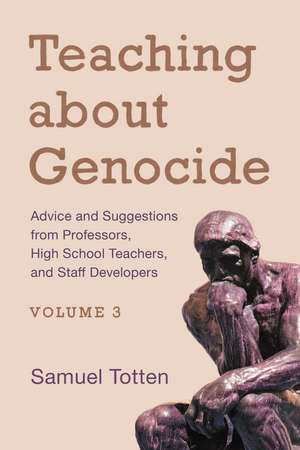
Teaching about Genocide: Advice and Suggestions from Professors, High School Teachers, and Staff Developers, Volume 3
Editat de Samuel Tottenen Limba Engleză Hardback – 27 oct 2020
Preț: 488.04 lei
Preț vechi: 690.43 lei
-29%
Puncte Express: 732
Carte tipărită la comandă
Livrare economică 03-17 decembrie
Livrare prin curier în România Termenul estimat este afișat lângă disponibilitate.
Transport gratuit pentru acest produs Plată online sau ramburs, în funcție de opțiunile comenzii.
Retur gratuit în 14 zile Comandă securizată și suport în română.
Specificații
ISBN-13: 9781475855999
ISBN-10: 1475855990
Pagini: 270
Ilustrații: 1 b/w photo; 5 tables
Dimensiuni: 158 x 230 x 16 mm
Greutate: 0.63 kg
Editura: Bloomsbury Publishing
Colecția Rowman & Littlefield
Locul publicării:New York, United States
ISBN-10: 1475855990
Pagini: 270
Ilustrații: 1 b/w photo; 5 tables
Dimensiuni: 158 x 230 x 16 mm
Greutate: 0.63 kg
Editura: Bloomsbury Publishing
Colecția Rowman & Littlefield
Locul publicării:New York, United States
V-ar putea interesa
-
 An Essay on the Principle of Population and Other WritingsThomas MalthusPreț: 79.76 lei
 -
 -30%Preț: 843.83 lei1206.79 lei
 -
 Preț: 232.26 lei
 -
 Buenos Aires: 400 YearsStanley R. RossPreț: 195.74 lei
 -
 No Shame in My GameKatherine S. NewmanPreț: 127.69 lei
 -
 History of Future CitiesDaniel BrookPreț: 192.64 lei
 -
 -18%Preț: 1252.93 lei1527.97 lei
 -
 Centuries of Genocide: Essays and Eyewitness AccountsSamuel Totten-15%Preț: 503.93 lei592.86 lei
 -
 Population and SocietyGregg Lee CarterPreț: 175.86 lei
 -
 Life on the BrinkPhilip CafaroPreț: 269.46 lei
 -
 Pioneers of Genocide StudiesSteven Jacobs-15%Preț: 449.01 lei528.24 lei
 -
 Uprooting Urban AmericaHorace R. HallPreț: 397.20 lei
 -
 Sudan's Nuba Mountains People Under SiegeSamuel TottenPreț: 305.39 lei
 -
 No Matter How Loud I ShoutEdward HumesPreț: 110.54 lei
 -
 Population 10 BillionProfessor Danny Dorling-25%Preț: 75.84 lei101.76 lei
Cuprins
Part 1: High School Teachers and Staff Developers
Chapter 1: "Providing Students with the Opportunity to Engage with Survivors of Genocide" by Michael Anthony
Chapter 2: "A Global Collaborative Approach to Genocide Education" by Kate Weckesser English
Chapter 3: "The Bosnian Genocide: Teaching Ideas and Resources"by Lisa M. Adeli
Chapter 4: "Happening Now: The Rohingya Genocide in Myanmar, A Jigsaw Activity Using Mace's 10 Stages of Genocide" by Frank J. Pérez
Part 2: Professors
Chapter 5: "If 'Never Again!' Is a Key Theme of Genocide Studies, Perhaps the Typical Approach to Genocide Education Needs to Be Reconsidered" by Samuel Totten
Chapter 6: "Teaching 'Introduction to Genocide Studies'" by Ashley L. Greene.
Chapter 7: "Rewriting the Genocide Convention" byTracy H. Slagter
Chapter 8: "Our Nature in Genocide: Teaching Atrocity from Within the Human Continuum" by Timothy Horner
Chapter 9: "Extraordinary Atrocities, Ordinary People: Teaching Genocide through the Lenses of Banal and Fetishized Evils" by Cathryn van Kessel
Chapter 10: "Moving Beyond Perpetrators, Victims, Bystanders, and Upstanders" by Hollie Nyseth Brehm and Michelle L. O'Brien
Chapter 11: "Teaching About Perpetrators and Perpetration in Genocide" by Timothy Williams
Chapter 12 :"Understanding Perpetrators?" by Susanne C. Knittel
Chapter 13: "Confronting Mass Atrocities: Interplays Between Legal Norms, Political Interests, and Moral Imperatives for Action" by Eyal Mayroz
Chapter 14 :"Teaching About Resistance to Genocide"by Khatchig Mouradian
Chapter 15 :"Balkan Stereotypes and the Problem of Teaching Southeastern European Genocide" by James Frusetta
Chapter 16: "From Student to Citizen: The Impact of Personal Narratives in University-Level Genocide Education" by Ari Kohen and Gerald J. Steinacher
Chapter 17: "Does Place Matter? Using Inquiry to Explore the Geography of Genocide" by Aaron Johnson and Lisa Pennington
Chapter 18: "The Complexity of Genocide: Atrocity Prevention and Interactive Learning" by Benjamin Meiches
Chapter 19: "Teaching Economic Aspects of Genocide and Their Prevention" by Charles H. Anderton
Chapter 20: "In the Margins: Teaching About Genocide While Teaching Writing" by Taleen Mardirossian
Chapter 21: "Advice on Teaching About Genocide with Film" by Glenn Mitoma and Alan S. Marcus
Chapter 22: "Art and Genocide in University Classrooms" by Mark Celinscak
Chapter 23: "Genocide Site Visits as an Educational Tool: A Bosnian Experience" by Hikmet Karcic.
Chapter 24: "Developing an 'Heroic Imagination' through Study Abroad in Guatemala by Trisha Posey and Kevin Simpson
Chapter 25: "The Potential and Limitations of Student Fieldwork on Continents and in Nations Other Than Their Own" by Timothy Williams
Chapter 26: "Genocide and the Promise of Positive Peace" by James G. Brown
Chapter 1: "Providing Students with the Opportunity to Engage with Survivors of Genocide" by Michael Anthony
Chapter 2: "A Global Collaborative Approach to Genocide Education" by Kate Weckesser English
Chapter 3: "The Bosnian Genocide: Teaching Ideas and Resources"by Lisa M. Adeli
Chapter 4: "Happening Now: The Rohingya Genocide in Myanmar, A Jigsaw Activity Using Mace's 10 Stages of Genocide" by Frank J. Pérez
Part 2: Professors
Chapter 5: "If 'Never Again!' Is a Key Theme of Genocide Studies, Perhaps the Typical Approach to Genocide Education Needs to Be Reconsidered" by Samuel Totten
Chapter 6: "Teaching 'Introduction to Genocide Studies'" by Ashley L. Greene.
Chapter 7: "Rewriting the Genocide Convention" byTracy H. Slagter
Chapter 8: "Our Nature in Genocide: Teaching Atrocity from Within the Human Continuum" by Timothy Horner
Chapter 9: "Extraordinary Atrocities, Ordinary People: Teaching Genocide through the Lenses of Banal and Fetishized Evils" by Cathryn van Kessel
Chapter 10: "Moving Beyond Perpetrators, Victims, Bystanders, and Upstanders" by Hollie Nyseth Brehm and Michelle L. O'Brien
Chapter 11: "Teaching About Perpetrators and Perpetration in Genocide" by Timothy Williams
Chapter 12 :"Understanding Perpetrators?" by Susanne C. Knittel
Chapter 13: "Confronting Mass Atrocities: Interplays Between Legal Norms, Political Interests, and Moral Imperatives for Action" by Eyal Mayroz
Chapter 14 :"Teaching About Resistance to Genocide"by Khatchig Mouradian
Chapter 15 :"Balkan Stereotypes and the Problem of Teaching Southeastern European Genocide" by James Frusetta
Chapter 16: "From Student to Citizen: The Impact of Personal Narratives in University-Level Genocide Education" by Ari Kohen and Gerald J. Steinacher
Chapter 17: "Does Place Matter? Using Inquiry to Explore the Geography of Genocide" by Aaron Johnson and Lisa Pennington
Chapter 18: "The Complexity of Genocide: Atrocity Prevention and Interactive Learning" by Benjamin Meiches
Chapter 19: "Teaching Economic Aspects of Genocide and Their Prevention" by Charles H. Anderton
Chapter 20: "In the Margins: Teaching About Genocide While Teaching Writing" by Taleen Mardirossian
Chapter 21: "Advice on Teaching About Genocide with Film" by Glenn Mitoma and Alan S. Marcus
Chapter 22: "Art and Genocide in University Classrooms" by Mark Celinscak
Chapter 23: "Genocide Site Visits as an Educational Tool: A Bosnian Experience" by Hikmet Karcic.
Chapter 24: "Developing an 'Heroic Imagination' through Study Abroad in Guatemala by Trisha Posey and Kevin Simpson
Chapter 25: "The Potential and Limitations of Student Fieldwork on Continents and in Nations Other Than Their Own" by Timothy Williams
Chapter 26: "Genocide and the Promise of Positive Peace" by James G. Brown
Recenzii
A much-needed and extraordinarily useful resource, Teaching about Genocide: Insights and Advice from Secondary Teachers and Professors, Volume 1, will provide educators with well-reasoned and experienced based information on teaching about genocide. Drawing upon the expertise of both secondary and college and university professors, this impressive work examines rationales for teaching about genocide and offers practical pedagogical strategies from a variety of academic disciplines and geographical locations. The importance of this issue demands a timely and powerful resource such as this book.
As public awareness of and interest in genocide and its disastrous effects continues to grow, the need for fresh, up-to-date approaches to its teaching is greater than ever. Totten is an experienced, professional educator, as well as a distinguished genocide scholar, who has assembled here a collection of original, insightful, theoretical, and practical studies on a wide variety of case studies and themes, useful for both secondary and post-secondary educators on genocide. Highly recommended.
Teaching about genocide is vital but challenging. By compiling the insights and advice of leading educators in the field, this book serves as an invaluable guide for those who would teach future generations to understand and combat this scourge of humanity.
Thirty-plus years ago, educator Ted Sizer noted that students learn best when "less is more." While Sam Totten's latest edited book on Teaching About Genocide. seemingly offers a voluminous opposite, educators, at varying levels, will find extensive, rich, and varied resources from which to choose, to meet Sizer's "in-depth" standards. Volume One of Two Volumes provides insights and advice from secondary teachers (9) and professors (13), many with decades of teaching experience, not to mention writings (including 46 annotated works) touching on every major identified genocide. Key is the volume's interdisciplinary, as well as multinational approach. The time-deprived educator (Is there any other kind?) will find abundant strategies, caveats, and electronic resource possibilities. Significantly, "political will" is contrasted with "political won't," as students are encouraged to become "constructive activists" in an age of genocides.
As public awareness of and interest in genocide and its disastrous effects continues to grow, the need for fresh, up-to-date approaches to its teaching is greater than ever. Totten is an experienced, professional educator, as well as a distinguished genocide scholar, who has assembled here a collection of original, insightful, theoretical, and practical studies on a wide variety of case studies and themes, useful for both secondary and post-secondary educators on genocide. Highly recommended.
Teaching about genocide is vital but challenging. By compiling the insights and advice of leading educators in the field, this book serves as an invaluable guide for those who would teach future generations to understand and combat this scourge of humanity.
Thirty-plus years ago, educator Ted Sizer noted that students learn best when "less is more." While Sam Totten's latest edited book on Teaching About Genocide. seemingly offers a voluminous opposite, educators, at varying levels, will find extensive, rich, and varied resources from which to choose, to meet Sizer's "in-depth" standards. Volume One of Two Volumes provides insights and advice from secondary teachers (9) and professors (13), many with decades of teaching experience, not to mention writings (including 46 annotated works) touching on every major identified genocide. Key is the volume's interdisciplinary, as well as multinational approach. The time-deprived educator (Is there any other kind?) will find abundant strategies, caveats, and electronic resource possibilities. Significantly, "political will" is contrasted with "political won't," as students are encouraged to become "constructive activists" in an age of genocides.