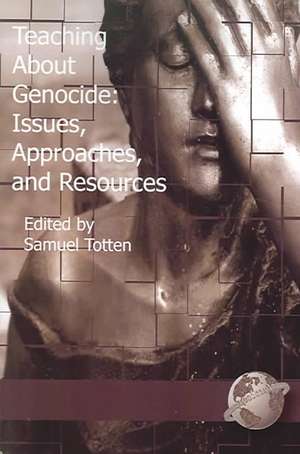
Teaching about Genocide
Editat de Samuel Tottenen Limba Engleză Paperback – 5 sep 2000
Preț: 433.23 lei
Puncte Express: 650
Carte tipărită la comandă
Livrare economică 03-17 decembrie
Livrare prin curier în România Termenul estimat este afișat lângă disponibilitate.
Transport gratuit pentru acest produs Plată online sau ramburs, în funcție de opțiunile comenzii.
Retur gratuit în 14 zile Comandă securizată și suport în română.
Specificații
ISBN-13: 9781593110741
ISBN-10: 159311074X
Pagini: 360
Dimensiuni: 156 x 234 x 20 mm
Greutate: 0.55 kg
Ediția:New.
Editura: Information Age Publishing
ISBN-10: 159311074X
Pagini: 360
Dimensiuni: 156 x 234 x 20 mm
Greutate: 0.55 kg
Ediția:New.
Editura: Information Age Publishing
V-ar putea interesa
-
 An Essay on the Principle of Population and Other WritingsThomas MalthusPreț: 79.76 lei
 -
 -30%Preț: 843.83 lei1206.79 lei
 -
 Preț: 232.26 lei
 -
 Buenos Aires: 400 YearsStanley R. RossPreț: 195.74 lei
 -
 No Shame in My GameKatherine S. NewmanPreț: 127.69 lei
 -
 History of Future CitiesDaniel BrookPreț: 192.64 lei
 -
 -18%Preț: 1252.93 lei1527.97 lei
 -
 Centuries of Genocide: Essays and Eyewitness AccountsSamuel Totten-15%Preț: 503.93 lei592.86 lei
 -
 Population and SocietyGregg Lee CarterPreț: 175.86 lei
 -
 Life on the BrinkPhilip CafaroPreț: 269.46 lei
 -
 Pioneers of Genocide StudiesSteven Jacobs-15%Preț: 449.01 lei528.24 lei
 -
 Uprooting Urban AmericaHorace R. HallPreț: 397.20 lei
 -
 Sudan's Nuba Mountains People Under SiegeSamuel TottenPreț: 305.39 lei
 -
 No Matter How Loud I ShoutEdward HumesPreț: 110.54 lei
 -
 Population 10 BillionProfessor Danny Dorling-25%Preț: 75.84 lei101.76 lei
Descriere
Descriere de la o altă ediție sau format:
This book presents the insights, advice and suggestions of secondary level teachers and professors in relation to teaching about various facets of genocide. The contributions are extremely eclectic, ranging from the basic concerns when teaching about genocide to a discussion as to why it is critical to teach students about more general human rights violations during a course on genocide, and from a focus on specific cases of genocide to various pedagogical strategies ideal for teaching about genocide.
This book presents the insights, advice and suggestions of secondary level teachers and professors in relation to teaching about various facets of genocide. The contributions are extremely eclectic, ranging from the basic concerns when teaching about genocide to a discussion as to why it is critical to teach students about more general human rights violations during a course on genocide, and from a focus on specific cases of genocide to various pedagogical strategies ideal for teaching about genocide.
Cuprins
Introduction - Samuel Totten
Part One: Insights and Advice from Secondary Level Teachers
1. "Student as Worker in Coming to Understand Modern Genocide: From KWL to Stanton's Ten Stages to Case Studies to Engaging in a Debate" by Keith Eaton (English Teacher, Mount Desert Island High School, Bar Harbor, Maine)
2. "Challenging or Passively Accepting Questionable Authority" by Jamie Allen (History Teacher, Centennial Regional High School, Greenfield Park, Quebec, Canada)
3. "The Power of Story: Teaching About Genocide Through Literature Circles" by Kelley Szany (Director of Education, Illinois Holocaust Museum & Education Center, Skokie, Illinois)
4. "Reader as Witness: Introducing Students to Genocide Through Literature" by
Dr. Sarah J. Donovan (English Language Arts Teacher, Plum Grove Junior High, Rolling Meadows, Illinois, and Adjunct Instructor at DePaul University and Dominican University).
5. "Unsettling Narratives: Teaching About the Genocide of Indigenous Peoples in North America" by George Dalbo (Social Studies Teacher, Mounds Park Academy, St. Paul, Minnesota; and Ph.D Candidate, University of Minnesota)
6. "Teaching the Armenian Genocide in a Nation Whose Government Refuses to Acknowledge It" by Dr. Mark Gudgel (English and Honor Humanities Teacher, Omaha North High School, Omaha, Nebraska, and Adjunct Instructor, Southeast Community College, English Department)
7. "Flora's Journey: Teaching the Cultural Events and Significance of the Armenian Genocide" by Brent Beerman (English and Theater Teacher, Crescenta Valley High School, La Crescenta, California)
8. "Using Rebecca Tinsley's When the Stars Fall to Earth in the Classroom to Teach About the Darfur Genocide" by Kimberly Klett (English Teacher, Dobson High School, Mesa, Arizona)
9. "Simplicity and Complexity" by Dr. Mary Lee Webeck (Director of Education, Holocaust Museum Houston, Houston, Texas)
Part Two: Insights and Advice from Professors
10. "At the Threshold of Genocide Studies: On Not Being a Gatekeeper" by Dr. Andrew Woolford (Professor, Department of Sociology, University of Manitoba)
11. "Teaching Ten Stages of Genocide" by Dr. Gregory H. Stanton (Research Professor in Genocide Studies and Prevention, School for Conflict Analysis and Resolution
George Mason University, Fairfax, Virginia)
12. "The Three "Ds" of Teaching History: A Focus on Genocide" by Dr. Khatchig Mouradian (Visiting Assistant Professor, Departments of History and Sociology, Rutgers University, Newark, New Jersey)
13. "Teaching About Genocide: Three Major Pedagogical Issues Worthy of Serious Consideration by Teachers" by Dr. Rubina Peroomian (Research Associate, Department of Near Eastern. Languages and Cultures. University of California, Los Angeles)
14. "Incorporating the Issue of Genocide into History Courses: Enlightenment and Mobilization" by Dr. John Hubbel Weiss (Associate Professor of History, Cornell University, Ithaca, New York)
15. "Towards a Critical Pedagogy for Genocide Education" by Dr. James G. Brown (Professor of Teaching, Joint Appointment in the Department of Peace Studies and College of Educational Studies, Chapman University, Orange, California)
16. "Teaching About the Bosnian Genocide" by Dr. Fred P. Cocozzelli (Associate Professor, Department of Government and Politics, St. John's University, Queens, New York)
17. Adam Muller by (Professor and Director of Peace and Conflict Studies, University of Manitoba, Winnipeg, Canada)
18. "A Focus on the Prevention of Genocide" by Dr. Agnieszka Bienczyk-Missala (Assistant Professor, Institute of International Relations, University of Warsaw, Poland)
19. "Educating the Military.and Others. Building the Basis for Effective Atrocity Prevention" by Dr. David Frey (Associate Professor of History and Director, Center for Holocaust and Genocide Studies, United States Military Academy at West Point)
20. "Teaching Complexity via Documentaries: Trauma and Co-existence after Genocide in Rwanda" by Dr. Gerise Herndon (Professor of English and Global Studies, Nebraska Wesleyan University, Lincoln, Nebraska)
21. "Acts of Loving Kindness: Genocide Education in Cambodia" by Dr. Theresa de Langis (Associate Professor of Global Affairs, and Director, Center for Southeast Asian Studies, American University of Phnom Penh, Cambodia)
Part One: Insights and Advice from Secondary Level Teachers
1. "Student as Worker in Coming to Understand Modern Genocide: From KWL to Stanton's Ten Stages to Case Studies to Engaging in a Debate" by Keith Eaton (English Teacher, Mount Desert Island High School, Bar Harbor, Maine)
2. "Challenging or Passively Accepting Questionable Authority" by Jamie Allen (History Teacher, Centennial Regional High School, Greenfield Park, Quebec, Canada)
3. "The Power of Story: Teaching About Genocide Through Literature Circles" by Kelley Szany (Director of Education, Illinois Holocaust Museum & Education Center, Skokie, Illinois)
4. "Reader as Witness: Introducing Students to Genocide Through Literature" by
Dr. Sarah J. Donovan (English Language Arts Teacher, Plum Grove Junior High, Rolling Meadows, Illinois, and Adjunct Instructor at DePaul University and Dominican University).
5. "Unsettling Narratives: Teaching About the Genocide of Indigenous Peoples in North America" by George Dalbo (Social Studies Teacher, Mounds Park Academy, St. Paul, Minnesota; and Ph.D Candidate, University of Minnesota)
6. "Teaching the Armenian Genocide in a Nation Whose Government Refuses to Acknowledge It" by Dr. Mark Gudgel (English and Honor Humanities Teacher, Omaha North High School, Omaha, Nebraska, and Adjunct Instructor, Southeast Community College, English Department)
7. "Flora's Journey: Teaching the Cultural Events and Significance of the Armenian Genocide" by Brent Beerman (English and Theater Teacher, Crescenta Valley High School, La Crescenta, California)
8. "Using Rebecca Tinsley's When the Stars Fall to Earth in the Classroom to Teach About the Darfur Genocide" by Kimberly Klett (English Teacher, Dobson High School, Mesa, Arizona)
9. "Simplicity and Complexity" by Dr. Mary Lee Webeck (Director of Education, Holocaust Museum Houston, Houston, Texas)
Part Two: Insights and Advice from Professors
10. "At the Threshold of Genocide Studies: On Not Being a Gatekeeper" by Dr. Andrew Woolford (Professor, Department of Sociology, University of Manitoba)
11. "Teaching Ten Stages of Genocide" by Dr. Gregory H. Stanton (Research Professor in Genocide Studies and Prevention, School for Conflict Analysis and Resolution
George Mason University, Fairfax, Virginia)
12. "The Three "Ds" of Teaching History: A Focus on Genocide" by Dr. Khatchig Mouradian (Visiting Assistant Professor, Departments of History and Sociology, Rutgers University, Newark, New Jersey)
13. "Teaching About Genocide: Three Major Pedagogical Issues Worthy of Serious Consideration by Teachers" by Dr. Rubina Peroomian (Research Associate, Department of Near Eastern. Languages and Cultures. University of California, Los Angeles)
14. "Incorporating the Issue of Genocide into History Courses: Enlightenment and Mobilization" by Dr. John Hubbel Weiss (Associate Professor of History, Cornell University, Ithaca, New York)
15. "Towards a Critical Pedagogy for Genocide Education" by Dr. James G. Brown (Professor of Teaching, Joint Appointment in the Department of Peace Studies and College of Educational Studies, Chapman University, Orange, California)
16. "Teaching About the Bosnian Genocide" by Dr. Fred P. Cocozzelli (Associate Professor, Department of Government and Politics, St. John's University, Queens, New York)
17. Adam Muller by (Professor and Director of Peace and Conflict Studies, University of Manitoba, Winnipeg, Canada)
18. "A Focus on the Prevention of Genocide" by Dr. Agnieszka Bienczyk-Missala (Assistant Professor, Institute of International Relations, University of Warsaw, Poland)
19. "Educating the Military.and Others. Building the Basis for Effective Atrocity Prevention" by Dr. David Frey (Associate Professor of History and Director, Center for Holocaust and Genocide Studies, United States Military Academy at West Point)
20. "Teaching Complexity via Documentaries: Trauma and Co-existence after Genocide in Rwanda" by Dr. Gerise Herndon (Professor of English and Global Studies, Nebraska Wesleyan University, Lincoln, Nebraska)
21. "Acts of Loving Kindness: Genocide Education in Cambodia" by Dr. Theresa de Langis (Associate Professor of Global Affairs, and Director, Center for Southeast Asian Studies, American University of Phnom Penh, Cambodia)
Recenzii
A much-needed and extraordinarily useful resource, Teaching about Genocide: Insights and Advice from Secondary Teachers and Professors, Volume 1, will provide educators with well-reasoned and experienced based information on teaching about genocide. Drawing upon the expertise of both secondary and college and university professors, this impressive work examines rationales for teaching about genocide and offers practical pedagogical strategies from a variety of academic disciplines and geographical locations. The importance of this issue demands a timely and powerful resource such as this book.
As public awareness of and interest in genocide and its disastrous effects continues to grow, the need for fresh, up-to-date approaches to its teaching is greater than ever. Totten is an experienced, professional educator, as well as a distinguished genocide scholar, who has assembled here a collection of original, insightful, theoretical, and practical studies on a wide variety of case studies and themes, useful for both secondary and post-secondary educators on genocide. Highly recommended.
Teaching about genocide is vital but challenging. By compiling the insights and advice of leading educators in the field, this book serves as an invaluable guide for those who would teach future generations to understand and combat this scourge of humanity.
Thirty-plus years ago, educator Ted Sizer noted that students learn best when "less is more." While Sam Totten's latest edited book on Teaching About Genocide. seemingly offers a voluminous opposite, educators, at varying levels, will find extensive, rich, and varied resources from which to choose, to meet Sizer's "in-depth" standards. Volume One of Two Volumes provides insights and advice from secondary teachers (9) and professors (13), many with decades of teaching experience, not to mention writings (including 46 annotated works) touching on every major identified genocide. Key is the volume's interdisciplinary, as well as multinational approach. The time-deprived educator (Is there any other kind?) will find abundant strategies, caveats, and electronic resource possibilities. Significantly, "political will" is contrasted with "political won't," as students are encouraged to become "constructive activists" in an age of genocides.
As public awareness of and interest in genocide and its disastrous effects continues to grow, the need for fresh, up-to-date approaches to its teaching is greater than ever. Totten is an experienced, professional educator, as well as a distinguished genocide scholar, who has assembled here a collection of original, insightful, theoretical, and practical studies on a wide variety of case studies and themes, useful for both secondary and post-secondary educators on genocide. Highly recommended.
Teaching about genocide is vital but challenging. By compiling the insights and advice of leading educators in the field, this book serves as an invaluable guide for those who would teach future generations to understand and combat this scourge of humanity.
Thirty-plus years ago, educator Ted Sizer noted that students learn best when "less is more." While Sam Totten's latest edited book on Teaching About Genocide. seemingly offers a voluminous opposite, educators, at varying levels, will find extensive, rich, and varied resources from which to choose, to meet Sizer's "in-depth" standards. Volume One of Two Volumes provides insights and advice from secondary teachers (9) and professors (13), many with decades of teaching experience, not to mention writings (including 46 annotated works) touching on every major identified genocide. Key is the volume's interdisciplinary, as well as multinational approach. The time-deprived educator (Is there any other kind?) will find abundant strategies, caveats, and electronic resource possibilities. Significantly, "political will" is contrasted with "political won't," as students are encouraged to become "constructive activists" in an age of genocides.