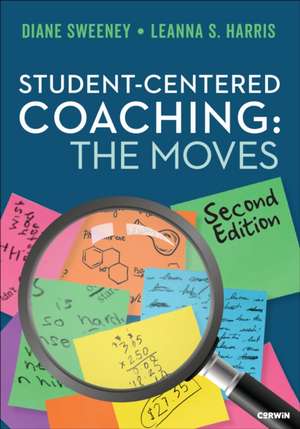
Student-Centered Coaching: The Moves
Autor Diane Sweeney, Leanna S. Harrisen Limba Engleză Paperback – 8 iul 2026
Bazându-se pe o serie bogată de instrumente testate pe teren și pe clipuri video originale care explică vizual mecanismele de interacțiune, Student-Centered Coaching: The Moves transformă teoria în acțiune directă în sala de clasă. Putem afirma că relevanța acestui volum rezidă în abordarea sa pragmatică: nu se limitează la concepte abstracte, ci oferă „mișcările” concrete pe care un coach trebuie să le execute înainte, în timpul și după finalizarea unei lecții pentru a sprijini dezvoltarea cadrului didactic și, implicit, progresul elevului. Lucrarea este structurată metodic, începând cu stabilirea obiectivelor ciclurilor de coaching și utilizarea țintelor de învățare, progresând apoi către pregătirea efectivă pentru intervenția în clasă. Fiecare capitol este calibrat pentru a răspunde nevoilor profesionale imediate, oferind secțiuni de „Lecții din teren” și seturi de tehnici aplicabile imediat. Merită menționat că acest titlu servește drept o extensie practică esențială pentru lucrările anterioare ale autoarei, precum Student-Centered Coaching: A Guide for K-8 Coaches and Principals și Student-Centered Coaching at the Secondary Level, completând cadrul teoretic cu un ghid de implementare pas cu pas. Spre deosebire de modelele care încearcă să „repare” deficiențele profesorilor, Diane Sweeney și Leanna S. Harris propun un parteneriat bazat pe datele evaluărilor formative. Credem că această schimbare de paradigmă este esențială pentru orice sistem educațional care urmărește o cultură a învățării continue, oferind coach-ilor strategii clare pentru a naviga prin provocările comune ale profesiei.
Preț: 250.82 lei
Carte disponibilă
Livrare economică 11-25 noiembrie
Livrare express 28 octombrie-03 noiembrie pentru 33.05 lei
Specificații
Pagini: 224
Dimensiuni: 252 x 177 x 14 mm
Greutate: 0.46 kg
Ediția:2 Revised edition
Editura: Sage Publications, Inc
V-ar putea interesa
-
 Change Forces - The SequelMichael G. FullanPreț: 361.09 lei
 -
 Preț: 463.23 lei
 -
 -18%Preț: 1416.89 lei1727.91 lei
 -
 Preț: 285.55 lei
 -
 Enabling AccessBarry Carpenter-18%Preț: 1003.26 lei1223.49 lei
 -
 -25%Preț: 219.85 lei292.52 lei
 -
 -25%Preț: 218.37 lei291.60 lei
 -
 Improving Your Leadership Intelligence: A Field Book for K-12 LeadersWanda S. Maulding Green-23%Preț: 265.00 lei344.68 lei
 -
 -25%Preț: 217.36 lei290.98 lei
 -
 -19%Preț: 314.30 lei388.84 lei
 -
 -32%Preț: 345.07 lei506.19 lei
 -
 -26%Preț: 175.85 lei236.81 lei
 -
 -27%Preț: 405.25 lei552.19 lei
 -
 -25%Preț: 218.65 lei291.77 lei
 -
 The Successful Principal: Concrete Strategies and Essential AdviceDr. Robert Cunard-25%Preț: 218.85 lei291.90 lei
 -
 Growing Leaders Within: A Process toward Teacher LeadershipMichael Coquyt-25%Preț: 218.85 lei291.90 lei
 -
 -27%Preț: 405.25 lei552.19 lei
 -
 -25%Preț: 218.85 lei291.90 lei
 -
 Leading Student-Centered CoachingDiane SweeneyPreț: 252.21 lei
 -
 The Essential Guide for Student-Centered CoachingDiane SweeneyPreț: 196.89 lei
De ce să citești această carte
Această carte este indispensabilă pentru coach-ii educaționali și liderii școlari care doresc să treacă de la simpla observare la un parteneriat activ cu profesorii. Cititorul câștigă acces la un set de instrumente verificate și exemple video care clarifică modul de intervenție în clasă, asigurând o corelare directă între efortul de coaching și rezultatele academice ale elevilor.
Despre autor
Diane Sweeney este consultant principal la Spark Innovation, specializându-se în coaching, alfabetizare și leadership educațional. Cu o experiență vastă ce include roluri de profesor, coach de alfabetizare și profesor universitar, ea sprijină activ cadrele didactice și liderii de districte în implementarea modelelor de învățare centrate pe elev. Expertiza sa este reflectată în numeroase lucrări de referință, precum Leading Student-Centered Coaching și The Essential Guide for Student-Centered Coaching, fiind recunoscută la nivel internațional pentru metodele sale bazate pe dovezi.
Notă biografică
Cuprins
ABOUT THE AUTHORS
INTRODUCTION
WHY STUDENT-CENTERED COACHING MATTERS
HOW STUDENT-CENTERED COACHING COMPARES WITH OTHER COACHING MODELS
OUR COACHING BELIEFS
STUDENT-CENTERED COACHING IS DRIVEN BY STUDENT EVIDENCE
CORE PRACTICES FOR STUDENT-CENTERED COACHING
MOVING FORWARD
CHAPTER 1: PARTNERING WITH TEACHERS TO LAUNCH COACHING CYCLES
THE MOVE-PARTNERING WITH TEACHERS TO LAUNCH COACHING CYCLES
WHY PARTNERING WITH TEACHERS TO LAUNCH COACHING CYCLES IS IMPORTANT
WHAT SETTING GOALS FOR COACHING CYCLES LOOKS LIKE
WHAT PARTNERING WITH TEACHERS TO LAUNCH COACHING CYCLES LOOKS LIKE
THINGS TO CONSIDER WHEN PARTNERING WITH TEACHERS TO LAUNCH COACHING CYCLES ACROSS LEVELS
TOOLS AND TECHNIQUES
CHAPTER 2: SETTING GOALS FOR COACHING CYCLES
THE MOVE-SETTING GOALS FOR COACHING CYCLES
WHY SETTING GOALS FOR COACHING CYCLES IS IMPORTANT
WHAT SETTING GOALS FOR COACHING CYCLES LOOKS LIKE
THINGS TO CONSIDER WHEN SETTING GOALS FOR COACHING CYCLES ACROSS LEVELS
TOOLS AND TECHNIQUES
CHAPTER 3: DEVELOPING AND USING LEARNING TARGETS
THE MOVE-DEVELOPING AND USING LEARNING TARGETS
WHY DEVELOPING AND USING LEARNING TARGETS IS IMPORTANT
WHAT DEVELOPING AND USING LEARNING TARGETS LOOKS LIKE
THINGS TO CONSIDER WHEN DEVELOPING AND USING LEARNING TARGETS ACROSS LEVELS
TOOLS AND TECHNIQUES
CHAPTER 4: CO-PLANNING WITH STUDENT EVIDENCE
THE MOVE-CO-PLANNING WITH STUDENT EVIDENCE
WHY CO-PLANNING WITH STUDENT EVIDENCE IS IMPORTANT
WHAT CO-PLANNING WITH STUDENT EVIDENCE LOOKS LIKE
THINGS TO CONSIDER WHEN CO-PLANNING WITH STUDENT EVIDENCE ACROSS LEVELS
TOOLS AND TECHNIQUES
CHAPTER 5: CO-TEACHING USING EFFECTIVE INSTRUCTIONAL PRACTICES
THE MOVE-CO-TEACHING USING EFFECTIVE INSTRUCTIONAL PRACTICES
WHY CO-TEACHING USING EFFECTIVE INSTRUCTIONAL PRACTICES IS IMPORTANT
WHAT CO-TEACHING USING EFFECTIVE INSTRUCTIONAL PRACTICES LOOKS LIKE
THINGS TO CONSIDER WHEN CO-TEACHING USING EFFECTIVE INSTRUCTIONAL PRACTICES ACROSS LEVELS
TOOLS AND TECHNIQUES
CHAPTER 6: MEASURING THE IMPACT OF COACHING ON STUDENT AND TEACHER LEARNING
THE MOVE-MEASURING THE IMPACT OF COACHING ON STUDENT AND TEACHER LEARNING
WHY MEASURING THE IMPACT OF COACHING ON STUDENT AND TEACHER LEARNING IS IMPORTANT
WHAT MEASURING THE IMPACT OF COACHING ON STUDENT AND TEACHER LEARNING LOOKS LIKE
THINGS TO CONSIDER FOR MEASURING THE IMPACT OF COACHING ON STUDENT AND TEACHER LEARNING ACROSS LEVELS
TOOLS AND TECHNIQUES
CHAPTER 7: PARTNERING WITH THE PRINCIPAL
THE MOVE-PARTNERING WITH THE PRINCIPAL
WHY PARTNERING WITH THE PRINCIPAL IS IMPORTANT
WHAT PARTNERING WITH THE PRINCIPAL LOOKS LIKE
THINGS TO CONSIDER WHEN PARTNERING WITH THE PRINCIPAL ACROSS LEVELS
TOOLS AND TECHNIQUES
CHAPTER 8: TAKING AN ASSET-BASED APPROACH TO COACHING
THE MOVE-TAKING AN ASSET-BASED APPROACH TO COACHING
WHY TAKING AN ASSET-BASED APPROACH TO COACHING IS IMPORTANT
WHAT TAKING AN ASSET-BASED APPROACH TO COACHING LOOKS LIKE
THINGS TO CONSIDER WHEN TAKING AN ASSET-BASED APPROACH TO COACHING ACROSS LEVELS
TOOLS AND TECHNIQUES
CLOSING
APPENDIX
RESOURCE A - SCENARIOS
RESOURCE B - RESULTS-BASED COACHING TOOL
RESOURCE C - COACHING LOGS ALIGNED WITH THE RESULTS-BASED COACHING TOOL
RESOURCE D - PLANNING TOOLS
RESOURCE E - AGREEMENTS AND PROTOCOLS
REFERENCES
INDEX
Descriere scurtă
The impact of the first edition of Student-Centered Coaching: The Moves is clear. With over 55,000 copies sold, thousands of coaches and leaders have used this resource to learn what it looks like to implement Student-Centered Coaching as their framework for instructional coaching. In this new edition, Sweeney and Harris expand on the strategies that were shared in the first edition to ensure that K-12 instructional coaches are prepared to thrive.
Student-Centered Coaching is a robust and evidence-based coaching model. It moves away from coaching centered around what teachers are or are not doing and instead focuses on partnering with teachers to design instruction that targets student outcomes. Whether you are new to Student-Centered Coaching or are looking to sharpen your existing skills, yoüll be supported by the fresh ideas that are shared in this book.
Readers will find:
- An expansive look into each of the core practices for Student-Centered Coaching
- Five brand new chapters focusing on using partnership agreements to launch coaching cycles, moves for co-planning and co-teaching, tips for building partnerships with the principal, and how to take an asset-based stance to coaching
- 13 new videos plus original clips that capture the work in action
- User friendly "moves" that are tailored for elementary, middle, and high school coaches
- Coaching tools such as logs and planners that can be used to stay on track with coaching conversations
Recenzii
"This book contains many hands-on techniques that can serve coaches well in working with teachers (and students). It addresses a lot of the common pitfalls that occur when learning to be a coach. The book serves as a great tool for experienced coaches as well as those just entering into the position."
Descriere
The essential coaching moves that every coach needs to know Student-centered coaching is a highly effective, evidence-based coaching model that shifts the focus from “fixing” teachers to collaborating with them to design instruction that targets student outcomes. But what does this look like in practice? This book shows you the day-to-day coaching moves that build powerful coaching relationships. Readers will find: Coaching moves that can be used before, during, and after lessons An abundance of field-tested tools and practices that can be put to immediate use Original video clips that depict and unpack key moves Richly detailed anecdotes from practicing coaches