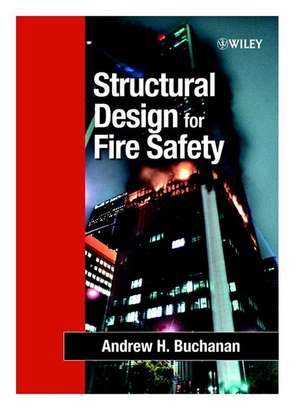
Structural Design for Fire Safety
Autor Andrew H Buchananen Limba Engleză Paperback – 15 mai 2001
În volumul Structural Design for Fire Safety, Andrew H Buchanan abordează integrat fundamentele fenomenului arderii și răspunsul mecanic al structurilor, punând accent pe standardele internaționale de proiectare și pe comportamentul materialelor de construcție esențiale: oțelul, betonul și lemnul. Într-o eră în care siguranța structurală este reglementată tot mai strict, această ediție revizuită devine un instrument de lucru indispensabil pentru calculul severității incendiilor și implementarea unor soluții de rezistență pasivă. Reținem din această lucrare rigoarea cu care sunt prezentate curbele timp-temperatură pentru incendiile dezvoltate în compartimente închise, oferind inginerilor capacitatea de a estima precis momentul critic al cedării structurale. Ne-a atras atenția modul în care autorul reușește să transforme teoria complexă a transferului de căldură în algoritmi de proiectare aplicabili, completând textul cu exemple de calcul și studii de caz care nu se regăsesc în alte resurse de profil. Pe linia practică a lucrării Structural Fire Engineering, dar cu un focus specific pe integrarea metodelor de calcul internaționale în procesul de design rațional, cartea facilitează dialogul tehnic între arhitecți, proiectanți de structuri și verificatori. Structura narativă a manualului urmărește un parcurs logic, de la fizica focului la evaluarea clădirilor existente și interpretarea codurilor de proiectare. Structural Design for Fire Safety nu se limitează la prezentarea normativelor, ci explică mecanismele degradării proprietăților materialelor sub sarcină termică, oferind soluții concrete pentru creșterea rezilienței clădirilor moderne.
Preț: 455.38 lei
Carte tipărită la comandă
Livrare economică 14-28 decembrie
Specificații
ISBN-10: 047189060X
Pagini: 448
Ilustrații: references, index
Dimensiuni: 170 x 244 x 24 mm
Greutate: 0.77 kg
Ediția:Revised edition
Editura: Wiley
Locul publicării:Chichester, United Kingdom
V-ar putea interesa
-
 Structural Engineer's Pocket Book: EurocodesFiona CobbPreț: 388.86 lei
-
 Williams, D: Structural MechanicsD. Williams-11%Preț: 652.66 lei733.32 lei
-
 StructuresJ. E. GordonPreț: 108.04 lei
-
 Structural Engineering: A Very Short IntroductionDavid Blockley-27%Preț: 51.50 lei70.82 lei
-
 Form and ForcesEdward Allen-11%Preț: 700.29 lei786.85 lei
-
 Structural Design for Fire SafetyAndrew H. Buchanan-19%Preț: 407.96 lei503.65 lei
-
 Designing Timber BuildingsFausto SannaPreț: 157.62 lei
-
 Fire-Resistant Design of StructuresSrinivasan ChandrasekaranPreț: 446.51 lei
-
 Funicular Structures: The Art of Building EfficientlyDamon BolhassaniPreț: 384.80 leiRecomandat
-
 Practising Wood in Architecture: Connecting Design, Construction and SustainabilityJames Benedict BrownPreț: 350.83 leiRecomandat
-
 Building Structures IllustratedFrancis D. K. ChingPreț: 432.01 lei
-
 -19%Preț: 615.63 lei760.04 lei
-
 The Structural Basis of ArchitectureBjørn N. SandakerPreț: 381.58 lei
-
 Structural Engineering for ArchitectsWilliam McLean-29%Preț: 191.38 lei271.02 lei
-
 Support I MaterialiseAlexander ReichelPreț: 333.87 lei
-
 -14%Preț: 753.56 lei876.23 lei
-
 Design Aids of Offshore Structures Under Special Environmental Loads including Fire ResistanceSrinivasan Chandrasekaran-18%Preț: 644.65 lei786.16 lei
-
 Steel DesignSayed Soleimani-25%Preț: 570.66 lei764.72 lei
Public țintă
1. Final year undergraduates in fire engineering, and postgraduates in structural fire engineering, practising structural engineers and building designers, students in fire protection (or fire safety) engineering 2. Structural engineering companies (such as Ove Arup (Arup Fire), London)3. Also useful to architects, building inspectors, code officials, firefighters, students, researchers and others interested in building fire safety, and manufacturers of building materials
De ce să citești această carte
Această resursă este esențială pentru inginerii structurali și studenții din anii terminali care doresc să stăpânească tehnicile de proiectare antifoc. Cititorul câștigă acces la metode de calcul validate internațional și la exemple practice pentru oțel, beton și lemn, facilitând luarea unor decizii de proiectare care echilibrează siguranța vieții cu integritatea materială a construcției.
Descriere scurtă
Structural Design for Fire Safety provides expert guidance on:
- interpreting code requirements for fire safety
- understanding the concepts of fire severity and fire resistance
- estimating time-temperature curves for fully developed compartment fires
- understanding the behaviour of structural elements and buildings exposed to fires
- designing steel, concrete and timber structures to resist fire exposure
- assessing the fire performance of existing structures
This is an essential book for structural engineers who wish to improve their understanding of buildings exposed to severe fires. It is also an ideal textbook for introductory courses in fire safety for a civil or structural engineering degree programme, and is vital reading for final year students in fire protection and fire safety engineering. Furthermore, it successfully bridges the information gap between fire safety engineers, structural engineers and building inspectors, and will be of significant interest to architects, code officials, building designers and firefighters.
Cuprins
Notation
Introduction
Fire Safety in Buildings
Overview
FireSafety Objectives
Process of Fire Development
Conceptual Framework for Fire Safety
Fire Resistance
Controlling Fire Spread
Building Construction for Fire Safety
Fire and Heat
Overview
Fuels
Combustion
Fire Initiation
Burning Objects
t-squared Fires
Pre-flashover Design Fires
Heat Transfer
Room Fires
Overview
Pre-flashover fires
Flashover
Post-flashover Fires
Design Fires
Other Factors
Fire Severity
Overview
Fire Severity and Fire Resistance
Fire Severity
Standard Fire
Equivalent Fire Severity
Fire Resistance
Overview
Fire Resistance
Assessing Fire Resistance
Fire-resistance Tests
Approved Fire-resistance Ratings
Fire Resistance by Calculation
Fire Resistance of Assemblies
Design of Structures Exposed to Fire
Overview
Structural Design at Normal Temperatures
Structural Design in Fire Conditions
Material Properties in Fire
Design of Individual Members Exposed to Fire
Design of Structural Assemblies Exposed to Fire
Steel Structures
Overview
Behaviour of Steel Structures in Fire
Fire-resistance Ratings
Steel Temperatures
Protection Systems
Mechanical Properties of Steel at Elevated Temperature
Design of Steel Members Exposed to Fire
Design of Steel Buildings Exposed to Fire
Concrete Structures
Overview
Behaviour of Concrete Structures in Fire
Fire-resistance Ratings
Concrete and Reinforcing Temperatures
Mechanical Properties of Concrete at Elevated Temperatures
Design of Concrete Members Exposed to Fire
Composite Steel-Concrete Construction Exposed to Fire
Timber Structures
Overview
Description of Timber Construction
Fire-resistance Ratings
Wood Temperatures
Mechanical Properties of Wood
Design Concepts for Heavy Timber Exposed to Fire
Design of Heavy Timber Members Exposed to Fire
Behaviour of Timber Connections in Fire
Light Frame Construction
Overview
Description
Fire Behaviours
Fire-resistance Ratings
Properties of Gypsum Plaster Board
Temperatures Within Light Frame Assemblies
Structural Behaviour
Design of Light Frame Structures in Fire
Construction Details
Lightweight Sandwich Panels
Design Recommendations
Overview
Summary of Main Points
Summary for Main Materials
Thermal Analysis
Conclusions
Appendix A Units and conversion factors
Appendix B Fire load energy densities
Appendix C Section property tables for steel beams
Appendix D Generic fire-resistance ratings for reinforcedconcrete
References
Index