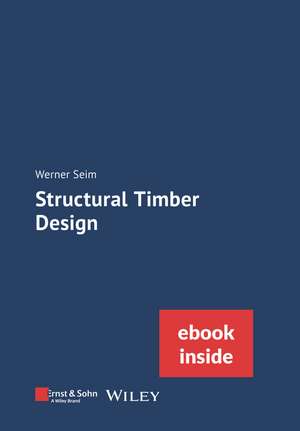
Structural Timber Design – (incl. ebook as PDF)
Autor W Seimen Limba Engleză Paperback – 7 mai 2024
Descoperim în Structural Timber Design – (incl. ebook as PDF) o resursă tehnică esențială pentru ingineria modernă a lemnului, un domeniu care cunoaște o expansiune accelerată în construcțiile rezidențiale multietajate și structurile industriale. Considerăm că valoarea principală a acestei lucrări rezidă în modul în care W Seim explică performanța materialelor compozite și derivate, precum CLT (Cross Laminated Timber) și LVL (Laminated Veneer Lumber), adaptate cerințelor actuale de sustenabilitate și viteză de execuție. Ca și Jack Porteous în Structural Timber Design to Eurocode 5, autorul distilează experiență reală în principii acționabile, făcând trecerea de la proprietățile fizice ale fibrei lemnoase la calcule riguroase de proiectare structurală.
Structura volumului este una progresivă și aplicată. Primele capitole fundamentează înțelegerea lemnului ca material anizotrop, detaliind modul în care umiditatea și durata de încărcare modifică rezistența și deformarea. Ulterior, cuprinsul ghidează cititorul prin verificări complexe ale elementelor de tip grindă, abordând nu doar încovoierea și forfecarea, ci și stabilitatea structurală prin metode specifice pentru flambaj și torsiune. Subliniem rigoarea cu care sunt prezentate combinațiile de acțiuni și factorii de modificare, elemente critice pentru siguranța oricărei structuri de lemn.
Spre deosebire de manualele pur teoretice, lucrarea editată de Wiley Vch integrează fenomenele fizice cu cerințele codurilor de practică, oferind o bază solidă pentru ceea ce autorul numește „inginerie creativă”. Este o resursă care echilibrează avantajele greutății reduse și ale prelucrabilității ridicate cu provocările legate de dăunători naturali și comportament higroscopic, oferind soluții de detaliere constructivă indispensabile în birourile de proiectare.
Preț: 753.56 lei
Preț vechi: 876.23 lei
-14%
Carte disponibilă
Livrare economică 13-27 noiembrie
Livrare express 29 octombrie-04 noiembrie pentru 48.78 lei
Specificații
ISBN-10: 3433034036
Pagini: 400
Dimensiuni: 170 x 244 x 24 mm
Greutate: 0.81 kg
Ediția:1
Editura: Wiley Vch
Locul publicării:Weinheim, Germany
V-ar putea interesa
-
 Structural Engineer's Pocket Book: EurocodesFiona CobbPreț: 388.86 lei
 -
 Williams, D: Structural MechanicsD. Williams-11%Preț: 652.66 lei733.32 lei
 -
 Modern Apartment DesignGuy MarriagePreț: 377.31 lei
 -
 Structural Design for Fire SafetyAndrew H. Buchanan-19%Preț: 407.96 lei503.65 lei
 -
 -17%Preț: 103.59 lei124.36 lei
 -
 Designing Timber BuildingsFausto SannaPreț: 157.62 lei
 -
 Preț: 302.43 lei
 -
 -23%Preț: 96.15 lei124.73 lei
 -
 Funicular Structures: The Art of Building EfficientlyDamon BolhassaniPreț: 384.80 leiRecomandat
 -
 Practising Wood in Architecture: Connecting Design, Construction and SustainabilityJames Benedict BrownPreț: 350.83 leiRecomandat
 -
 Goss's Roofing Ready ReckonerC. N. MindhamPreț: 201.22 lei
 -
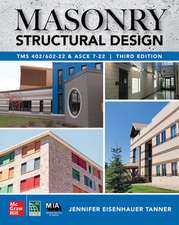 Masonry Structural Design, Third Edition: TMS 402/602-22 and ASCE 7-22Jennifer Eisenhauer Tanner-34%Preț: 903.56 lei1362.34 lei
 -
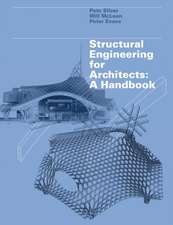 Structural Engineering for ArchitectsWilliam McLean-29%Preț: 191.38 lei271.02 lei
 -
 Detail in Contemporary Timber ArchitectureVirginia McLeod-27%Preț: 173.39 lei238.87 lei
 -
 -18%Preț: 1768.09 lei2156.21 lei
 -
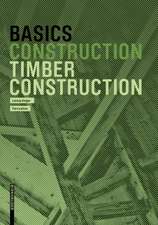 Basics Timber ConstructionLudwig SteigerPreț: 146.05 lei
 -
 -14%Preț: 606.91 lei705.72 lei
 -
 Structural Timber DesignWerner Seim-11%Preț: 471.45 lei529.71 lei
 -
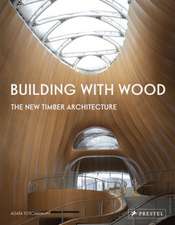 Building With Wood: The New Timber ArchitectureAgata Toromanoff-14%Preț: 258.46 lei299.99 lei
De ce să citești această carte
Această carte este indispensabilă inginerilor structuraliști și studenților la inginerie civilă care doresc să stăpânească proiectarea structurilor moderne din lemn. Cititorul câștigă o înțelegere profundă a materialelor noi, precum CLT, și a metodelor de calcul pentru stabilitate. Formatul mixt (tipărit + PDF) facilitează consultarea rapidă atât pe șantier, cât și la birou, oferind toate instrumentele necesare pentru a proiecta clădiri din lemn sigure și durabile conform standardelor actuale.