
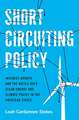
Short Circuiting Policy: Interest Groups and the Battle Over Clean Energy and Climate Policy in the American States: Studies in Postwar American Political Development
Autor Leah Cardamore Stokesen Limba Engleză Hardback – 4 iun 2020
Subliniem contribuția esențială a autoarei Leah Cardamore Stokes, profesoară și cercetătoare specializată în politici de mediu, care aduce în Short Circuiting Policy o analiză riguroasă a eșecului sistematic în tranziția energetică a Statelor Unite. Lucrarea, publicată sub egida Oxford University Press în seria Studies in Postwar American Political Development, investighează de ce state precum Texas, deși pionieri legislativi în 1999, nu au reușit să își curețe sistemele electrice. Considerăm că forța acestui volum rezidă în documentarea a treizeci de ani de istorie politică în Kansas, Arizona, Ohio și Texas, demascând modul în care grupurile de interese din sectorul combustibililor fosili și al utilităților au orchestrat campanii de negare și întârziere a politicilor climatice.
Comparabil cu Following in Footsteps or Marching Alone? de Srinivas Parinandi în ceea ce privește analiza dinamicii legislative la nivel statal, volumul lui Stokes merge mai departe, oferind o perspectivă critică asupra modului în care resursele financiare masive permit opoziției să „scurtcircuiteze” procesul democratic. Reținem argumentul central conform căruia victoriile legislative sunt fragile; autoarea explică limitele teoriei feedback-ului politic, arătând cum lobby-ul și controlul partidelor politice pot anula progresele obținute prin lege. Stilul narativ este unul academic, dar alert, susținut de 21 de diagrame care clarifică mecanismele de putere. Spre deosebire de Climate and Clean Energy Policy de Benjamin H. Deitchman, care utilizează o abordare mixtă pentru toate cele 50 de state, Stokes alege o examinare profundă, de tip studiu de caz, pentru a ilustra „lupta organizată” ce blochează viitorul regenerabil.
Din seria Studies in Postwar American Political Development
- 30%
 Preț: 434.04 lei
 - 23%
 Preț: 153.71 lei
 - 15%
 Preț: 147.23 lei
 - 25%
 Preț: 143.67 lei
 - 16%
 Preț: 190.10 lei
 - 14%
 Preț: 183.45 lei
 - 25%
 Preț: 148.60 lei
 - 24%
 Preț: 200.37 lei
 - 20%
 Preț: 303.36 lei
 - 16%
 Preț: 209.66 lei
 - 20%
 Preț: 327.35 lei
 -
 Preț: 179.72 lei
 - 16%
 Preț: 218.46 lei
 - 11%
 Preț: 374.78 lei
 - 24%
 Preț: 211.13 lei
 - 16%
 Preț: 144.36 lei
 - 19%
 Preț: 352.66 lei
 - 20%
 Preț: 160.32 lei
 - 12%
 Preț: 260.25 lei
 -
 Preț: 294.49 lei
 -
 Preț: 245.79 lei
 - 28%
 Preț: 427.82 lei
 - 18%
 Preț: 302.03 lei
 - 32%
 Preț: 367.42 lei
 - 20%
 Preț: 258.80 lei
 - 35%
 Preț: 525.10 lei
 - 23%
 Preț: 217.97 lei
 - 19%
 Preț: 321.56 lei
 - 15%
 Preț: 278.40 lei
 - 28%
 Preț: 452.82 lei
 - 20%
 Preț: 251.97 lei
 -
 Preț: 153.61 lei
 - 11%
 Preț: 359.81 lei
Preț: 663.85 lei
Preț vechi: 1008.17 lei
-34%
Carte tipărită la comandă
Livrare economică 03-08 decembrie
Specificații
ISBN-10: 0190074256
Pagini: 338
Ilustrații: 21 black and white line drawings
Dimensiuni: 241 x 159 x 24 mm
Greutate: 0.61 kg
Editura: Oxford University Press
Colecția OUP USA
Seria Studies in Postwar American Political Development
Locul publicării:New York, United States
De ce să citești această carte
Recomandăm această carte specialiștilor în politici publice și studenților la științe politice care doresc să înțeleagă de ce legislația de mediu eșuează adesea în practică. Cititorul câștigă o viziune realistă asupra puterii grupurilor de lobby și a mecanismelor prin care instituțiile energetice rezistă schimbării. Este o lectură fundamentală pentru a descifra jocurile de putere din spatele crizei climatice actuale.
Despre autor
Leah Cardamore Stokes este o voce autoritară în domeniul politicii energetice și climatice, activând ca profesor asociat la Universitatea din California, Santa Barbara. Cercetările sale se concentrează pe intersecția dintre politicile publice, opinia publică și sistemele energetice. Prin activitatea sa, Stokes a devenit o prezență constantă în dezbaterile academice și publice privind tranziția către energia regenerabilă, aducând date concrete despre influența corporațiilor asupra legislației de mediu americane.
Descriere
Recenzii
This is a book of the very first importance, a stunningly good piece of investigation that lays bare the answer to what may be the world's most important mystery: why are we moving so slowly to address the greatest crisis the planet has ever faced? It should be read-and memorized-by everyone who deals with energy policy in any way, shape, or form.
With Washington gridlocked or worse, advocates for action on climate change have looked to the states for leadership. In this deeply researched and sobering analysis, Leah Stokes shows why these hopes must be combined with vigilance and tenacity. Even where states have managed to introduce innovative reforms, Stokes shows, deeply entrenched and resourceful fossil fuel interests can often regain the upper hand.
With US national politics deadlocked under right-wing dominance, crucial battles over clean energy are playing out in the states. In this brilliant new book, Leah Stokes spells out exactly how and why entrenched interests can take advantage of weak, ambiguous laws to achieve costly delays and hobble infant clean energy sources. All citizens fighting for effective responses to global warming should heed the lessons in this book-and scholars studying policy battles in many other realms have much to learn from it as well.
Notă biografică
Cuprins
- Acknowledgements
- List of Abbreviations
- List of Figures
- Chapter 1. Introduction
- Chapter 2. When New Policies Fail to Create a New Politics
- Chapter 3. An Institutional History of Electricity Politics and Climate Inaction
- Chapter 4. Policy Feedback: Networked and Influential Advocates Use the Public to Drive Clean Energy Leadership in Texas
- Chapter 5. A Direct Line to Legislators and Regulators: Fossil Fuel Corporations and the Limitations of Texas's Renewable Energy Laws
- Chapter 6. Retrenchment by a Thousand Cuts: Fossil Fuel Opponents Drive Polarization on Clean Energy in Kansas
- Chapter 7. Regulatory Capture: Electric Utilities Retrench Arizona's Net Metering Laws
- Chapter 8. When the Fog of Enactment Lifts: Late Action brings Rapid Retrenchment of Ohio's Renewable Energy Laws
- Chapter 9. Conclusion
- References
- Appendix:List of Interviews