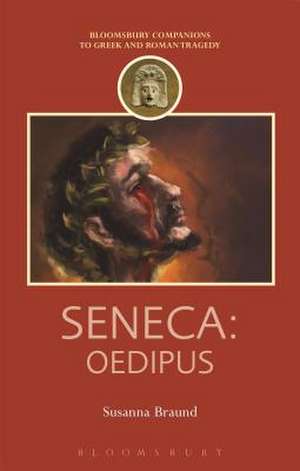
Seneca: Oedipus
Autor Susanna Braund Editat de Thomas Harrisonen Limba Engleză Paperback – 17 dec 2015
| Toate formatele și edițiile | Preț | Express |
|---|---|---|
| Paperback (2) | 155.38 lei 3-5 săpt. | |
| BLOOMSBURY ACADEMIC – 17 dec 2015 | 155.38 lei 3-5 săpt. | |
| OUP OXFORD – 30 iun 2011 | 341.92 lei 45-50 zile | |
| Hardback (1) | 1028.58 lei 45-50 zile | |
| OUP OXFORD – 12 feb 2009 | 1028.58 lei 45-50 zile |
Preț: 155.38 lei
Preț vechi: 191.16 lei
-19% Nou
Puncte Express: 233
Preț estimativ în valută:
27.50€ • 32.24$ • 24.15£
27.50€ • 32.24$ • 24.15£
Carte disponibilă
Livrare economică 19 ianuarie-02 februarie 26
Preluare comenzi: 021 569.72.76
Specificații
ISBN-13: 9781474234788
ISBN-10: 147423478X
Pagini: 176
Dimensiuni: 137 x 213 x 13 mm
Greutate: 0.23 kg
Editura: BLOOMSBURY ACADEMIC
Locul publicării:London, United Kingdom
ISBN-10: 147423478X
Pagini: 176
Dimensiuni: 137 x 213 x 13 mm
Greutate: 0.23 kg
Editura: BLOOMSBURY ACADEMIC
Locul publicării:London, United Kingdom
V-ar putea interesa
-
 Grettir's SagaJesse Byock-20%Preț: 65.52 lei82.32 lei
 -
 Further Voices in Vergil's AeneidR. O. A. M. Lyne-23%Preț: 498.61 lei649.67 lei
 -
 -27%Preț: 521.62 lei714.12 lei
 -
 Catullus: A CommentaryC. J. Fordyce-26%Preț: 308.90 lei417.39 lei
 -
 Oxford Readings in Homer's IliadDouglas L. Cairns-27%Preț: 521.29 lei713.91 lei
 -
 Oxford Readings in the Greek NovelSimon Swain-33%Preț: 542.66 lei814.73 lei
 -
 Ovid Metamorphoses VIII (Schools Edition)Adrian Hollis-7%Preț: 83.84 lei89.67 lei
 -
 -34%Preț: 519.05 lei785.95 lei
 -
 AeneidVirgil-18%Preț: 57.73 lei70.49 lei
 -
 Greek Fictional LettersC. D. N. Costa-20%Preț: 189.19 lei235.44 lei
 -
 -24%Preț: 367.52 lei483.63 lei
 -
 The Poems of CatullusCatullus-21%Preț: 63.89 lei81.32 lei
 -
 GeorgicsVirgil-22%Preț: 52.69 lei67.42 lei
 -
 Classical Literary CriticismD. A. Russell-21%Preț: 54.06 lei68.25 lei
 -
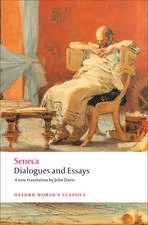 Dialogues and EssaysSeneca-20%Preț: 54.80 lei68.71 lei
 -
 The Complete OdesPindar-21%Preț: 69.19 lei88.09 lei
 -
 The Tale of SinuheR. B. Parkinson-20%Preț: 60.03 lei75.42 lei
 -
 Pindar and the Cult of HeroesBruno Currie-18%Preț: 483.87 lei591.82 lei
 -
 -9%Preț: 704.13 lei773.03 lei
 -
 -14%Preț: 704.12 lei818.74 lei
 -
 Work in Progress: Literary Revision as Social Performance in Ancient RomeSean Alexander Gurd-8%Preț: 643.71 lei702.72 lei
 -
 Plato on Art and BeautyAlison Denham-18%Preț: 702.09 lei856.20 lei
 -
 Preț: 240.94 lei
 -
 Horace and Me: Life Lessons from an Ancient PoetHarry Eyres-29%Preț: 71.78 lei101.34 lei
 -
 InfernoDantePreț: 34.78 lei
 -
 -23%Preț: 163.39 lei211.36 lei
 -
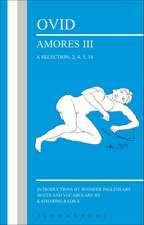 Ovid: Amores III, a Selection: 2, 4, 5, 14Jennifer Ingleheart-19%Preț: 146.98 lei181.84 lei
Caracteristici
Latest installment in Bloomsbury's well-established series that provides essential guidance about the crucial issues relating to Greek and Roman tragedy
Notă biografică
Susanna Morton Braund is Professor of Latin Poetry and Its Reception at University of British Columbia, Vancouver, Canada. She has published extensively on Roman satire, Latin epic poetry and Seneca.
Cuprins
Acknowledgments Chapter One: The MythChapter Two: Seneca in his TimeChapter Three: Structure, Themes and IssuesChapter Four: Reception and Influence of Seneca's OedipusGuide to Further ReadingBibliographyIndex
Recenzii
What makes Braund's Companion stand out is the depth of her interpretation, the powerful section on the reception of this play, and her sure guidance through aspects of the play that are puzzling or difficult to explain. ... This is a fine introduction to Seneca's play and will benefit students and scholars alike.
[Braund] has produced a clear and comprehensive companion to Seneca's Oedipus.
In this short study of Seneca's Oedipus Susanna Braund has made a significant contribution to the steadily growing study of Senecan tragedy and its reception.
[Braund] has made a valuable contribution towards raising the profile of this unconventional tragedy.
Braund's Oedipus not only introduces readers to the complexities of this distinctively Roman tragedy, but cuts a fascinating path through the remarkable story of its reception from earlier English and French drama through to Freud, Stravinsky and Ted Hughes and on to theatre and film in the twenty-first century.
It is hard to imagine any study of Seneca's Oedipus of these dimensions that could match Susana Braund's highly readable style of presentation, her breadth of coverage in locating the drama in its Roman historical, cultural and sociological context, her insightful probing of the drama's thematic complexities, and the conciseness with which she relates the Oedipus both to the Greco-Roman literary past and to the drama's reception in later ages. Seneca's Oedipus has drawn significant scholarly attention in recent times, but Braund's individuality of vision and voice sets this volume apart.
It would be hard to think of a more refreshing and revealing case-study in tragic myth than Seneca's Oedipus. Braund is a generous guide to student and scholar alike. She introduces the play in its original Roman context, opens it up for new interpretation, compares it with better-known and lesser-known versions, and traces its fascinating influence from antiquity to the present day.
Braund's treatment of the question of Senecan tragedy's ancient performance amounts to a masterful précis of this vexed scholarly debate, into which she manages to introduce decisive clarity . Braund's volume constitutes an exemplary addition to the expanding corpus of 'companions' or 'handbooks' to classical literary texts. In fact, I have never encountered a work of this genre that does a better job of 'opening up' for students the text it addresses. Braund's treatment of themes in chapter 3 deserves special mention. She isolates a set of themes that are urgently relevant to Seneca's Oedipus and whose identification has the added benefit of being hermeneutically provocative. Moreover, Braund's discussion of them, which usually amounts to brief analytical comments on a handful of relevant passages, gives students a sense of the sort of additional textual evidence they might adduce, as well as of how they might pursue sustained interpretations of these or related themes on their own.
[Braund] has produced a clear and comprehensive companion to Seneca's Oedipus.
In this short study of Seneca's Oedipus Susanna Braund has made a significant contribution to the steadily growing study of Senecan tragedy and its reception.
[Braund] has made a valuable contribution towards raising the profile of this unconventional tragedy.
Braund's Oedipus not only introduces readers to the complexities of this distinctively Roman tragedy, but cuts a fascinating path through the remarkable story of its reception from earlier English and French drama through to Freud, Stravinsky and Ted Hughes and on to theatre and film in the twenty-first century.
It is hard to imagine any study of Seneca's Oedipus of these dimensions that could match Susana Braund's highly readable style of presentation, her breadth of coverage in locating the drama in its Roman historical, cultural and sociological context, her insightful probing of the drama's thematic complexities, and the conciseness with which she relates the Oedipus both to the Greco-Roman literary past and to the drama's reception in later ages. Seneca's Oedipus has drawn significant scholarly attention in recent times, but Braund's individuality of vision and voice sets this volume apart.
It would be hard to think of a more refreshing and revealing case-study in tragic myth than Seneca's Oedipus. Braund is a generous guide to student and scholar alike. She introduces the play in its original Roman context, opens it up for new interpretation, compares it with better-known and lesser-known versions, and traces its fascinating influence from antiquity to the present day.
Braund's treatment of the question of Senecan tragedy's ancient performance amounts to a masterful précis of this vexed scholarly debate, into which she manages to introduce decisive clarity . Braund's volume constitutes an exemplary addition to the expanding corpus of 'companions' or 'handbooks' to classical literary texts. In fact, I have never encountered a work of this genre that does a better job of 'opening up' for students the text it addresses. Braund's treatment of themes in chapter 3 deserves special mention. She isolates a set of themes that are urgently relevant to Seneca's Oedipus and whose identification has the added benefit of being hermeneutically provocative. Moreover, Braund's discussion of them, which usually amounts to brief analytical comments on a handful of relevant passages, gives students a sense of the sort of additional textual evidence they might adduce, as well as of how they might pursue sustained interpretations of these or related themes on their own.
Descriere
Descriere de la o altă ediție sau format:
Soon after Nero's accession in 54 CE, his tutor, the philosopher Seneca, addressed to his young pupil an essay called De Clementia in which he offered advice on how to behave in his new role. This is the first full philological edition of the De Clementia in English. It includes the text with apparatus criticus, a new translation, a substantial introduction, and detailed commentary on matters of textual criticism, literary criticism and issues of socio-political, historical, cultural, and philosophical significance. The notes illuminate Seneca's language and thought through extensive citation of parallel passages from his other writings, from those of other imperial Latin authors, and from other relevant texts. The introduction includes discussion of Seneca's life, relationship with Nero, writings, and philosophy; the date, genre, scope, structure, and argument of De Clementia; the concept of clementia; kingship theory in Greek literature and Republican Rome; and the work's afterlife and influence.
Soon after Nero's accession in 54 CE, his tutor, the philosopher Seneca, addressed to his young pupil an essay called De Clementia in which he offered advice on how to behave in his new role. This is the first full philological edition of the De Clementia in English. It includes the text with apparatus criticus, a new translation, a substantial introduction, and detailed commentary on matters of textual criticism, literary criticism and issues of socio-political, historical, cultural, and philosophical significance. The notes illuminate Seneca's language and thought through extensive citation of parallel passages from his other writings, from those of other imperial Latin authors, and from other relevant texts. The introduction includes discussion of Seneca's life, relationship with Nero, writings, and philosophy; the date, genre, scope, structure, and argument of De Clementia; the concept of clementia; kingship theory in Greek literature and Republican Rome; and the work's afterlife and influence.