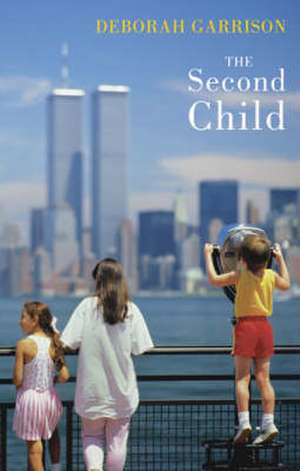
Second Child
Autor Deborah Garrisonen Limba Engleză Paperback – 9 ian 2008
Preț: 42.37 lei
Preț vechi: 53.92 lei
-21%
Puncte Express: 64
Carte disponibilă
Livrare economică 30 aprilie-07 mai
Specificații
ISBN-13: 9781852247980
ISBN-10: 1852247983
Pagini: 64
Dimensiuni: 138 x 216 x 6 mm
Greutate: 0.11 kg
Editura: BLOODAXE BOOKS LTD
Locul publicării:United Kingdom
ISBN-10: 1852247983
Pagini: 64
Dimensiuni: 138 x 216 x 6 mm
Greutate: 0.11 kg
Editura: BLOODAXE BOOKS LTD
Locul publicării:United Kingdom
V-ar putea interesa
-
 Selected PoemsWilliam Blake-19%Preț: 61.78 lei76.36 lei
 -
 Selected Poems of Lord George Gordon ByronLord George Gordon Byron-18%Preț: 97.98 lei119.49 lei
 -
 Collected PoemsPatrick Kavanagh-20%Preț: 60.45 lei75.54 lei
 -
 Edward ThomasEdward ThomasPreț: 47.70 lei
 -
 The Love Poems Of RumiDeepak Chopra-22%Preț: 68.84 lei87.70 lei
 -
 Complete PoemsBasil Bunting-19%Preț: 73.20 lei90.50 lei
 -
 Staying AliveNeil Astley-15%Preț: 79.64 lei94.19 lei
 -
 AfterJane Hirshfield-21%Preț: 63.54 lei80.94 lei
 -
 Nigh-No-PlaceJen Hadfield-22%Preț: 57.33 lei73.78 lei
 -
 BriggflattsBasil Bunting-21%Preț: 69.95 lei88.40 lei
 -
 The Burning of the Books and Other PoemsGeorge SzirtesPreț: 89.95 lei
 -
 The Selected Poems of William BlakeWilliam BlakePreț: 36.57 lei
 -
 Baudelaire: Les Fleurs du MalCharles Baudelaire-18%Preț: 155.97 lei190.50 lei
 -
 Hardy PoemsThomas Hardy-20%Preț: 55.07 lei68.85 lei
 -
 Sweet to BurnBeverly BurchPreț: 74.43 lei
Notă biografică
Deborah Garrison is the author of A Working Girl Can’t Win: and Other Poems. For fifteen years, she worked on the editorial staff of The New Yorker and is now the poetry editor af Alfred A. Knopf and a senior editor at Pantheon Books. She lives with her husband and three children in Montclair, New Jersey.
From the Hardcover edition.
From the Hardcover edition.
Extras
On New Terms
I’d like to begin again. Not touch my own face, not tremble in the dark before an intruder who never arrives. Not apologize. Not scurry, not pace. Not refuse to keep notes of what meant the most. Not skirt my father’s ghost. Not abandon piano, or a book before the end. Not count, count, count and wait, poised—the control, the agony controlled—for the loss of the one, having borne, I can’t be, won’t breathe without: the foregone conclusion, the pain not yet met, the preemptive mourning without which nothing left of me but smoke.
Goodbye, New York (song from the wrong side of the Hudson)
You were the big fat city we called hometown You were the lyrics I sang but never wrote down
You were the lively graves by the highway in Queens the bodega where I bought black beans
stacks of the Times we never read nights we never went to bed
the radio jazz, the doughnut cart the dogs off their leashes in Tompkins Square Park
You were the tiny brass mailbox key the joy of “us” and the sorrow of “me”
You were the balcony bar in Grand Central Station the blunt commuters and their destination
the post-wedding blintzes at 4 a.m. and the pregnant waitress we never saw again
You were the pickles, you were the jar You were the prizefight we watched in a bar
the sloppy kiss in the basement at Nell’s the occasional truth that the fortune cookie tells
Sinatra still swinging at Radio City You were ugly and gorgeous but never pretty
always the question, never the answer the difficult poet, the aging dancer
the call I made from a corner phone to a friend in need, who wasn’t at home
the fireworks we watched from a tenement roof the brash allegations and the lack of any proof
my skyline, my byline, my buzzer and door now you’re the dream we lived before
Not Pleasant but True
This afternoon when the bus turned hard by the graveyard,
the stones sugared with snow, I wanted to go there, underground.
You’re thirteen weeks old. Cold shock, as never wished before:
to die and be buried, close under the packed earth,
safe for an eternal instant from my constant, fevered fear that
you’d die. Relief warming my veins,
and you relieved forever of my looming, teary watch.
Someone take from me this crazed love,
such battering care I lost my mind—
I was going to leave you without a mother!
Play Your Hand
A joy so full it won’t fit in a body. Like sound packed in a trumpet’s bell, its glossy exit retains that shape, printing
its curve in reverse on the ear. A musical house, with more children than you planned for, a smallest hand, and fingers
of that hand closing on one of yours, making a handle, pulling the lever gaily down, ringing in the first
jackpot of many, with coins and cries, heavenly noise, a crashing pile of minor riches—
And if the worst thing imaginable were to happen where does the happiness go?
The melody flown (where?), you think you wouldn’t live one more day. But you would.
Days don’t stop. You toss your glove at the moon, you don’t know what may come down.
From the Hardcover edition.
I’d like to begin again. Not touch my own face, not tremble in the dark before an intruder who never arrives. Not apologize. Not scurry, not pace. Not refuse to keep notes of what meant the most. Not skirt my father’s ghost. Not abandon piano, or a book before the end. Not count, count, count and wait, poised—the control, the agony controlled—for the loss of the one, having borne, I can’t be, won’t breathe without: the foregone conclusion, the pain not yet met, the preemptive mourning without which nothing left of me but smoke.
Goodbye, New York (song from the wrong side of the Hudson)
You were the big fat city we called hometown You were the lyrics I sang but never wrote down
You were the lively graves by the highway in Queens the bodega where I bought black beans
stacks of the Times we never read nights we never went to bed
the radio jazz, the doughnut cart the dogs off their leashes in Tompkins Square Park
You were the tiny brass mailbox key the joy of “us” and the sorrow of “me”
You were the balcony bar in Grand Central Station the blunt commuters and their destination
the post-wedding blintzes at 4 a.m. and the pregnant waitress we never saw again
You were the pickles, you were the jar You were the prizefight we watched in a bar
the sloppy kiss in the basement at Nell’s the occasional truth that the fortune cookie tells
Sinatra still swinging at Radio City You were ugly and gorgeous but never pretty
always the question, never the answer the difficult poet, the aging dancer
the call I made from a corner phone to a friend in need, who wasn’t at home
the fireworks we watched from a tenement roof the brash allegations and the lack of any proof
my skyline, my byline, my buzzer and door now you’re the dream we lived before
Not Pleasant but True
This afternoon when the bus turned hard by the graveyard,
the stones sugared with snow, I wanted to go there, underground.
You’re thirteen weeks old. Cold shock, as never wished before:
to die and be buried, close under the packed earth,
safe for an eternal instant from my constant, fevered fear that
you’d die. Relief warming my veins,
and you relieved forever of my looming, teary watch.
Someone take from me this crazed love,
such battering care I lost my mind—
I was going to leave you without a mother!
Play Your Hand
A joy so full it won’t fit in a body. Like sound packed in a trumpet’s bell, its glossy exit retains that shape, printing
its curve in reverse on the ear. A musical house, with more children than you planned for, a smallest hand, and fingers
of that hand closing on one of yours, making a handle, pulling the lever gaily down, ringing in the first
jackpot of many, with coins and cries, heavenly noise, a crashing pile of minor riches—
And if the worst thing imaginable were to happen where does the happiness go?
The melody flown (where?), you think you wouldn’t live one more day. But you would.
Days don’t stop. You toss your glove at the moon, you don’t know what may come down.
From the Hardcover edition.