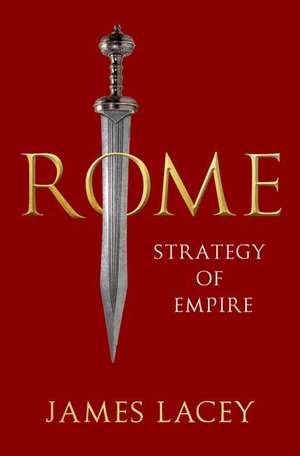
Rome: Strategy of Empire
Autor James Laceyen Limba Engleză Hardback – 24 noi 2022
Destinată studenților la istorie, cercetătorilor în studii strategice și practicienilor din domeniul relațiilor internaționale, această lucrare oferă o înțelegere profundă a modului în care un imperiu își poate menține relevanța și securitatea pe parcursul a cinci secole. Considerăm că Rome reușește să depășească limitele istoriografiei tradiționale, tratând strategia nu doar ca pe un exercițiu de forță militară, ci ca pe un sistem complex de adaptare la fluxurile economice și amenințările externe. Subliniem faptul că James Lacey analizează Imperiul Roman nu ca pe o entitate statică, ci ca pe un organism politic aflat într-o transformare continuă, de la victoria lui Octavian la Actium până la fragmentarea finală din 476.
Textul completează perspectiva oferită de The Romans de Edward J. Watts, adăugând o analiză riguroasă a mecanismelor de luare a deciziilor strategice acolo unde Watts se concentrează pe supraviețuirea și reinventarea civilizației. De asemenea, spre deosebire de A History of Rome de David Cherry, care servește ca o introducere cronologică generală, volumul lui Lacey este o monografie specializată pe conceptul de „grand strategy”. Autorul folosește un ton academic, dar accesibil, eliminând jargonul inutil pentru a permite urmărirea logică a campaniilor și a tratatelor diplomatice. În contextul operei sale, Rome reprezintă o evoluție naturală de la cadrul teoretic stabilit în The Shaping of Grand Strategy, aplicând aceleași principii de protecție a statului și proiecție a puterii asupra celui mai longeviv model imperial din istoria occidentală. Ilustrațiile și hărțile incluse sunt esențiale pentru vizualizarea schimbărilor de frontieră și a logisticii militare romane.
Preț: 220.45 lei
Preț vechi: 275.30 lei
-20%
Carte disponibilă
Livrare economică 06-11 noiembrie
Livrare express 22-28 octombrie pentru 109.14 lei
Specificații
ISBN-10: 019093770X
Pagini: 448
Ilustrații: 25 b&w halftones + 15 b&w line drawings
Dimensiuni: 163 x 233 x 37 mm
Greutate: 0.78 kg
Editura: Oxford University Press
Colecția OUP USA
Locul publicării:New York, United States
De ce să citești această carte
Cititorul va câștiga o perspectivă integrată asupra puterii romane, înțelegând cum s-au împletit economia, diplomația și forța armată pentru a susține imperiul timp de 500 de ani. Este o resursă valoroasă pentru cei care doresc să vadă dincolo de bătăliile celebre, analizând „de ce”-ul din spatele deciziilor imperiale. Recomandăm această carte pentru rigoarea academică dublată de experiența practică a autorului în analiză strategică.
Despre autor
James Lacey este profesor de strategie la Marine War College din Washington, DC, și predă cursuri postuniversitare de istorie militară la Johns Hopkins University. Cu o experiență de peste un deceniu ca ofițer de infanterie și analist militar, Lacey aduce o perspectivă practică unică asupra istoriei antice. A publicat numeroase studii despre conflictele moderne, inclusiv despre războiul din Irak, experiență care îi permite să analizeze campaniile romane printr-o lentilă strategică avizată. Lucrările sale anterioare, precum The Shaping of Grand Strategy, demonstrează interesul său constant pentru modul în care statele își gestionează supraviețuirea pe termen lung.
Descriere
Recenzii
A military history of the Roman Empire with a twist. Using his expertise in strategic operations, [Lacey] makes a compelling argument that the Romans did think and plan strategically in governing.... Highly recommended.
This well-argued and exhaustively researched book will no doubt reopen the debate as to whether the Romans really were capable of strategic thought.
...he[Lacey] writes honest, straightforward English, tells a good story, makes his disagreements with other scholars fairly and clearly and, even if one disagrees with some of his conclusions, the weight of his experience brings a sense of authority to what he writes. His reflections on the modern military world are especially valuable.
Engagingly written and logically structured, this is an invaluable contribution to knowledge which moves the discussion far beyond the Luttwak/Isaac debate. The author's practical experience of military planning is brilliantly deployed throughout, and the fact that staff officers effectively use the modern equivalent of Roman itineraries to plan campaign moves is worth a whole book in itself.
Jim Lacey has already established himself as a major historian of politics and strategy in the twenty-first century. He has now brought his focus to Roman strategy and done so with the critical mind of a first rate strategist. This brilliant work replaces all other examinations of Roman strategy.
Drawing on a wealth of ancient and modern material, Lacey succeeds in bringing a fresh perspective to the question of grand strategy in the Roman empire. This book should become mandatory reading for anyone interested in the development of strategic military thought in any age.
Lacey... concludes that the western empire managed to survive for five centuries despite numerous enemies and environmental challenges because it remained committed to three strategic elements: securing the economic foundations of the empire, maintaining a military force second to none, and having a seemingly inexhaustible supply of soldiers.
Lacey also emphasizes the importance of economics to the Roman military machine.
The facts presented are faultlessly accurate, and the story is told with a warm, almost conversational (albeit completely academic) tone that is insightful, often witty, and completely free of jargon, which allows the story it conveys to be easily understood by the widest possible audience. It contains enough food for thought to satisfy the most strait-laced academic while providing an easily absorbed and engrossing narrative that will be more than palatable to an amateur history enthusiast. It could as easily serve as summer beach reading as for a textbook for a college survey class. It is thus a worthy addition to any library devoted to ancient military history, or to history in general.
Notă biografică
Cuprins
- Introduction: Standing on the Shoulders of Giants
- Part I Themes and Topics
- 1: Could the Romans Do Strategy?
- 2: How Dangerous Were the Barbarians?
- 3: Paying for a Strategy: Funding the Republic
- 4: The Core of Roman Strategy
- 5: The Infrastructure of Empire
- 6: An Army for Empire
- 7: Roman Naval Power
- Part II Rome's Strategic History: From the Principate to the Crisis of the Third Century
- 8: The Julio-Claudian Empire
- 9: The Year of the Four Empires and the Flavians
- 10: The Empire at High Table
- 11: The Severan Interlude
- 12: New Threats
- 13: The Crisis of the Third Century
- Part III The Late Empire: New Beginnings and an End
- 14: Diocletian, Constantine, and a New Empire
- 15: The Late Imperial Army and Strategy
- 16: Four Battles and a Divorce
- 17: The Gothic Challenge
- 18: Adrianople's Aftermath
- 19: Denouement
- Conclusion
- Notes
- For Further Reading
- Acknowledgements
- Index