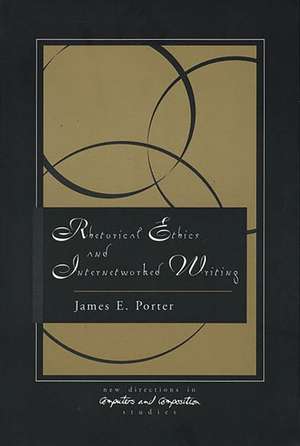
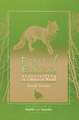
Rhetorical Ethics and Internetworked Writing: New Directions in Computers and Composition Studies
Autor James Porteren Limba Engleză Hardback – 19 apr 1998 – vârsta până la 17 ani

Preț: 446.61 lei
Preț vechi: 651.15 lei
-31%
Puncte Express: 670
Carte tipărită la comandă
Livrare economică 20 noiembrie-04 decembrie
Livrare prin curier în România Termenul estimat este afișat lângă disponibilitate.
Transport gratuit pentru acest produs Plată online sau ramburs, în funcție de opțiunile comenzii.
Retur gratuit în 14 zile Comandă securizată și suport în română.
Specificații
ISBN-13: 9781567503227
ISBN-10: 1567503225
Pagini: 218
Dimensiuni: 152 x 229 x 13 mm
Greutate: 0.33 kg
Editura: Bloomsbury Publishing
Colecția Praeger
Seria New Directions in Computers and Composition Studies
Locul publicării:New York, United States
ISBN-10: 1567503225
Pagini: 218
Dimensiuni: 152 x 229 x 13 mm
Greutate: 0.33 kg
Editura: Bloomsbury Publishing
Colecția Praeger
Seria New Directions in Computers and Composition Studies
Locul publicării:New York, United States
V-ar putea interesa
-
 Cryptography InfoSec Pro GuideSean-Philip Oriyano-20%Preț: 199.89 lei249.86 lei
 -
 Minimal SemanticsEmma Borg-19%Preț: 330.95 lei408.74 lei
 -
 Structuring Sense: Volume 1: In Name OnlyHagit Borer-28%Preț: 446.36 lei622.61 lei
 -
 Linguistic CategorizationJohn R. Taylor-21%Preț: 375.58 lei475.10 lei
 -
 Seeing Through LanguageRonald CarterPreț: 345.01 lei
 -
 Diseases of CoralCheryl M Woodley-23%Preț: 1489.21 lei1934.04 lei
 -
 Key Terms in SemioticsBronwen Martin-17%Preț: 206.96 lei248.17 lei
 -
 Networked LifeMung ChiangPreț: 307.81 lei
 -
 Introduction to Ground Penetrating RadarRaffaele Persico-9%Preț: 782.55 lei859.94 lei
 -
 Evolutionary AlgorithmsDorronsoro-20%Preț: 654.97 lei818.70 lei
 -
 HSPA+ Evolution to Release 12Pablo Tapia-8%Preț: 625.74 lei680.15 lei
 -
 Cloud ManagementAbbadi-20%Preț: 645.13 lei806.42 lei
 -
 How to Write a PoemRedmondPreț: 228.48 lei
 -
 Preț: 326.65 lei
 -
 -18%Preț: 1070.53 lei1305.53 lei
 -
 Getting Started with RFIDTom IgoePreț: 40.60 lei
 -
 -9%Preț: 990.46 lei1088.42 lei
Cuprins
AcknowledgementsPrefaceEthics in Internetworked Writing Classrooms and CommunitiesRecovering an Ethics for Rhetoric and Writing: Classical and Modern ViewsRecovering an Ethics for Rhetoric and Writing: Postmodern ViewsComplicating Rhetorical-Ethical StancesLegal and Ethical Issues in CyberspaceThe Exercise of Critical Rhetorical EthicsFraming Postmodern Commitment and SolidarityAppendix: Electronic Resources for Ethical InquiryReferencesAuthor IndexSubject IndexAbout the Author
Descriere
Descriere de la o altă ediție sau format:
This book raises a lot of questions, considers a lot of tough cases, and mainly situates itself in the gray areas between certainties. It courts ambiguity and complexity and revels in difficulty in its examination of ethical issues in the realm of the Internet, the World Wide Web, electronic mail, and the networked classroom, in the rapidly expanding writing space of internetworked writing.
This book raises a lot of questions, considers a lot of tough cases, and mainly situates itself in the gray areas between certainties. It courts ambiguity and complexity and revels in difficulty in its examination of ethical issues in the realm of the Internet, the World Wide Web, electronic mail, and the networked classroom, in the rapidly expanding writing space of internetworked writing.