Cantitate/Preț
Produs

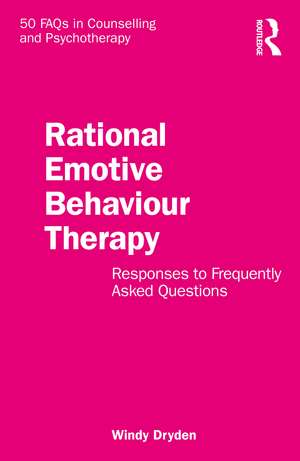
Rational Emotive Behaviour Therapy: Responses to Frequently Asked Questions: 50 FAQs in Counselling and Psychotherapy

Autor Windy Dryden
en Limba Engleză Paperback – 6 aug 2024

Remarcăm în această a treia ediție a Rational Emotive Behaviour Therapy un format extrem de eficient pentru specialiști: un volum compact în format paperback (166 pagini), organizat meticulos pentru a răspunde celor mai presante întrebări clinice. Subliniem că structura narativă nu urmează un curs teoretic abstract, ci progresează de la definirea cadrului ABC către aplicații practice riguroase, facilitând accesul la informație prin tabele comparative și diagrame structurale. Reținem că această lucrare reunește cele mai importante scrieri din ultimul deceniu ale lui Windy Dryden, oferind o perspectivă clară asupra evoluției terminologice de la terapia rațional-emotivă (RET) la cea rațional-emotivă și comportamentală (REBT).

În contextul operei sale vaste, dacă titluri precum Overcoming Anger sau Overcoming Procrastination se concentrează pe auto-ajutor și gestionarea unor simptome specifice, volumul de față servește drept fundament teoretic și tehnic pentru profesioniști. Acolo unde Getting Started with REBT oferă un ghid concis pentru evaluarea inițială, această lucrare aprofundează mecanismele de schimbare, cum ar fi disputarea credințelor iraționale și eficiența terapeutică. Comparativ cu A Practitioner's Guide to Rational-Emotive Behavior Therapy de Raymond A. DiGiuseppe, care oferă o revizuire filozofică extinsă, volumul lui Dryden este mai sintetic, concentrându-se pe elementele distinctive care separă REBT de alte forme de CBT.

Secțiunile cărții ghidează cititorul prin nuanțele subtile ale practicii, de la diferențierea emoțiilor negative sănătoase de cele nesănătoase, până la gestionarea tulburărilor bazate pe ego. Este o resursă clinică ce apără abordarea „tough-minded” a REBT, punând accent pe acceptarea realității și responsabilitatea personală în procesul de recuperare.
Citește tot Restrânge

Din seria 50 FAQs in Counselling and Psychotherapy


Specificații

ISBN-13: 9781032692050
ISBN-10: 1032692057
Pagini: 256
Dimensiuni: 129 x 198 x 17 mm
Greutate: 0.25 kg
Ediția:1
Editura: Taylor & Francis
Colecția Routledge
Seria 50 FAQs in Counselling and Psychotherapy

Locul publicării:Oxford, United Kingdom

Public țintă

Professional Practice & Development, Professional Reference, and Professional Training

De ce să citești această carte

Această carte este esențială pentru psihoterapeuții în formare și practicienii care doresc să stăpânească specificul REBT. Cititorul câștigă o înțelegere profundă a distincțiilor dintre „a te simți mai bine” și „a deveni mai bine”, primind instrumente concrete pentru a construi o alianță terapeutică solidă și pentru a contesta structurile cognitive rigide ale clienților. Este un manual de precizie care elimină ambiguitățile din practica clinică cotidiană.


Despre autor

Windy Dryden este profesor de studii psihoterapeutice la Goldsmiths College, Universitatea din Londra, și este recunoscut la nivel internațional drept una dintre cele mai importante autorități în Terapia Rațional-Emotivă și Comportamentală (REBT) și CBT. Cu o carieră prolifică, a scris sau editat peste 150 de volume destinate atât mediului academic, cât și publicului larg. Expertiza sa se reflectă în capacitatea de a sintetiza teorii complexe în pași practici, fiind un promotor activ al tehnicilor de consiliere eficientă și al dezvoltării profesionale continue pentru terapeuții din întreaga lume.


Cuprins

Introduction Part 1: The Nature of Rational Emotive Behaviour Therapy in Context Question 1. What is Rational Emotive Behaviour Therapy? Question 2. Why Have You Changed Some of REBT’s Basic Terminology? Question 3. What Is Meant by the ABC Framework in REBT? Moreover, Isn’t This Framework Overly Simplistic? Question 4. What Is the Difference Between Healthy and Unhealthy Negative Emotions? Question 5. How Can a Therapist and a Client Know if a Client’s Negative Emotion is Healthy or Unhealthy? Question 6. What Are the Differences Between Rigid/Extreme Attitudes and Flexible/Non-Extreme Attitudes in REBT? Question 7. What Is Ego-Based and Non-Ego-Based Disturbance in REBT, How Are They Different, and How Are They Clinically Valuable for the Practitioner? Question 8. Why Does REBT Not Advocate Helping Clients to Raise Their Self-Esteem? Question 9. What Is the Difference Between Helping People Feel Better and Get Better? Question 10. What Are the Differences Between Rational Emotive Behaviour Therapy and Cognitive Behaviour Therapy? Question 11. Is REBT a Transdiagnostic Approach to Therapy? Question 12. What Advantages Does REBT Have Which Would Make a Client Seek This Form of Psychotherapy? Question 13. What Does REBT Mean to Help Clients Become Less Disturbable, and Do Most Achieve This Goal? Part 2: The Practice of REBT Question 14. What Is the Role of the Therapeutic Alliance in REBT? Question 15. Do You Have to Practice REBT Like Albert Ellis? Question 16. Which Client Factors Contribute to a Good Outcome or a Poor Outcome in REBT? Question 17. Which Therapist Factors Contribute to a Good Outcome or a Poor Outcome in REBT? Question 18. How Do REBT Therapists Begin Therapy with New Clients? Question 19. How Are Therapy Sessions Structured in REBT? Question 20. Does the REBT Therapist’s Behaviour Change over the Process of REBT? Question 21. How Does REBT View Case Conceptualisation, and How Does This Differ from Generic CBT Case Conceptualisation? Question 22. What Is Meant by a Meta-Psychological Disturbance in REBT, and How Is It Addressed in Therapeutic Practice? Question 23. What Cognitive, Emotive and Behavioural Homework Assignments Do REBT Therapists Commonly Use? Question 24. When REBT Integrates Techniques and Ideas Found in Other Forms of Psychotherapy, How Does It Go About Doing So? Question 25. How Is Lack of Client Progress Conceptualised in REBT? Question 26. How Can Clients Be Harmed in REBT, and What Can Be Done to Prevent Such Harm? Part 3: Miscellaneous Questions Question 27. What Common Mistakes Should Novice Practitioners Avoid When Doing REBT? Question 28. How Important Is Using Language Accurately in REBT? Question 29. What Training Is Necessary to Become a Skilled REBT Practitioner? Question 30. What Activities Do You Think Can Best Help REBT Practitioners Hone Their Skills in REBT? Question 31. Does REBT Only Apply to Alleviate Disturbance, or Can It Assist the Client in Pursuing Meaning, Life Satisfaction and Happiness? Question 32. Why Do You Think REBT Is Less Popular Now Than It Was? Part 4: Personal Questions about REBT Question 33. What Drew You to REBT as Opposed to Any Other Therapeutic Approach? Question 34. Which Ideas or Techniques Have You Personally Found Most Helpful as a Practitioner in REBT? Question 35. How Have You Combined Your Interest in REBT with Your Interest in Single-Session Therapy? Question 36. I Understand You Used to Have a Bad Stammer as a Teenager. Did You Deal with This Problem in Ways that Were Consistent with REBT? Question 37. How Have You Applied REBT in Your Life since Becoming an REBT Therapist? Part 5: FAQs from Clients Question 38. REBT States that Events Do Not Cause Emotions. I Can See This Is the Case When Adverse Events Are Mild or Moderate, but Don’t Very Adverse Events Like Being Raped or Losing a Loved One Cause Disturbed Emotions? Question 39. I Am Worried about the Principle of Emotional Responsibility. Doesn’t It Lead to Blaming the Victim? Question 40. If I Disturb Myself about Your Bad Behaviour, for Example, Won’t that Lead You to Say that My Response Has Nothing to Do with Your Behaviour and Is This Not a Cop-Out on Your Behalf? Question 41. I Get the Impression that REBT Neglects the Past. Am I Right? Question 42. Doesn’t the REBT Concept of Acceptance Encourage Complacency? Question 43. Doesn’t REBT Encourage Selfishness? Question 44. I Understand the Ideas of REBT Intellectually, but I Find It Hard to Be Convinced of Them. What Can I Do? Question 45. How Do You Respond to the Criticism that REBT Therapists Brainwash Their Clients? Question 46. But Don’t REBT Therapists Tell Their Clients What to Feel and What to Do? Question 47. Don’t REBT Therapists Prevent Clients from Finding Their Own Solutions to Their Problems? Question 48. Isn’t REBT Too Confrontational? Question 49. Isn’t It the Case that REBT Is Only Concerned with Changing Attitudes? Question 50. REBT Relies Heavily on the Verbal Interchange Between Therapist and Client. It Also Advocates Concepts that Are Difficult to Grasp. Doesn’t This Mean REBT Only Works with Highly Verbal, Intelligent Clients?


Notă biografică

Windy Dryden is in clinical and consultative practice and is an international authority on Single-Session Therapy. He is Emeritus Professor of Psychotherapeutic Studies at Goldsmiths, University of London. He has worked in psychotherapy for more than 45 years and is the author or editor of over 275 books.

Descriere scurtă

Rational Emotive Behaviour Therapy: Responses to Frequently Asked Questions aims to answer the 50 most frequently asked questions on REBT by trainees, novice practitioners, and clients themselves.
This concise and readable book is divided into five parts, with each focusing on responding to questions about different elements of REBT from theory to practice and applications:
• Part 1: The Nature of Rational Emotive Behaviour Therapy in Context
• Part 2: The Practice of REBT
• Part 3: Miscellaneous Questions
• Part 4: Personal Questions about REBT
• Part 5: FAQs from Clients
The book will appeal to a wide range of counsellors and psychotherapists. It will provide trainee and novice therapists with answers to some of their own questions, give trainers and supervisors helpful responses to frequently asked questions in training and aid all levels of practitioners in answering questions from clients.

Recenzii

`An invaluable resource. It is easily accessible, well referenced and indexed and overall provides an excellent dissemination of REBT for today' - British Journal of Medical Psychology

`This Reader, whose articles are skilfully selected and arranged by Professor Dryden, serves both as an introduction to REBT and a highly detailed account of its actual practice... As an REBT therapist myself, I found much to learn from these authoritative chapters to enhance my own practice... I hope this book attracts a large readership within the counselling community and thereby lead to a more informed and balanced assessment of REBT' - British Psychological Society Counselling Psychology Review
`Addresses important issues in the practice of Rational Emotive Behaviour Therapy... a useful source of information for students and more experienced practitioners seeking an introduction to the method' - The Therapist
`For trainee counselors and those who seek an introduction to REBT, this book is an excellent resource' - Child and Family Behavior Therapy