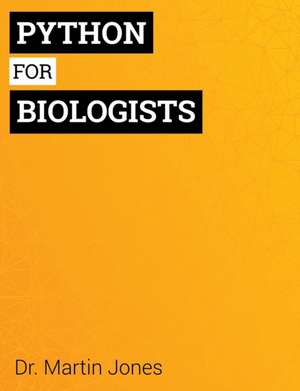
Python for Biologists
Autor Dr Martin Jonesen Limba Engleză Paperback
Actualizarea perspectivei asupra cercetării moderne impune stăpânirea unor instrumente computaționale solide, iar Python for Biologists reprezintă fundamentul necesar pentru orice om de știință care dorește să depășească limitările procesării manuale a datelor. Observăm cum autorul, Dr Martin Jones, își folosește expertiza de lector în Bioinformatică pentru a transforma un limbaj de programare complex într-o unealtă de lucru accesibilă. Această lucrare rafinează abordarea didactică începută în Python for Complete Beginners, adaptând conceptele fundamentale de programare la nevoile specifice ale laboratorului de biologie.
Structura cursului este riguros organizată, pornind de la configurarea mediului de dezvoltare și ajungând la automatizarea unor sarcini complexe. Ne-a atras atenția focalizarea pe exerciții practice care oglindesc fluxul real de lucru într-un proiect de bioinformatică: de la manipularea secvențelor de ADN și proteine în capitolul doi, până la lucrul cu formate standard precum FASTA. Descoperim aici o metodologie progresivă prin care cititorul învață să scrie propriile funcții pentru analiza compoziției aminoacizilor sau să utilizeze expresii regulate pentru identificarea motivelor în secvențe genomice. Pe linia practică a volumului Managing Your Biological Data with Python, dar cu un focus mai accentuat pe rezolvarea problemelor de bioinformatică prin scripturi personalizate, cartea elimină bariera tehnică dintre cercetător și seturile mari de date.
Spre deosebire de alte manuale tehnice, Python for Biologists nu se rezumă la teorie, ci insistă pe bunele practici de testare și documentare a codului, asigurându-se că programele create sunt robuste și pot fi utilizate de întreaga comunitate științifică. Este o resursă care transformă programarea dintr-o abilitate opțională într-un avantaj competitiv în cariera academică.
Preț: 218.85 lei
Preț vechi: 273.56 lei
-20%
Carte disponibilă
Livrare economică 17 noiembrie-01 decembrie
Specificații
ISBN-10: 1492346136
Pagini: 244
Dimensiuni: 189 x 246 x 13 mm
Greutate: 0.44 kg
Editura: CreateSpace Independent Publishing Platform
V-ar putea interesa
-
 Python Without FearBrian Overland-20%Preț: 223.20 lei279.00 lei
 -
 Learn Enough Python to Be DangerousMichael Hartl-20%Preț: 243.02 lei303.78 lei
 -
 MATLAB Programming for Biomedical Engineers and ScientistsAndrew P. King-27%Preț: 365.35 lei499.33 lei
 -
 Computing Skills for BiologistsStefano AllesinaPreț: 524.91 lei
 -
 Practical Computing for BiologistsSteven H. D. Haddock-27%Preț: 797.38 lei1092.30 lei
 -
 Python by ExampleNichola Lacey-20%Preț: 135.23 lei169.04 lei
 -
 Bioinformatics and Functional GenomicsJonathan Pevsner-23%Preț: 833.61 lei1082.62 lei
 -
 R-ticulateMartin Bader-23%Preț: 653.46 lei848.65 lei
 -
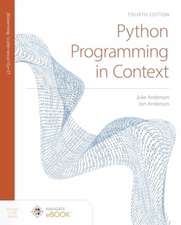 Python Programming in ContextJon Anderson-20%Preț: 864.48 lei1080.60 lei
 -
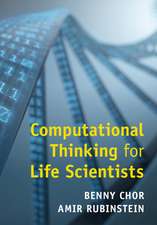 Computational Thinking for Life ScientistsBenny ChorPreț: 293.45 lei
 -
 Streamlining Your Research Laboratory with PythonMark F Russo-19%Preț: 569.15 lei702.66 lei
 -
 Statistical Analysis with Python For DummiesJoseph SchmullerPreț: 197.34 lei
 -
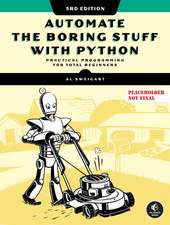 -34%Preț: 291.41 lei444.24 lei
 -
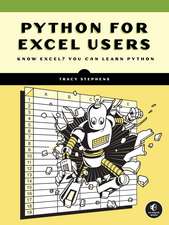 Python for Excel Users: Know Excel? You Can Learn PythonTracy Stephens-35%Preț: 238.55 lei369.12 lei
 -
 -37%Preț: 187.47 lei295.65 lei
 -
 BioinformaticsKhalid SayoodPreț: 313.36 lei
 -
 A Guide to Applied Machine Learning for BiologistsMohammad "Sufian" BadarPreț: 410.48 lei
 -
 Statistics for ScientistsUmberto Michelucci-20%Preț: 279.62 lei349.53 lei
 -
 The Python WorkbookBen Stephenson-20%Preț: 416.65 lei520.81 lei
 -
 A Primer on Scientific Programming with PythonHans Petter Langtangen-20%Preț: 651.64 lei814.55 lei
De ce să citești această carte
Recomandăm această carte biologilor și cercetătorilor care doresc să automatizeze analiza datelor genomice fără a avea cunoștințe prealabile de informatică. Prin parcurgerea exercițiilor de tăiere a intronilor sau filtrare a genelor, cititorul câștigă independență tehnică și capacitatea de a gestiona seturi de date masive, esențiale în bioinformatica modernă. Este un curs complet care transformă un începător într-un utilizator competent de Python.