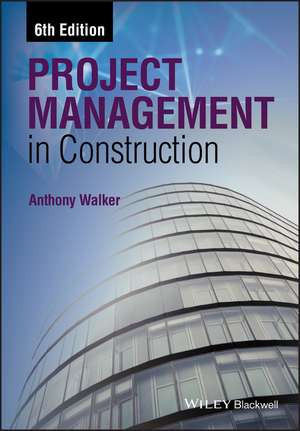
Project Management in Construction
Autor Anthony Walkeren Limba Engleză Paperback – 27 mar 2015
Gestionarea eficientă a unui șantier modern depășește simpla coordonare a resurselor materiale, transformându-se într-o problemă complexă de organizare a structurilor umane și tehnice sub presiunea unor termene stricte. Descoperim aici Project Management in Construction, o lucrare ajunsă la a șasea ediție, care propune soluționarea acestor provocări prin prisma teoriei sistemelor. Suntem de părere că forța acestui volum rezidă în capacitatea de a traduce concepte abstracte de management în instrumente pragmatice pentru faza de execuție și finalizare a proiectelor. Textul este structurat pentru a oferi o progresie logică: începe cu definirea procesului de management și evoluția istorică a organizațiilor, trece prin analiza diverselor școli de gândire (comportamentală, socio-tehnică sau configurațională) și culminează cu aplicații practice privind controlul și responsabilizarea participanților. Pe linia practică a lucrării People and Organizational Management in Construction, dar cu focus pe rigoarea teoriei sistemelor, Anthony Walker explică modul în care structura organizațională influențează direct succesul unui proiect. Notăm cu interes adăugarea unor teme critice în această ediție, precum sustenabilitatea și managementul lanțului de aprovizionare, elemente care devin obligatorii în contextul legislativ actual. Față de Managing Complex Construction Projects, care se concentrează pe atenuarea riscurilor în proiecte de anvergură, volumul de față oferă o bază teoretică mai vastă, incluzând perspective din teoria costurilor de tranzacție și teoria complexității, esențiale pentru înțelegerea organizațiilor temporare specifice domeniului construcțiilor. Deși autorul a explorat în alte lucrări teme diverse, experiența sa de Profesor Emerit și activitatea de „chartered surveyor” în Orientul Mijlociu și Extremul Orient conferă acestui manual o autoritate tehnică incontestabilă.
Preț: 436.74 lei
Carte disponibilă
Livrare economică 09-23 noiembrie
Livrare express 23-29 octombrie pentru 49.70 lei
Specificații
ISBN-10: 1118500407
Pagini: 350
Dimensiuni: 173 x 245 x 16 mm
Greutate: 0.68 kg
Ediția:6. Auflage
Editura: John Wiley and Sons Ltd
Locul publicării:Chichester, United Kingdom
V-ar putea interesa
-
 Strategic Project OrganizingGraham Miles Winch-21%Preț: 372.95 lei472.53 lei
 -
 Project Manager, TheRichard NewtonPreț: 246.30 lei
 -
 The Project Management BookRichard NewtonPreț: 128.46 lei
 -
 People and Organizational Management in ConstructionShamil NaoumPreț: 414.25 lei
 -
 Preț: 379.89 lei
 -
 -19%Preț: 414.50 lei511.72 lei
 -
 Project Management LeadershipRory BurkePreț: 213.53 lei
 -
 Construction Project ManagementS Keoki Sears-11%Preț: 647.59 lei727.63 lei
 -
 -19%Preț: 451.56 lei557.48 lei
 -
 Preț: 183.97 lei
 -
 Project Management - A Managerial Approach, Eleventh EditionJack R. Meredith-23%Preț: 960.56 lei1247.48 lei
 -
 Project Management Next GenerationHarold R. Kerzner-19%Preț: 494.45 lei610.43 lei
 -
 Little Book of Big Management Questions, TheJames McgrathPreț: 106.12 lei
 -
 Project ManagementHarvey Maylor-9%Preț: 567.51 lei623.63 lei
 -
 How to Measure Anything in Project ManagementDouglas W. HubbardPreț: 357.24 lei
 -
 Project ManagementHarold R. Kerzner-23%Preț: 694.25 lei901.62 lei
 -
 Project Management with AI For DummiesDaniel Stanton-20%Preț: 140.32 lei175.39 lei
 -
 Agile Project Management For DummiesMark C LaytonPreț: 171.30 lei
 -
 -8%Preț: 620.59 lei674.56 lei
 -
 -22%Preț: 236.41 lei302.24 lei
Public țintă
Second and third year undergraduate students in construction management and related disciplines.De ce să citești această carte
Recomandăm această carte studenților din anii superiori și inginerilor care doresc să treacă de la execuția tehnică la managementul strategic. Cititorul câștigă o înțelegere profundă a modului în care se structurează echipele și cum pot fi integrate cerințele de sustenabilitate și interesele stakeholderilor într-un flux de lucru coerent. Este un ghid esențial pentru a naviga complexitatea organizațională a șantierelor moderne folosind teoria sistemelor.
Despre autor
Anthony Walker este Profesor Emerit în Real Estate și Construcții la Universitatea din Hong Kong. Expert topometru autorizat (chartered surveyor), acesta deține o experiență internațională vastă, activând profesional în Marea Britanie, Orientul Mijlociu și Extremul Orient. Această perspectivă globală și academică se reflectă în rigoarea cu care tratează structurile de organizare în construcții. Deși bibliografia sa include și lucrări cu caracter personal sau teologic, expertiza sa principală rămâne ancorată în managementul și economia construcțiilor, fiind o voce de referință în domeniu.