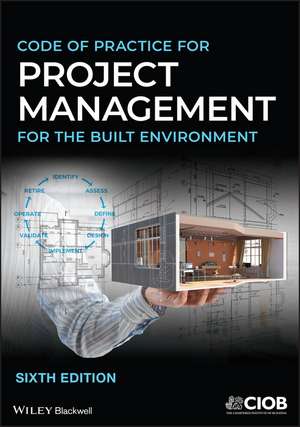
Code of Practice for Project Management for the Built Environment
Autor Cioben Limba Engleză Paperback – 23 iun 2022
Problema productivității scăzute și a complexității legislative în industria construcțiilor moderne necesită un cadru de lucru riguros și standardizat. În această a șasea ediție a Code of Practice for Project Management for the Built Environment, considerăm că Ciob (the Chartered Institute of Building) oferă soluția tehnică necesară pentru a naviga prin provocările actuale ale mediului construit. Ne-a atras atenția modul în care textul integrează noile tehnologii și cerințele de sustenabilitate, precum obiectivul „carbon net zero”, transformându-le din concepte abstracte în cerințe operaționale. Structura volumului urmărește logic și progresiv cele opt etape fundamentale ale unui proiect: de la identificarea nevoilor și evaluarea fezabilității, până la execuție, operare și, în final, dezafectarea sau reconversia structurii. Fiecare capitol este segmentat în scop, activități și decizii-cheie, oferind o claritate procedurală esențială pentru managerii de proiect. Ca și Albert Lester în Project Management, Planning and Control, autorul distilează experiență reală în principii acționabile, însă Ciob (the Chartered Institute of Building) pune un accent mai puternic pe documentația sistematică și pe conformitatea contractuală la nivel global. Această lucrare completează viziunea tehnică începută în alte publicații ale institutului, precum Design Manager's Handbook, mutând focusul de la coordonarea informațiilor de design către managementul integrat al întregului proces de dezvoltare. Găsim în acest ghid nu doar o expunere teoretică, ci un standard industrial care abordează direct integrarea lanțului de aprovizionare și digitalizarea designului. Este o resursă esențială pentru menținerea profitabilității în proiecte complexe, oferind un limbaj comun pentru toți actorii implicați în procesul de construcție.
Preț: 427.71 lei
Preț vechi: 528.03 lei
-19%
Carte disponibilă
Livrare economică 18 mai-01 iunie
Livrare express 01-07 mai pentru 46.62 lei
Specificații
ISBN-10: 111971513X
Pagini: 288
Dimensiuni: 297 x 210 x 24 mm
Greutate: 0.83 kg
Ediția:6. Auflage
Editura: John Wiley and Sons Ltd
Locul publicării:Chichester, United Kingdom
V-ar putea interesa
-
 -8%Preț: 463.35 lei503.64 lei
 -
 Preț: 223.50 lei
 -
 Design-Tech: Building Science for ArchitectsJason Alread-8%Preț: 450.24 lei489.39 leiRecomandat
 -
 Architect's Legal Handbook: The Law for ArchitectsAnthony Speaight KCPreț: 427.96 leiRecomandat
 -
 Project ManagementRory BurkePreț: 461.49 lei
 -
 Construction Project ManagementS Keoki Sears-11%Preț: 602.55 lei677.02 lei
 -
 Bim and Construction ManagementBrad HardinPreț: 354.00 lei
 -
 Project Management for Dummies 2e UKN GrahamPreț: 174.40 lei
 -
 The Fast Forward MBA in Project ManagementEric VerzuhPreț: 186.64 lei
 -
 Introduction To Environmental Impact AssessmentRiki Therivel-8%Preț: 412.89 lei448.80 lei
 -
 Preț: 346.38 lei
 -
 Code of Practice for Programme Management in the Built EnvironmentCiob (the Chartered Institute of Building)-19%Preț: 470.91 lei581.36 lei
 -
 Construction Project Scheduling and ControlSaleh A. Mubarak-23%Preț: 812.65 lei1055.39 lei
 -
 How to Measure Anything in Project ManagementDouglas W. HubbardPreț: 332.60 lei
 -
 A Guide to the Project Management Body of Knowledge (PMBOK® Guide) — Eighth Edition and The Standard for Project ManagementProject Management Institute PMI-8%Preț: 576.47 lei626.60 lei
 -
 Handbook of Practice ManagementMatt Thompson-8%Preț: 505.98 lei549.98 lei
 -
 Guide to JCT Intermediate Building Contract 2024Sarah Lupton-8%Preț: 423.76 lei460.62 lei
 -
 Guide to JCT Standard Building Contract 2024Sarah Lupton-8%Preț: 424.18 lei461.06 lei
 -
 Project ManagementBernd-J. Madauss-15%Preț: 714.27 lei840.33 lei
 -
 -33%Preț: 372.42 lei555.53 lei
De ce să citești această carte
Recomandăm această lucrare oricărui profesionist care gestionează proiecte de construcții de anvergură. Cititorul câștigă acces la standardul de aur al industriei, actualizat pentru realitățile tehnologice și de mediu din 2024. Este un instrument practic care transformă gestionarea riscurilor și controlul calității în procese predictibile, fiind la fel de util managerilor de proiect experimentați, cât și studenților la inginerie civilă care doresc o bază metodologică solidă.
Despre autor
Ciob (the Chartered Institute of Building) este cea mai mare și influentă organizație profesională din lume dedicată managementului și leadershipului în construcții. Înființată prin Cartă Regală, instituția are misiunea de a promova știința și practica construcțiilor în beneficiul societății. Membrii săi activează la nivel global în dezvoltarea, conservarea și îmbunătățirea mediului construit. Prin publicațiile sale tehnice, CIOB stabilește standardele de bune practici în domeniu, influențând direct modul în care sunt planificate și executate proiectele de infrastructură și clădiri la nivel internațional.