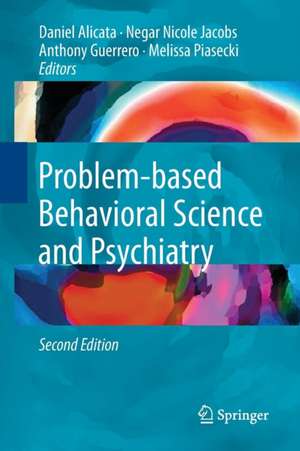
Problem-based Behavioral Science and Psychiatry
en Limba Engleză Paperback – 22 apr 2018
Descoperim în Problem-based Behavioral Science and Psychiatry un algoritm de învățare structurat pe modelul PBL (Problem-Based Learning), unde procesul începe nu cu teoria abstractă, ci cu o vinietă clinică ce simulează un scenariu real de cabinet. Această a doua ediție, revizuită pentru a încorpora criteriile de diagnostic DSM-5, transformă studentul într-un participant activ la procesul de diagnosticare și planificare terapeutică. Subliniem faptul că textul nu se limitează la descrierea simptomatologiei, ci utilizează diagrame de caz inovatoare pentru a evidenția legătura directă dintre manifestările comportamentale și substratul neurobiologic. Reținem organizarea riguroasă a celor 617 pagini, care ghidează cititorul prin progresia firească a ciclului de viață: de la dezvoltarea infantilă și efectele experiențelor timpurii asupra creierului, până la provocările etice ale îngrijirii la sfârșitul vieții. Capitolele sunt concepute pentru a integra științele comportamentale în practica medicală generală, abordând teme esențiale precum aderența la tratament, stigmatizarea în medicină și relația medic-pacient. Acolo unde BRS Behavioral Science de Barbara Fadem PhD oferă o sinteză rapidă, în format de puncte cheie, optimizată pentru memorare accelerată, volumul coordonat de Daniel Alicata aprofundează mecanismele de sinteză a cunoștințelor prin analiză multidisciplinară. În comparație cu Psychiatry in Medical Practice de David Goldberg, care se concentrează pe servicii și legislație, acest manual prioritizează aplicabilitatea clinică a științelor comportamentale prin exerciții de evaluare, interviu clinic și diagnostic diferențial, fiind un instrument robust pentru pregătirea examenelor USMLE Step 1 și 2.
Preț: 796.51 lei
Preț vechi: 838.44 lei
-5%
Carte disponibilă
Livrare economică 05-19 noiembrie
Specificații
ISBN-10: 331979518X
Pagini: 617
Ilustrații: XIII, 617 p. 331 illus.
Dimensiuni: 155 x 235 mm
Greutate: 0.87 kg
Ediția:Softcover reprint of the original 2nd ed. 2016
Editura: Springer International Publishing
Locul publicării:Cham, Switzerland
V-ar putea interesa
-
 Behavioral Health Response to DisastersJulie Framingham-5%Preț: 1282.70 lei1350.22 lei
 -
 -5%Preț: 627.44 lei660.46 lei
 -
 Obsessive-Compulsive Symptoms in SchizophreniaLieuwe De Haan-5%Preț: 738.01 lei776.84 lei
 -
 An Outline of Psychiatry in Clinical LecturesOnzm Miller-5%Preț: 1162.13 lei1223.29 lei
 -
 Psychiatrie, Psychosomatik und Psychotherapie ...in 5 TagenFrank Schneider-5%Preț: 468.06 lei492.70 lei
 -
 Bipolar DisorderKostas N. Fountoulakis-5%Preț: 769.34 lei809.83 lei
De ce să citești această carte
Această resursă este esențială pentru studenții la medicină și psihologie care doresc să depășească memorarea mecanică a criteriilor DSM-5. Prin utilizarea scenariilor clinice reale și a întrebărilor de verificare, cititorul câștigă capacitatea de a sintetiza informații complexe și de a aplica neuroștiințele în interacțiunea directă cu pacientul. Este un ghid practic care transformă teoria comportamentală într-o competență clinică aplicabilă imediat.
Despre autor
Editorii volumului, Daniel Alicata, Negar Jacobs, Anthony Guerrero și Melissa Piasecki, sunt specialiști cu o vastă experiență în psihiatrie și educație medicală. Aceștia au coordonat o echipă de peste 40 de experți, mulți dintre aceștia fiind formați în sisteme pedagogice Problem-Based Learning. Expertiza lor colectivă acoperă arii diverse, de la psihiatria copilului și adolescentului până la bioetică, reușind să ofere o perspectivă integrată asupra sănătății mintale în cadrul Springer International Publishing.
Descriere scurtă
The new 2nd edition of Problem-Based Behavioral Science and Psychiatry integrates DSM-5 updates and diagnostic criteria, and is fully consistent with PBL models and methods. Building on the strengths of the popular and widely downloaded 1st edition, the 2nd edition is a clinically robust resource for both the medical and the behavioral science student. Over 40 contributors, many themselves graduates of PBL medical schools, apply problem-based learning methods to specific psychiatric disorders, general clinical issues, and bedrock physician skills such as the intake interview and treatment planning.
The book’s fictional case vignettes illustrated typical patient scenarios, providing real-world context for content areas,and accompanying case diagrams show the relationships between patient behaviour and underlying neurobiological structures. Each student-friendly section ends with helpful review questions.
A sampling of the content areas covered:
· Childhood development and brain development.
· Major psychiatric illnesses, including personality, mood, anxiety, and psychotic disorders.
· Stress, substance abuse, and violence.
· Eating, sleep, and sexual disorders.
· Coping skills and treatment compliance.
· End-of-life care.
· PLUS chapters on cultural sensitivity, ethical concerns, and the physician/patient relationship.
This book is ideal for first and second year medical students wanting to learn about psychiatry in the exciting context of realistic cases. It also makes an excellent prep/review text for third- and fourth-year medical students preparing for the USMLE Step 1 and 2 exams, as well as being suited to graduate students in psychology or clinical social work. Problem-Based Behavioral Science and Psychiatry encourages lifelong learning and helps build the foundation for a lifelong career.
Cuprins
Recenzii
Notă biografică
Dr. N. Nicole Jacobs is an Associate Professor in the Department of Psychiatry and Behavioral Sciences at the University of Nevada School of Medicine. She serves as the Behavioral Science Coordinator and is the Co-Director of the Practice of Medicine Block. She completed her undergraduate education at the University of Washington in Seattle and earned her graduate degrees at the University of Nevada in Reno. She completed her internship and post-doctoral fellowship at the Veteran’s Affairs Sierra Nevada Health Care System in Reno, Nevada. Her areas of special interest include development and delivery of evidence-based treatments, integrated medical student and resident education, behavioral health care with a focus on behavioral medicine and the delivery of behavioral health care in primary care settings, addictive disorders, infertility, implicit bias, and cross-cultural issues.
Dr. Melissa Piasecki is a professor of psychiatry and the Executive Associate Dean at the University of Nevada School of Medicine. She is also on faculty at the National Judicial College. Her specialty is forensic psychiatry. Sheearned her bachelor’s degree and her M.D. from Washington University in St. Louis, Missouri. She completed her psychiatry residency at the University of Vermont and her forensic psychiatry fellowship at the University of Hawaii. She teaches psychiatry, the neuroscience of addiction, and forensic psychiatry to medical students, medical residents, and legal professionals. She is a fellow of the American Psychiatric Association and is a member of the American Academy of Psychiatry and the Law.