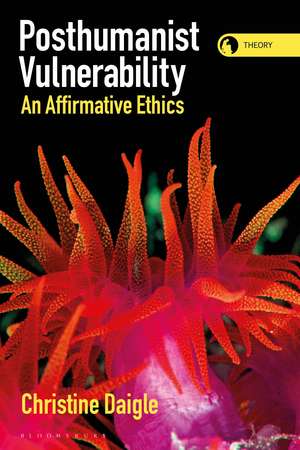
Posthumanist Vulnerability: An Affirmative Ethics: Theory in the New Humanities
Autor Christine Daigleen Limba Engleză Hardback – 13 iul 2023
Posthuman Vulnerability fills a significant theoretical gap - whilst feminism has explored the affirming power of vulnerability, it's been from a very human-centric viewpoint. In posing a feminist and posthuman take on vulnerability, Daigle is bridging traditions in a totally original and much needed way.
Din seria Theory in the New Humanities
- 24%
 Preț: 202.84 lei
 - 15%
 Preț: 166.00 lei
 - 20%
 Preț: 159.85 lei
 - 26%
 Preț: 198.73 lei
 - 18%
 Preț: 216.17 lei
 - 46%
 Preț: 229.93 lei
 - 20%
 Preț: 164.50 lei
 - 28%
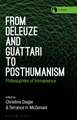 Preț: 209.30 lei
 - 28%
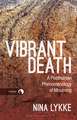 Preț: 209.30 lei
 - 28%
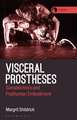 Preț: 211.87 lei
 - 14%
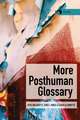 Preț: 162.03 lei
 - 22%
 Preț: 157.73 lei
 - 15%
 Preț: 158.59 lei
 - 32%
 Preț: 560.58 lei
 - 32%
 Preț: 555.13 lei
 - nou
 Preț: 128.07 lei
Preț: 437.92 lei
Preț vechi: 492.04 lei
-11%
Puncte Express: 657
Carte tipărită la comandă
Livrare economică 18 noiembrie-02 decembrie
Livrare prin curier în România Termenul estimat este afișat lângă disponibilitate.
Transport gratuit pentru acest produs Plată online sau ramburs, în funcție de opțiunile comenzii.
Retur gratuit în 14 zile Comandă securizată și suport în română.
Specificații
ISBN-13: 9781350302877
ISBN-10: 1350302872
Pagini: 224
Ilustrații: 3 bw illus
Dimensiuni: 138 x 216 x 25 mm
Greutate: 0.41 kg
Editura: Bloomsbury Publishing
Colecția Bloomsbury Academic
Seria Theory in the New Humanities
Locul publicării:London, United Kingdom
ISBN-10: 1350302872
Pagini: 224
Ilustrații: 3 bw illus
Dimensiuni: 138 x 216 x 25 mm
Greutate: 0.41 kg
Editura: Bloomsbury Publishing
Colecția Bloomsbury Academic
Seria Theory in the New Humanities
Locul publicării:London, United Kingdom
Cuprins
Meandering 1: In lieu of a Preface
Introduction: By way of Getting Started
Meandering 2: Land Acknowledgement
Chapter 1: The Transjective-A Posthumanist Material Feminist Ontology
Meandering 3: Charlie and Me
Chapter 2: Our Polyp-Being
Meandering 4: Feeling/Being Out of Place
Chapter 3: Affective Fabric and Collective Agency
Meandering 5: Inoculation
Chapter 4: Of Selves and Agents
Meandering 6: Inosculation
Meandering 7: 4am By the Train Tracks
Chapter 5: Vulnerability
Meandering 8: World in Turmoil
Chapter 6: Manifold Toxicity
Meandering 9: Cohabitating
Chapter 7: Ethical Thriving
References
Introduction: By way of Getting Started
Meandering 2: Land Acknowledgement
Chapter 1: The Transjective-A Posthumanist Material Feminist Ontology
Meandering 3: Charlie and Me
Chapter 2: Our Polyp-Being
Meandering 4: Feeling/Being Out of Place
Chapter 3: Affective Fabric and Collective Agency
Meandering 5: Inoculation
Chapter 4: Of Selves and Agents
Meandering 6: Inosculation
Meandering 7: 4am By the Train Tracks
Chapter 5: Vulnerability
Meandering 8: World in Turmoil
Chapter 6: Manifold Toxicity
Meandering 9: Cohabitating
Chapter 7: Ethical Thriving
References
Recenzii
Drawing inspiration from non-human critters such as coral polyps and an insistent bee, Posthumanist Vulnerability explores what it means to be vulnerable and agentic - transjective - beings, and how they may teach humans ethical lessons in unlearning human exceptionalism. This is a truly wonderful book, full of new, affirmative posthumanist insight.
Daigle's Posthumanist Vulnerability is a timely philosophical monograph, highlighting the affirmative potential of multispecies vulnerability amidst unprecedented times of more-than-human crises. Bringing together traditions as diverse as feminist materialist philosophy, phenomenology, Deleuzoguattarian thought, and affect theory, Daigle dethrones the human subject and convincingly pleas for the radical embracing of a shared posthumanist vulnerability.
Daigle's Posthumanist Vulnerability is a timely philosophical monograph, highlighting the affirmative potential of multispecies vulnerability amidst unprecedented times of more-than-human crises. Bringing together traditions as diverse as feminist materialist philosophy, phenomenology, Deleuzoguattarian thought, and affect theory, Daigle dethrones the human subject and convincingly pleas for the radical embracing of a shared posthumanist vulnerability.
Notă biografică
Christine Daigle is Professor of Philosophy at Brock University, Canada, where she is also Director of the Posthumanism Research Institute.