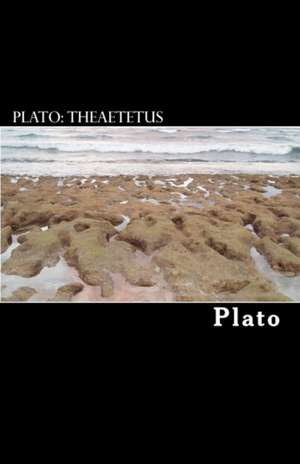
Plato
Autor Platoen Limba Engleză Paperback – 31 mar 2010
Preț: 73.83 lei
Puncte Express: 111
Carte indisponibilă temporar
Livrare prin curier în România Termenul estimat este afișat lângă disponibilitate.
Transport gratuit de la 400.00 lei Plată online sau ramburs, în funcție de opțiunile comenzii.
Retur gratuit în 14 zile Comandă securizată și suport în română.
Specificații
ISBN-13: 9781452800387
ISBN-10: 1452800383
Pagini: 106
Dimensiuni: 140 x 216 x 6 mm
Greutate: 0.13 kg
Editura: CREATESPACE
ISBN-10: 1452800383
Pagini: 106
Dimensiuni: 140 x 216 x 6 mm
Greutate: 0.13 kg
Editura: CREATESPACE
V-ar putea interesa
-
 The PrinceNiccolo MachiavelliPreț: 28.01 lei
 -
 SymposiumPlatoPreț: 27.61 lei
 -
 Behavior in Public PlacesErving Goffman-41%Preț: 75.07 lei127.96 lei
 -
 The Lost Duke of WyndhamJulia QuinnPreț: 53.50 lei
 -
 The Secret Diaries of Miss Miranda CheeverJulia QuinnPreț: 53.65 lei
 -
 Ten Things I Love about YouJulia QuinnPreț: 53.00 lei
 -
 Because of Miss BridgertonJulia QuinnPreț: 57.69 lei
 -
 The Sickness Unto DeathSøren Kierkegaard-26%Preț: 57.59 lei78.30 lei
 -
 The RepublicPlato-29%Preț: 66.62 lei94.34 lei
 -
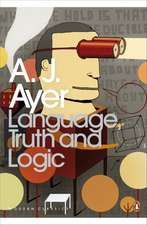 Language, Truth and LogicA. J. Ayer-20%Preț: 73.73 lei92.32 lei
 -
 The Communist ManifestoFriedrich Engels-39%Preț: 17.49 lei28.48 lei
 -
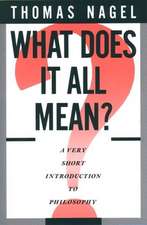 Preț: 226.45 lei
 -
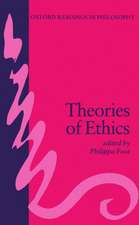 Theories of EthicsPhilippa Foot-19%Preț: 334.34 lei413.50 lei
 -
 Contemporary Political Philosophy: An IntroductionWill Kymlicka-20%Preț: 408.79 lei511.61 lei
 -
 AeneidVirgil-16%Preț: 62.08 lei74.03 lei
 -
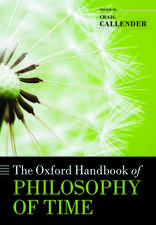 The Oxford Handbook of Philosophy of TimeCraig Callender-20%Preț: 313.67 lei389.81 lei
 -
 Problems of the SelfBernard WilliamsPreț: 196.69 lei
 -
 The Philosophy of MindPeter SmithPreț: 223.90 lei
 -
 HumeDorothy ColemanPreț: 350.97 lei
 -
 An Enquiry Concerning Human UnderstandingDavid HumePreț: 350.65 lei
 -
 Introduction to Contemporary EpistemologyJonathan DancyPreț: 292.92 lei
 -
 A Kant DictionaryHoward CaygillPreț: 304.00 lei
 -
 From a Logical Point of View – Nine Logical Philosophical Essays Rev (Paper)Willard Van Orm QuinePreț: 242.89 lei
 -
 Draw 50 Boats, Ships, Trucks, and TrainsLee JamesPreț: 63.89 lei
 -
 Escaping from EdenPaul WallisPreț: 76.42 lei
 -
 Preț: 85.48 lei
 -
 Uses of PessimismRoger Scruton-31%Preț: 64.48 lei93.10 lei
Descriere
Descriere de la o altă ediție sau format:
This edition of Platos' short Dialogue, Laches, provides a detailed commentary on one of the most approachable and lively philosophical works in Greek. The concept of courage is the subject under discussion, in which Socrates questions and leads some prominent Athenian citizens to develop their ideas and recognise short comings. Two features of the work area particularly interesting: the argument and its setting draw upon and exploit the tensions in a wide range of 5th- and 4th-century BC cultural and social values submitting them to criticism: secondly, Plato's ideas and linguistic expression interrelated to provide a work which is ironically questioning rather than purely didactic.
This miniature masterpiece can only be fully appreciated through a reading of the original Greek text. The simplicity of language (accessible to students with just one or two year's Greek) belies the richness of texture, subtlety of characterisation and liveliness of style. Laches provides an introduction to Greek philosophy and culture through the work of one its greatest thinkers and artists.
This edition of Platos' short Dialogue, Laches, provides a detailed commentary on one of the most approachable and lively philosophical works in Greek. The concept of courage is the subject under discussion, in which Socrates questions and leads some prominent Athenian citizens to develop their ideas and recognise short comings. Two features of the work area particularly interesting: the argument and its setting draw upon and exploit the tensions in a wide range of 5th- and 4th-century BC cultural and social values submitting them to criticism: secondly, Plato's ideas and linguistic expression interrelated to provide a work which is ironically questioning rather than purely didactic.
This miniature masterpiece can only be fully appreciated through a reading of the original Greek text. The simplicity of language (accessible to students with just one or two year's Greek) belies the richness of texture, subtlety of characterisation and liveliness of style. Laches provides an introduction to Greek philosophy and culture through the work of one its greatest thinkers and artists.
Recenzii
"This trio from St. John’s has produced the most high-fidelity English translation of the Meno available. The Introduction offers a no-nonsense summary of the dialogue, and ample footnotes alert the reader to important Greek terms, while also situating significant claims in their historical context as well as in the context of Plato’s larger corpus. The Glossary helpfully places the focus on core philosophical concepts, and the Select Bibliography makes for a manageable introduction to some of the standard scholarship. This volume is an all-around success."
—Charles Ives, University of Washington
“This gem of a dialogue is elegantly rendered into English, masterfully achieving the twin goals of illuminating the Greek and speaking to a modern audience. In its fifth translation of a Platonic dialogue, the team of Brann, Kalkavage, and Salem is at the top of its craft, bringing alive this important Platonic dialogue in search of a definition of virtue.”
—Stephen Scully, Boston University
"The translation stays close to the Greek while remaining clear and lively, allowing the reader to become absorbed in the drama without losing any of the provocative details of the original. The notes provide new and experienced readers with powerful tools for better appreciating both the task of the translator and the drama of the exchange between the characters. This is a first-rate volume for engaging each of the themes raised in the Meno while offering help pulling them all together. It is an excellent point of entry into Platonic dialogues and into philosophy generally, in fine Socratic spirit."
—Eric Sanday, University of Kentucky
"The appearance of a new translation of a Platonic dialogue by Eva Brann, Peter Kalkavage, and Eric Salem for the Focus Philosophical Library is always exciting, and this edition of the Meno does not disappoint. The translation is highly praiseworthy for its fidelity and lucidity, accurately capturing the vocabulary of the Greek while presenting the text in an engaging, colloquial form that places it among the best English translations of Plato. The book’s value is increased by an authoritative but concise introductory overview of the dialogue, extensive historical and linguistic footnotes, and detailed geometric diagrams set directly within the text, rather than in an appendix. These virtues, along with its affordable cost, make this edition a must-have for scholars and an excellent choice for teaching at all levels."
—Colin C. Smith, Pennsylvania State University, in Bryn Mawr Classical Review
“As one would expect from the team of Brann, Kalkavage and Salem, their edition of Plato's Meno is a fine one. The translation meets their stated goal of remaining 'as faithful as possible to the Greek, while using lively, colloquial English.' Their notes are consistently helpful and will be particularly useful to those readers willing to explore the nuances of Plato's extraordinary prose. Their introduction is clear and compact, and it highlights the most philosophically important themes of the dialogue. One particularly useful feature of this edition is the manner in which it displays the diagrams Socrates draws in order to illustrate his famous 'square within a square.' Instead of relegating them to the notes, it integrates them into the text of the dialogue itself. Readers are able to follow along, and 'watch' Socrates actually construct them."
—David Roochnik, Boston University
—Charles Ives, University of Washington
“This gem of a dialogue is elegantly rendered into English, masterfully achieving the twin goals of illuminating the Greek and speaking to a modern audience. In its fifth translation of a Platonic dialogue, the team of Brann, Kalkavage, and Salem is at the top of its craft, bringing alive this important Platonic dialogue in search of a definition of virtue.”
—Stephen Scully, Boston University
"The translation stays close to the Greek while remaining clear and lively, allowing the reader to become absorbed in the drama without losing any of the provocative details of the original. The notes provide new and experienced readers with powerful tools for better appreciating both the task of the translator and the drama of the exchange between the characters. This is a first-rate volume for engaging each of the themes raised in the Meno while offering help pulling them all together. It is an excellent point of entry into Platonic dialogues and into philosophy generally, in fine Socratic spirit."
—Eric Sanday, University of Kentucky
"The appearance of a new translation of a Platonic dialogue by Eva Brann, Peter Kalkavage, and Eric Salem for the Focus Philosophical Library is always exciting, and this edition of the Meno does not disappoint. The translation is highly praiseworthy for its fidelity and lucidity, accurately capturing the vocabulary of the Greek while presenting the text in an engaging, colloquial form that places it among the best English translations of Plato. The book’s value is increased by an authoritative but concise introductory overview of the dialogue, extensive historical and linguistic footnotes, and detailed geometric diagrams set directly within the text, rather than in an appendix. These virtues, along with its affordable cost, make this edition a must-have for scholars and an excellent choice for teaching at all levels."
—Colin C. Smith, Pennsylvania State University, in Bryn Mawr Classical Review
“As one would expect from the team of Brann, Kalkavage and Salem, their edition of Plato's Meno is a fine one. The translation meets their stated goal of remaining 'as faithful as possible to the Greek, while using lively, colloquial English.' Their notes are consistently helpful and will be particularly useful to those readers willing to explore the nuances of Plato's extraordinary prose. Their introduction is clear and compact, and it highlights the most philosophically important themes of the dialogue. One particularly useful feature of this edition is the manner in which it displays the diagrams Socrates draws in order to illustrate his famous 'square within a square.' Instead of relegating them to the notes, it integrates them into the text of the dialogue itself. Readers are able to follow along, and 'watch' Socrates actually construct them."
—David Roochnik, Boston University
Notă biografică
Plato was an ancient Greek philosopher born in Athens during the Classical period in Ancient Greece. In Athens, Plato founded the Academy, a philosophical school where he taught the philosophical doctrines that would later become known as Platonism. Plato (or Platon) was a pen name derived, apparently, from the nickname given to him by his wrestling coach - allegedly a reference to his physical broadness. According to Alexander of Miletus quoted by Diogenes of Sinope his actual name was Aristocles, son of Ariston, of the deme Collytus (Collytus being a district of Athens).[2]Plato was an innovator of the written dialogue and dialectic forms in philosophy. He raised problems for what later became all the major areas of both theoretical philosophy and practical philosophy. His most famous contribution is the Theory of forms, which has been interpreted as advancing a solution to what is now known as the problem of universals. He is also the namesake of Platonic love and the Platonic solids.His own most decisive philosophical influences are usually thought to have been, along with Socrates, the pre-Socratics Pythagoras, Heraclitus, and Parmenides, although few of his predecessors' works remain extant and much of what we know about these figures today derives from Plato himself.[a]Along with his teacher, Socrates, and his student, Aristotle, Plato is a central figure in the history of philosophy.[b] Unlike the work of nearly all of his contemporaries, Plato's entire body of work is believed to have survived intact for over 2,400 years.[6] Although their popularity has fluctuated, Plato's works have consistently been read and studied.[7] Through Neoplatonism Plato also greatly influenced both Christian and Islamic philosophy (through e.g. Al-Farabi). In modern times, Alfred North Whitehead famously said: "the safest general characterization of the European philosophical tradition is that it consists of a series of footnotes to Plato
Cuprins
Introduction; Editorial Notes; Acknowledgments
Euthyphro, Apology, Crito, Phaedo, trans. G. M. A. Grube
Cratylus, trans. C. D. C. Reeve
Theaetetus, trans. M. J. Levett, rev. M. Burnyeat
Sophist, trans. N. White
Statesman, trans. C. J. Rowe
Parmenides, trans. M. L. Gill and P. Ryan
Philebus, trans. D. Frede
Symposium, Phaedrus, trans. A. Nehamas and P. Woodruff
Alcibiades, trans. D. S. Hutchinson
Second Alcibiades, trans. A. Kenny
Hipparchus, trans. N. Smith
Rival Lovers, trans. J. Mitscherling
Theages, trans. N. D. Smith
Charmides, Laches, trans. R. K. Sprague
Lysis, trans. S. Lombardo
Euthydemus, trans. R. K. Sprague
Protagoras, trans. S. Lombardo and K. Bell
Gorgias, trans. D. J. Zeyl
Meno, trans. G. M. A. Grube
Greater Hippias, trans. P. Woodruff
Lesser Hippias, trans. N. J. Smith
Ion, trans. P. Woodruff
Menexenus, trans. P. Ryan
Clitophon, trans. F. J. Gonzalez
Republic, trans. G. M. A. Grube, rev. C. D. C. Reeve
Timaeus, trans. D. J. Zeyl
Critias, trans. D. Clay
Minos, trans. M. Schofield
Laws, trans. T. Saunders
Epinomis, trans. R. D. McKirahan, Jr
Letters, trans. G. R. Morrow
Definitions, trans. D. S. Hutchinson
On Justice, trans. A. S. Becker
On Virtue, trans. M. Reuter
Demodocus, trans. J. Barnes
Sisyphus, trans. D. Gallop
Halcyon, trans. B. Inwood
Eryxias, trans. M. Joyal
Axiochus, trans. J. P. Hershbell
Epigrams, trans. J. M. Edmonds, rev. J. M. Cooper
Index
Euthyphro, Apology, Crito, Phaedo, trans. G. M. A. Grube
Cratylus, trans. C. D. C. Reeve
Theaetetus, trans. M. J. Levett, rev. M. Burnyeat
Sophist, trans. N. White
Statesman, trans. C. J. Rowe
Parmenides, trans. M. L. Gill and P. Ryan
Philebus, trans. D. Frede
Symposium, Phaedrus, trans. A. Nehamas and P. Woodruff
Alcibiades, trans. D. S. Hutchinson
Second Alcibiades, trans. A. Kenny
Hipparchus, trans. N. Smith
Rival Lovers, trans. J. Mitscherling
Theages, trans. N. D. Smith
Charmides, Laches, trans. R. K. Sprague
Lysis, trans. S. Lombardo
Euthydemus, trans. R. K. Sprague
Protagoras, trans. S. Lombardo and K. Bell
Gorgias, trans. D. J. Zeyl
Meno, trans. G. M. A. Grube
Greater Hippias, trans. P. Woodruff
Lesser Hippias, trans. N. J. Smith
Ion, trans. P. Woodruff
Menexenus, trans. P. Ryan
Clitophon, trans. F. J. Gonzalez
Republic, trans. G. M. A. Grube, rev. C. D. C. Reeve
Timaeus, trans. D. J. Zeyl
Critias, trans. D. Clay
Minos, trans. M. Schofield
Laws, trans. T. Saunders
Epinomis, trans. R. D. McKirahan, Jr
Letters, trans. G. R. Morrow
Definitions, trans. D. S. Hutchinson
On Justice, trans. A. S. Becker
On Virtue, trans. M. Reuter
Demodocus, trans. J. Barnes
Sisyphus, trans. D. Gallop
Halcyon, trans. B. Inwood
Eryxias, trans. M. Joyal
Axiochus, trans. J. P. Hershbell
Epigrams, trans. J. M. Edmonds, rev. J. M. Cooper
Index