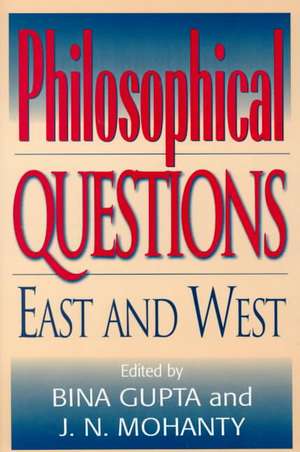
Philosophical Questions: East and West: Philosophy and the Global Context
Editat de Bina Gupta, J. N. Mohantyen Limba Engleză Paperback – 22 dec 1999




Preț: 378.69 lei
Preț vechi: 556.22 lei
-32%
Puncte Express: 568
Carte tipărită la comandă
Livrare economică 02-16 decembrie
Livrare prin curier în România Termenul estimat este afișat lângă disponibilitate.
Transport gratuit de la 400.00 lei Plată online sau ramburs, în funcție de opțiunile comenzii.
Retur gratuit în 14 zile Comandă securizată și suport în română.
Specificații
ISBN-13: 9780847692859
ISBN-10: 084769285X
Pagini: 488
Dimensiuni: 181 x 229 x 36 mm
Greutate: 0.71 kg
Ediția:0488
Editura: Bloomsbury Publishing
Colecția Rowman & Littlefield
Seria Philosophy and the Global Context
Locul publicării:New York, United States
ISBN-10: 084769285X
Pagini: 488
Dimensiuni: 181 x 229 x 36 mm
Greutate: 0.71 kg
Ediția:0488
Editura: Bloomsbury Publishing
Colecția Rowman & Littlefield
Seria Philosophy and the Global Context
Locul publicării:New York, United States
V-ar putea interesa
-
 Great Ideas of the Abuse of WordsJohn Locke-20%Preț: 44.40 lei55.76 lei
 -
 An Answer to the Question: 'What Is Enlightenment?'Immanuel Kant-20%Preț: 45.30 lei56.65 lei
 -
 -16%Preț: 99.98 lei118.88 lei
 -
 -31%Preț: 572.25 lei827.56 lei
 -
 Content and Justification: Philosophical PapersPaul A. Boghossian-12%Preț: 351.46 lei400.07 lei
 -
 An Essay concerning Human UnderstandingJohn Locke-17%Preț: 90.69 lei109.62 lei
 -
 Pensées and Other WritingsBlaise PascalPreț: 69.50 lei
 -
 -18%Preț: 130.89 lei159.83 lei
 -
 The Metaphysics of HyperspaceHud Hudson-21%Preț: 344.63 lei438.61 lei
 -
 Against Coherence: Truth, Probability, and JustificationErik J. Olsson-21%Preț: 378.95 lei481.66 lei
 -
 -31%Preț: 660.24 lei959.69 lei
 -
 The Images of Time: An Essay on Temporal RepresentationRobin Le Poidevin-13%Preț: 300.08 lei345.55 lei
 -
 PhysicalismDaniel StoljarPreț: 439.22 lei
 -
 Metaphysics: Contemporary Readings: 2nd EditionMichael Loux-8%Preț: 441.05 lei479.40 lei
 -
 Batman and Philosophy - The Dark Knight of the SoulMark D. WhitePreț: 149.08 lei
 -
 Informal LogicDouglas WaltonPreț: 282.91 lei
 -
 -16%Preț: 131.91 lei157.81 lei
Descriere
Philosophical Questions: East and West is an anthology of source material for use in comparative courses in philosophy, religion, and the humanities. The readings-derived from the great works of the Indian, Chinese, Japanese, Islamic, and Western intellectual traditions-are presented as answers to some of the most enduring questions in philosophy. Discussions are arranged under the headings of epistemology, metaphysics, ethics, philosophy of religion, aesthetics, and the nature of human being. Each section begins with an introductory essay in which the leading questions and their responses from different traditions are presented in overview.Philosophical Questions raises the central questions of comparative philosophy and eloquently argues the need for discarding familiar cliches to make a fresh, unprejudiced study of these traditions.
Cuprins
Chapter 1 Preface
Chapter 2 General Introduction: A Framework for Comparative Philosophy
Part 3 I Metaphysics
Chapter 4 1.1 Introduction: What is Real or Reality?
Chapter 5 1.2 The Way of Truth
Chapter 6 1.3 Metaphysics
Chapter 7 1.4 Hymn to Creation
Chapter 8 1.5 Hymn to Time
Chapter 9 1.6Isa
Chapter 10 1.7 Kena
Chapter 11 1.8 Superimposition
Chapter 12 1.9 "Brahman"
Chapter 13 1.10 Tao Te Ching
Chapter 14 1.11 "Lao-tzu's Conception of Tao"
Chapter 15 1.12 The Philosophy of Material Force
Chapter 16 1.13 Conditioning Causes and Nirvana
Chapter 17 1.14 "The True Nature of Reality"
Part 18 II Epistemology
Chapter 19 2.1 Introduction: What Are the Nature and Sources of Knowledge?
Chapter 20 2.2 The Nature of Knowledge (Thaetetus)
Chapter 21 2.3 Theory of Recollection (Meno)
Chapter 22 2.4Means of True Cognition
Chapter 23 2.5 Sentence-Generated Cognition
Chapter 24 2.6 Cognitino
Chapter 25 2.7 "Deliverance from Error"
Chapter 26 2.8 Meditations
Chapter 27 2.9"Western and Comparative Perspectives on Truth"
Part 30 III Ethics
Chapter 31 3.1 Introduction: On What Principles do I Judge Things Right and Wrong?
Chapter 32 3.2 The First Sermon
Chapter 33 3.3 Euthyphro
Chapter 34 3.4Nichomachean Ethics
Chapter 35 3.5 The Analects
Chapter 36 3.6 Universal Love
Chapter 37 3.7 The Bhagavad Gita: Action, Knowledge, Devotion
Chapter 38 3.8 Political Theory of Islam
Chapter 39 3.9 The Categorical Imperative
Chapter 40 3.10 Utilitarianism
Chapter 41 3.11 Ambiguity and Freedom
Chapter 42 3.12 "Letter from a Birmingham Jail"
Chapter 43 3.13Ahimsa
Chapter 44 3.14 "Chinese and Western Interpretations of Jen"
Chapter 46 Study Questions
Part 47 IV Religion
Chapter 47 Suggestions for Further Reading
Chapter 48 4.1 Introduction: Does God Exist? What is the Nature of God?
Chapter 49 4.2 The Ontological Argument
Chapter 50 4.3 The Cosmological Argument
Chapter 51 4.4 On Spontaneity and A Discussion of Death
Chapter 52 4.5 The Concetion of God in Islam
Chapter 53 4.6 "Reality Omnipresent"
Chapter 54 4.7 "Zen Enlightenment"
Chapter 56 Suggestions for Further Reading
Chapter 56 Study Questions
Chapter 57 Suggestions for Further Reading
Part 57 V Philosophical Anthropology
Chapter 58 5.1 Introduction: What is the Nature of Human Beings?
Chapter 59 5.2Human Nature
Chapter 60 5.3 The Nature of Man in Islam
Chapter 61 5.4"What is Enlightenment?"
Chapter 62 5.5 "Is the Human Race Continually Improving?"
Chapter 63 5.6"The 'Who' of Dasein"
Chapter 64 5.7 "Man'sNature"
Chapter 65 5.8"Self in Japanese Culture"
Chapter 66 Study Questions
Chapter 67 Suggestions for Further Reading
Chapter 67 Study Questions
Chapter 68 About the Editors
Chapter 2 General Introduction: A Framework for Comparative Philosophy
Part 3 I Metaphysics
Chapter 4 1.1 Introduction: What is Real or Reality?
Chapter 5 1.2 The Way of Truth
Chapter 6 1.3 Metaphysics
Chapter 7 1.4 Hymn to Creation
Chapter 8 1.5 Hymn to Time
Chapter 9 1.6Isa
Chapter 10 1.7 Kena
Chapter 11 1.8 Superimposition
Chapter 12 1.9 "Brahman"
Chapter 13 1.10 Tao Te Ching
Chapter 14 1.11 "Lao-tzu's Conception of Tao"
Chapter 15 1.12 The Philosophy of Material Force
Chapter 16 1.13 Conditioning Causes and Nirvana
Chapter 17 1.14 "The True Nature of Reality"
Part 18 II Epistemology
Chapter 19 2.1 Introduction: What Are the Nature and Sources of Knowledge?
Chapter 20 2.2 The Nature of Knowledge (Thaetetus)
Chapter 21 2.3 Theory of Recollection (Meno)
Chapter 22 2.4Means of True Cognition
Chapter 23 2.5 Sentence-Generated Cognition
Chapter 24 2.6 Cognitino
Chapter 25 2.7 "Deliverance from Error"
Chapter 26 2.8 Meditations
Chapter 27 2.9"Western and Comparative Perspectives on Truth"
Part 30 III Ethics
Chapter 31 3.1 Introduction: On What Principles do I Judge Things Right and Wrong?
Chapter 32 3.2 The First Sermon
Chapter 33 3.3 Euthyphro
Chapter 34 3.4Nichomachean Ethics
Chapter 35 3.5 The Analects
Chapter 36 3.6 Universal Love
Chapter 37 3.7 The Bhagavad Gita: Action, Knowledge, Devotion
Chapter 38 3.8 Political Theory of Islam
Chapter 39 3.9 The Categorical Imperative
Chapter 40 3.10 Utilitarianism
Chapter 41 3.11 Ambiguity and Freedom
Chapter 42 3.12 "Letter from a Birmingham Jail"
Chapter 43 3.13Ahimsa
Chapter 44 3.14 "Chinese and Western Interpretations of Jen"
Chapter 46 Study Questions
Part 47 IV Religion
Chapter 47 Suggestions for Further Reading
Chapter 48 4.1 Introduction: Does God Exist? What is the Nature of God?
Chapter 49 4.2 The Ontological Argument
Chapter 50 4.3 The Cosmological Argument
Chapter 51 4.4 On Spontaneity and A Discussion of Death
Chapter 52 4.5 The Concetion of God in Islam
Chapter 53 4.6 "Reality Omnipresent"
Chapter 54 4.7 "Zen Enlightenment"
Chapter 56 Suggestions for Further Reading
Chapter 56 Study Questions
Chapter 57 Suggestions for Further Reading
Part 57 V Philosophical Anthropology
Chapter 58 5.1 Introduction: What is the Nature of Human Beings?
Chapter 59 5.2Human Nature
Chapter 60 5.3 The Nature of Man in Islam
Chapter 61 5.4"What is Enlightenment?"
Chapter 62 5.5 "Is the Human Race Continually Improving?"
Chapter 63 5.6"The 'Who' of Dasein"
Chapter 64 5.7 "Man'sNature"
Chapter 65 5.8"Self in Japanese Culture"
Chapter 66 Study Questions
Chapter 67 Suggestions for Further Reading
Chapter 67 Study Questions
Chapter 68 About the Editors