
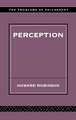
Perception: Problems of Philosophy
Autor Howard Robinsonen Limba Engleză Hardback – 8 sep 1994
Din seria Problems of Philosophy
- 15%
 Preț: 424.63 lei
 - 15%
 Preț: 447.04 lei
 -
 Preț: 486.79 lei
 -
 Preț: 410.01 lei
 -
 Preț: 424.90 lei
 - 18%
 Preț: 1479.52 lei
 -
 Preț: 245.91 lei
 -
 Preț: 410.44 lei
 - 15%
 Preț: 437.63 lei
 -
 Preț: 412.99 lei
 -
 Preț: 418.49 lei
 - 15%
 Preț: 428.96 lei
 - 15%
 Preț: 479.55 lei
 -
 Preț: 407.11 lei
 -
 Preț: 407.80 lei
 -
 Preț: 410.44 lei
 -
 Preț: 407.11 lei
 - 15%
 Preț: 443.78 lei
 - 15%
 Preț: 457.63 lei
 - 15%
 Preț: 435.60 lei
 -
 Preț: 469.94 lei
 - 20%
 Preț: 393.00 lei
 - 25%
 Preț: 1203.54 lei
Preț: 1113.27 lei
Preț vechi: 1357.65 lei
-18%
Puncte Express: 1670
Carte tipărită la comandă
Livrare economică 01-15 decembrie
Livrare prin curier în România Termenul estimat este afișat lângă disponibilitate.
Transport gratuit pentru acest produs Plată online sau ramburs, în funcție de opțiunile comenzii.
Retur gratuit în 14 zile Comandă securizată și suport în română.
Specificații
ISBN-13: 9780415033640
ISBN-10: 0415033640
Pagini: 272
Dimensiuni: 138 x 216 x 26 mm
Greutate: 0.48 kg
Ediția:1
Editura: Taylor & Francis
Colecția Routledge
Seria Problems of Philosophy
Locul publicării:Oxford, United Kingdom
ISBN-10: 0415033640
Pagini: 272
Dimensiuni: 138 x 216 x 26 mm
Greutate: 0.48 kg
Ediția:1
Editura: Taylor & Francis
Colecția Routledge
Seria Problems of Philosophy
Locul publicării:Oxford, United Kingdom
V-ar putea interesa
-
 Objections to PhysicalismHoward Robinson-28%Preț: 372.94 lei519.86 lei
 -
 The Significance of Philosophical ScepticismBarry Stroud-19%Preț: 358.80 lei444.94 lei
 -
 Epistemic LuckDuncan Pritchard-28%Preț: 354.38 lei492.70 lei
 -
 Tracking Truth: Knowledge, Evidence, and ScienceSherrilyn Roush-19%Preț: 322.85 lei399.08 lei
 -
 Hermeneutics: A Very Short IntroductionJens Zimmermann-20%Preț: 57.15 lei71.12 lei
 -
 Human Knowledge: Its Scope and ValueBertrand RussellPreț: 507.95 lei
 -
 Our Knowledge of the External WorldBertrand RussellPreț: 155.27 lei
 -
 Human Knowledge: Its Scope and LimitsBertrand RussellPreț: 179.23 lei
 -
 The Scientific OutlookBertrand RussellPreț: 155.74 lei
 -
 Preț: 236.49 lei
 -
 -8%Preț: 458.59 lei498.46 lei
 -
 -8%Preț: 428.57 lei465.83 lei
 -
 Preț: 256.32 lei
 -
 The Creativity of ActionHans JoasPreț: 264.41 lei
 -
 ComplexitiesAnnemarie MolPreț: 246.34 lei
 -
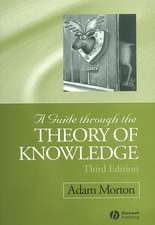 Guide Through the Theory 3eMortonPreț: 294.35 lei
 -
 Epistemology - An Anthology 2eErnest SosaPreț: 287.31 lei
Public țintă
Postgraduate and UndergraduateRecenzii
'Robinson presents ..[his].. argument, in both its constructive and critical aspects, with great skill. It is very valuable to have a defence of sense data by someone who is well acquainted with and has thought deeply about, recent criticisms and alternatives ... anyone interested in the philosophy of perception should read this book and consider it.' - Times Literary Supplement
'Howard Robinson's book brings boldly forward the challenges that have been mounting against one of the most - if not the most entrenched of received opinions, namely, the discountenancing of any notion of an internal sensory experience. An incisive and near-comprehensive survey of the opposing arguments from a phenomenalist position'
'It presents a battery of considerations which should provoke theorists who are dismissive of sense-datum theory to review the details of their position, and it helpfully brings together neglected material from the literature.' - Philosophical Quarterly
'Howard Robinson's book brings boldly forward the challenges that have been mounting against one of the most - if not the most entrenched of received opinions, namely, the discountenancing of any notion of an internal sensory experience. An incisive and near-comprehensive survey of the opposing arguments from a phenomenalist position'
'It presents a battery of considerations which should provoke theorists who are dismissive of sense-datum theory to review the details of their position, and it helpfully brings together neglected material from the literature.' - Philosophical Quarterly
Cuprins
Preface 1. The Classical Empiricist Conception of the Content of Perceptual Experience 2. The Traditional Arguments for the Empiricist Conception of Sense-Contents: the Argument from Illusion 3. Further Arguments against Naive Realism 4. Sense-Data and the Anti-Private-Language-Argument 5. Contemporary Physicalist Theories of Perception 6. The Revised - and Successful - Causal Argument for Sense-Data 7. The Intentional and Adverbial Theories 8. The Nature of Sense-Data 9. Sense-data and the Physical World
Descriere
This book is not only an introduction to the debate on perception, by arguing against the current consensus and in favour of a strengthened version of the sense-datum theory, Robinson also makes a provocative contribution to that debate.