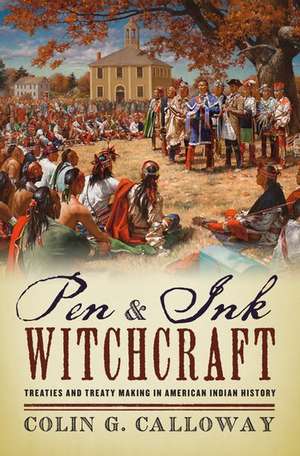
Pen and Ink Witchcraft: Treaties and Treaty Making in American Indian History
Autor Colin G. Callowayen Limba Engleză Paperback – 23 oct 2014
Găsim în această monografie istorică, Pen and Ink Witchcraft, o analiză riguroasă a diplomației dintre națiunile indigene și puterile coloniale, demontând mitul conform căruia tratatele au fost simple instrumente de deposedare acceptate pasiv. Colin G. Calloway propune o perspectivă nuanțată asupra celor peste 400 de acorduri semnate până în 1871, prezentându-le ca întâlniri culturale complexe și drame umane în care liderii nativi și-au demonstrat ingeniozitatea politică. Această lucrare reprezintă o alternativă solidă la Indian Treaties in the United States de Donald L. Fixico pentru cursurile de istoria Americii de Nord, având avantajul unei abordări narative care pune accent pe agenția individuală a participanților și pe momentele de coliziune între civilizații, dincolo de cadrul pur legislativ.
Structura cărții urmărește cronologic evoluția acestui „vrăjitorism” al penei și cernelii, de la centurile wampum folosite în relația cu olandezii, până la tratatele de la Fort Laramie. Apreciem modul în care Calloway integrează aceste evenimente în contextul operei sale vaste, cartea fiind o continuare firească a cercetărilor din The Indian World of George Washington sau The Victory with No Name. Dacă în lucrările anterioare autorul s-a concentrat pe conflicte militare și figuri politice centrale, aici mută reflectorul pe procesul birocratic și simbolic al negocierii. Față de Paper Sovereigns de Jeffrey Glover, care explorează alfabetizarea și manipularea politică, volumul de față oferă o panoramă mai largă, incluzând interacțiuni cu puteri precum Spania, Franța sau Rusia, oferind o imagine completă a peisajului diplomatic american.
Preț: 282.88 lei
Carte tipărită la comandă
Livrare economică 12-23 iunie
Specificații
ISBN-10: 0190206519
Pagini: 400
Ilustrații: 21 hts
Dimensiuni: 155 x 231 x 25 mm
Greutate: 0.57 kg
Editura: Oxford University Press
Colecția OUP USA
Locul publicării:New York, United States
V-ar putea interesa
-
 Land Rights: Oxford Amnesty LecturesTimothy Chesters-23%Preț: 387.85 lei504.88 lei
 -
 -30%Preț: 434.62 lei622.24 lei
 -
 -22%Preț: 343.22 lei438.12 lei
 -
 -11%Preț: 329.55 lei370.27 lei
 -
 -14%Preț: 518.45 lei602.85 lei
 -
 -23%Preț: 344.29 lei448.04 lei
 -
 -12%Preț: 358.06 lei407.34 lei
 -
 The EncounterPetru PopescuPreț: 90.28 lei
 -
 The Forest PeopleColin M Turnbull-21%Preț: 93.06 lei117.29 lei
 -
 Johnson, R: True to Their SaltRob Johnson-22%Preț: 167.68 lei214.45 lei
De ce să citești această carte
Această carte este esențială pentru studenții la istorie și pentru cititorii interesați de mecanismele puterii în America colonială. Colin G. Calloway oferă o perspectivă corectă asupra rezilienței indigene, demonstrând că tratatele au fost spații de negociere activă, nu doar acte de capitulare. Cititorul câștigă o înțelegere profundă a modului în care documentele scrise au modelat frontierele fizice și politice ale lumii moderne.
Despre autor
Colin G. Calloway este profesor de istorie și deține catedra Samson Occom în Studii Native Americane la Dartmouth College. Este unul dintre cei mai respectați cercetători ai istoriei indigene, fiind distins cu premii prestigioase precum Ray Allen Billington și Merle Curti Award pentru volumul „One Vast Winter Count”. Expertiza sa se concentrează pe interacțiunile dintre coloniștii europeni și populațiile native, abordând teme care variază de la biografia lui George Washington până la iconografia națională americană, fiind recunoscut pentru capacitatea de a recupera vocile și perspectivele populațiilor indigene în discursul istoric academic.