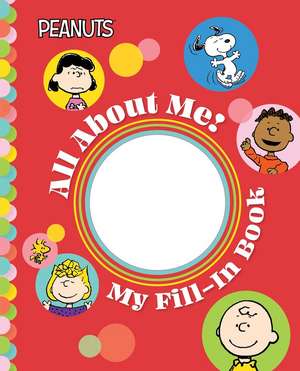
Peanuts: All About Me!: My Fill-In Book
Autor Charles M. Schulzen Limba Engleză Hardback – 30 apr 2026 – vârsta până la 10 ani
Structura acestui album impresionant propune o călătorie vizuală neliniară prin arhiva personală a lui Charles M. Schulz, oferindu-ne o perspectivă rară asupra modului în care s-a născut universul Peanuts. Ne-a atras atenția în mod deosebit felul în care volumul alternează între benzile desenate consacrate și documente inedite, precum caietul de schițe al autorului din perioada serviciului militar din anii '40 sau primele versiuni ale lui Charlie Brown. La intersecția dintre The Peanuts Book și Peanuts, această lucrare combină rigoarea istorică a unui ghid vizual cu intimitatea unui jurnal de creație, oferind detalii tactile uimitoare datorită fotografiilor în culori naturale realizate de Geoff Spear. Observăm o evoluție fascinantă a liniei și a texturii, surprinsă pe parcursul a cinci decenii de activitate, de la debutul din 1950 până la ultimele schițe din 2000. Merită menționat că, spre deosebire de colecțiile tematice precum Lucy: Speak Out! sau Peanuts for the Soul, care se concentrează pe mesaje specifice sau personaje individuale, Peanuts: And A Woodstock In A Birch Tree acționează ca o retrospectivă de lux a întregului canon artistic. Designul semnat de Chip Kidd transformă fiecare pagină într-o experiență de lectură imersivă, unde benzile desenate sunt tratate ca obiecte de artă, păstrând patina timpului și imperfecțiunile fermecătoare ale hârtiei de ziar vintage. Este o piesă fundamentală care completează seria The Complete Peanuts 1950-2000, aducând în plus contextul vizual necesar pentru a înțelege geniul celui mai influent caricaturist al secolului XX.
Preț: 99.41 lei
Carte disponibilă
Livrare economică 06-20 noiembrie
Livrare express 22-28 octombrie pentru 29.15 lei
Specificații
Pagini: 64
Ilustrații: 60 4c illustrations throughout
Dimensiuni: 206 x 260 x 12 mm
Greutate: 0.41 kg
Editura: Little Brown
Colecția Running Press Kids
Locul publicării:London, United Kingdom
V-ar putea interesa
-
 Dive, Dolphin!Shira EvansPreț: 53.25 lei
 -
 NAT GEO READER - POLAR BEARSLaura MarshPreț: 61.48 lei
 -
 OFFICIAL PEANUTS_OFFICIAL P HBCharles M. SchulzPreț: 72.83 lei
 -
 Nothing but Fun in Noisy VillageAstrid LindgrenPreț: 48.56 lei
 -
 The Children of Noisy VillageAstrid Lindgren-5%Preț: 47.16 lei49.40 lei
 -
 The Peanuts Book: A Visual History of the Iconic Comic StripSimon Beecroft-14%Preț: 129.49 lei151.05 lei
 -
 Charlie Brown and Friends: A PEANUTS CollectionCharles M. Schulz-15%Preț: 57.59 lei67.67 lei
 -
 Snoopy: Cowabunga!: A PEANUTS CollectionCharles M. Schulz-14%Preț: 58.13 lei67.97 lei
 -
 Celebrating Peanuts: 65 YearsCharles M. Schulz-16%Preț: 392.72 lei469.50 lei
 -
 Charlie Brown: All Tied Up: A PEANUTS CollectionCharles M. Schulz-16%Preț: 56.12 lei66.79 lei
 -
 The Complete Peanuts 1991-1992Charles M SchulzPreț: 190.31 lei
 -
 The Complete Peanuts Volume 13: 1975-1976Charles M. SchulzPreț: 150.53 lei
 -
 The Complete Peanuts Volume 14: 1977-1978Charles M. SchulzPreț: 150.52 lei
 -
 The Complete Peanuts Volume 15: 1979-1980Charles M. SchulzPreț: 150.59 lei
 -
 The Complete Peanuts Volume 17: 1983-1984Charles M. SchulzPreț: 150.96 lei
 -
 The Complete Peanuts Volume 19: 1987-1988Charles M. SchulzPreț: 147.83 lei
 -
 The Complete Peanuts Volume 22: 1993-1994Charles M. SchulzPreț: 150.53 lei
 -
 More PeanutsCharles M Schulz-17%Preț: 30.64 lei36.76 lei
 -
 SnoopyCharles M. Schulz-17%Preț: 30.66 lei36.79 lei
 -
 Peanuts for the SoulCharles M. SchulzPreț: 92.30 lei
 -
 Peanuts Boxed SetCharles Schulz-17%Preț: 108.95 lei130.88 lei
 -
 The Complete Peanuts Volume 01: 1950-1952Charles M. SchulzPreț: 150.89 lei
 -
 The Complete Peanuts 1957-1958Charles M. SchulzPreț: 148.53 lei
De ce să citești această carte
Recomandăm acest album oricărui pasionat de istoria benzii desenate și de design grafic. Cititorul câștigă acces la arhivele private ale lui Charles M. Schulz, descoperind materiale rare care nu au mai fost publicate până acum. Este o oportunitate unică de a vedea cum au evoluat tehnicile de desen și personajele iconice, totul într-un format de colecție editat cu o atenție deosebită pentru detalii vizuale.
Despre autor
Charles M. Schulz (1922–2000), poreclit „Sparky”, a fost un caricaturist american fenomenal, a cărui creație, seria Peanuts, a devenit cea mai citită bandă desenată din lume, ajungând la un public de peste 355 de milioane de oameni. Recunoscut ca unul dintre cei mai influenți artiști ai genului, Schulz a reușit să transforme experiențele cotidiene și emoțiile umane complexe în momente de umor fin și introspecție prin intermediul unor personaje universale precum Charlie Brown și Snoopy. Activitatea sa de peste 50 de ani a fost onorată cu numeroase distincții, influențând generații întregi de artiști contemporani.
Descriere
Let the Peanuts gang guide you in filling in a book all about you and what you like! Draw a picture of yourself to peek through the cover and then fill in the pages of the book, answering questions such as: What color is your hair? How about your eyes? What sports do you like best? What are your hobbies? Is your favorite color yellow or red or blue? If you could travel into outer space, where would you want to visit? Do you like to give advice or receive advice from friends? If you had a dog, what color would its doghouse be? This fun, colorful, and interactive book is one that only you can create.
If you are searching for a unique and thoughtful gift for an elementary-aged child, this is one you don't want to miss. For any child who loves Snoopy, Charlie Brown, and the Peanuts characters, Peanuts: All About Me! is a wonderful keepsake of a moment captured in time