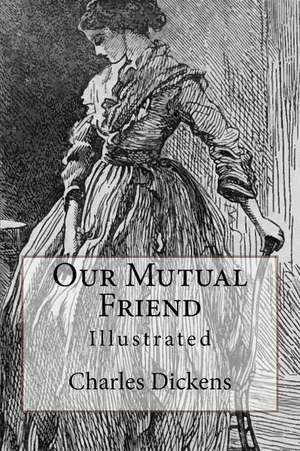
Our Mutual Friend
Autor Charles Dickens Ilustrat de Marcus Stoneen Limba Engleză Paperback
Vezi toate premiile Carte premiată
În „Our Mutual Friend”, descoperim o confruntare mută, dar violentă, între forțele regeneratoare ale apei și mizeria sufocantă a lăcomiei umane. Tensiunea centrală se naște la granița dintre supraviețuirea brutală și aspirația spre respectabilitate, totul sub privirea rece a unei Londre ce pare construită din noroi și praf. Remarcăm cum Charles Dickens, ajuns la apogeul măiestriei sale, transformă Tamisa dintr-un simplu decor într-un personaj omniscient, un depozitar al secretelor și al morții, unde Gaffer Hexam și fiica sa, Lizzie, pescuiesc nu pești, ci destine frânte. Stilul are ceva din proza densă și panoramică din Little Dorrit, fără să fie o imitație — aici, satira este mai ascuțită, iar atmosfera mai sumbră, reflectând o maturitate artistică ce nu se mai mulțumește cu soluții facile. Dacă în A Tale of Two Cities autorul explora cataclismul istoric, în acest ultim roman finalizat el se apleacă asupra cataclismului moral provocat de „bani, bani, bani”. Structura este una de o complexitate remarcabilă, împletind misterul identității lui John Harmon cu destinele unor personaje memorabile precum Bella Wilfer. Ritmul este deliberat, oferind cititorului timp să observe detaliile sordide ale mormanelor de gunoi care, paradoxal, constituie sursa bogăției în această societate victoriană târzie. Este o operă care încheie parcursul literar al lui Charles Dickens nu printr-o concluzie liniștitoare, ci printr-o interogație profundă asupra valorii umane într-o lume dominată de posesiuni.
Preț: 181.01 lei
Carte indisponibilă temporar
Specificații
ISBN-10: 1542455480
Pagini: 740
Dimensiuni: 152 x 229 x 38 mm
Greutate: 0.97 kg
V-ar putea interesa
-
 A Christmas CarolCharles DickensPreț: 28.32 lei
 -
 Green Hills of AfricaErnest Hemingway-20%Preț: 51.34 lei63.97 lei
 -
 Winner Take NothingErnest Hemingway-20%Preț: 50.96 lei63.74 lei
 -
 A Farewell to ArmsErnest Hemingway-19%Preț: 52.37 lei64.57 lei
 -
 David CopperfieldCharles Dickens-19%Preț: 68.92 lei85.05 lei
 -
 Hard TimesCharles Dickens-33%Preț: 48.96 lei72.72 lei
 -
 -33%Preț: 1304.87 lei1945.80 lei
 -
 Bleak HouseCharles Dickens-11%Preț: 63.01 lei70.88 lei
 -
 A Tale of Two CitiesCharles Dickens-30%Preț: 108.45 lei154.38 lei
 -
 A Christmas CarolCharles DickensPreț: 29.27 lei
 -
 Great ExpectationsCharles DickensPreț: 32.43 lei
 -
 Oliver TwistCharles DickensPreț: 37.41 lei
 -
 David CopperfieldCharles DickensPreț: 39.94 lei
 -
 A Tale of Two CitiesCharles DickensPreț: 37.55 lei
 -
 The Pickwick PapersCharles DickensPreț: 40.39 lei
 -
 ShirleyCharlotte BrontëPreț: 38.92 lei
 -
 Bleak HouseCharles DickensPreț: 40.36 lei
 -
 Little DorritCharles DickensPreț: 40.98 lei
 -
 Martin ChuzzlewitCharles DickensPreț: 41.00 lei
 -
 Hard TimesCharles DickensPreț: 28.01 lei
 -
 Old Curiosity ShopCharles DickensPreț: 39.44 lei
 -
 Dombey and SonCharles DickensPreț: 28.01 lei
 -
 Nicholas NicklebyCharles DickensPreț: 28.01 lei
 -
 The Mystery of Edwin DroodCharles DickensPreț: 38.13 lei
 -
 Complete Ghost StoriesCharles DickensPreț: 36.87 lei
 -
 Barnaby RudgeCharles DickensPreț: 39.35 lei
 -
 Little DorritCharles DickensPreț: 73.32 lei
De ce să citești această carte
Recomandăm această lucrare celor care doresc să exploreze latura cea mai sofisticată și întunecată a geniului dickensian. Cititorul va câștiga o perspectivă unică asupra Londrei victoriene, dincolo de clișeele de epocă, descoperind un roman despre transformare și identitate. Este o lectură esențială pentru fanii literaturii clasice care apreciază criticile sociale subtile și personajele cu o psihologie stratificată.
Despre autor
Charles Dickens (1812–1870) este recunoscut drept cel mai important romancier al epocii victoriene și un critic social neobosit. Experiența sa timpurie de lucru într-o fabrică de cremă de ghete, în timp ce tatăl său era închis pentru datorii, i-a marcat profund opera, insuflându-i o empatie rară pentru clasele defavorizate. Autor a 15 romane, printre care David Copperfield și Great Expectations, Dickens a revoluționat literatura prin publicarea în foileton și prin capacitatea sa de a crea personaje iconice care au rămas vii în conștiința universală. „Our Mutual Friend” reprezintă testamentul său literar finalizat, o sinteză a geniului său satiric.
Descriere scurtă
Descriere
Following his father's death John Harmon returns to London to claim his inheritance, but he finds he is eligible only if he marries Bella Wilfur. To observe her character he assumes another identity and secures work with his father's foreman, Mr Boffin, who is also Bella's guardian.Disguise and concealment play an important role in the novel and individual identity is examined within the wider setting of London life: in the 1860s the city was aflame with spiralling financial speculation while thousands of homeless scratched a living from the detritus of the more fortunate-indeed John Harmon's father has amassed his wealth by recycling waste.This edition includes extensive explanatory notes and significant manuscript variants. ABOUT THE SERIES: For over 100 years Oxford World's Classics has made available the widest range of literature from around the globe. Each affordable volume reflects Oxford's commitment to scholarship, providing the most accurate text plus a wealth of other valuable features, including expert introductions by leading authorities, helpful notes to clarify the text, up-to-date bibliographies for further study, and much more.
Notă biografică
Recenzii
--Zoe Heller, Guardian
"Dickens wasn't just telling a story, but drawing a panoramic picture of his times, full of detail about the way the Victorians lived, loved and thought. Our Mutual Friend is superbly constructed -- part social satire, part murder mystery, part love story. It is crowded with memorable characters: the aspirational Veneerings, the playboy lawyer Eugene Wrayburn, and the heroines: giddy-minded Bella Wilfur and saintly Lizzy Hexam."
--Independent
"Perhaps his greatest work. The great novel of London: dark, wise, unsentimental."
--William Boyd, Newsweek
"Our Mutual Friend made me want to be a writer" -- Zoe Heller Guardian "Dickens wasn't just telling a story, but drawing a panoramic picture of his times, full of detail about the way the Victorians lived, loved and thought. Our Mutual Friend is superbly constructed - part social satire, part murder mystery, part love story. It is crowded with memorable characters: the aspirational Veneerings, the playboy lawyer Eugene Wrayburn, and the heroines: giddy-minded Bella Wilfur and saintly Lizzy Hexam" Independent "Our Mutual Friend disturbs us to the root of our being...terribly great" -- John Sutherland "Perhaps his greatest work. The great novel of London: dark, wise, unsentimental" -- William Boyd Newsweek "Charles Dickens is the greatest novelist in the English language" -- Peter Ackroyd
Premii
- Listen Up Editor's Choice, 2008