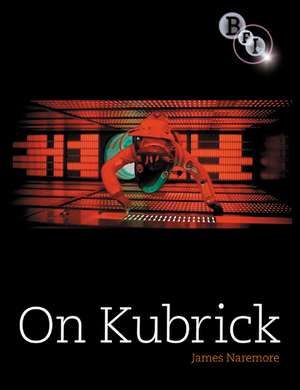
On Kubrick: British Film Institute
Autor James Naremoreen Limba Engleză Paperback – 12 iun 2007
James Naremore argues that in several respects Kubrick was one of the cinema's last modernists: his taste and sensibility were shaped by the artistic culture of New York in the 1950s; he became a celebrated auteur who forged a distinctive style; he used art-cinema conventions in commercial productions; he challenged censorship regulations; and throughout his career he was preoccupied with one of the central themes of modernist art - the conflict between rationality and its ever-present shadow, the unconscious.
War and science are key concerns in Kubrick's oeuvre, and his work has a hyper-masculine quality. Yet no director has more relentlessly emphasized the absurdity of combat, as in Paths of Glory (1957) and Full Metal Jacket (1987), the failure of scientific reasoning, as in 2001 (1968), and the fascistic impulses in masculine sexuality, as in Dr Strangelove (1964) and Eyes Wide Shut (1999).
The book also argues that while Kubrick was a voracious intellectual and a life-long autodidact, the fascination of his work has less to do with the ideas it espouses than with the emotions it evokes. Often described as 'cool' or 'cold,' Kubrick is best understood as a skillful practitioner of what might be called the aesthetics of the grotesque; he employs extreme forms of caricature and black comedy to create disgusting, frightening yet also laughable images of the human body, creating a sense of unease that leaves viewers unsure of how to react.
Din seria British Film Institute
- 25%
 Preț: 181.46 lei
 - 33%
 Preț: 584.40 lei
 - 23%
 Preț: 256.70 lei
 - 22%
 Preț: 259.40 lei
 -
 Preț: 64.62 lei
 - 33%
 Preț: 583.98 lei
 - 21%
 Preț: 520.42 lei
 - 23%
 Preț: 253.17 lei
 - 23%
 Preț: 250.09 lei
 - 31%
 Preț: 660.41 lei
 - 29%
 Preț: 913.32 lei
 - 26%
 Preț: 190.30 lei
 - 22%
 Preț: 259.73 lei
 - 32%
 Preț: 566.16 lei
 - 23%
 Preț: 254.48 lei
 - 24%
 Preț: 250.54 lei
 - 22%
 Preț: 248.98 lei
 - 36%
 Preț: 647.04 lei
 - 32%
 Preț: 606.53 lei
 - 19%
 Preț: 320.66 lei
 - 33%
 Preț: 585.54 lei
 - 23%
 Preț: 255.79 lei
 - 33%
 Preț: 65.65 lei
 - 13%
 Preț: 233.91 lei
 - 22%
 Preț: 281.51 lei
 - 23%
 Preț: 274.30 lei
 - 48%
 Preț: 151.88 lei
 - 17%
 Preț: 171.08 lei
 - 31%
 Preț: 509.13 lei
 - 17%
 Preț: 171.38 lei
 - 27%
 Preț: 217.60 lei
 - 33%
 Preț: 583.59 lei
 - 56%
 Preț: 211.09 lei
 - 29%
 Preț: 648.31 lei
 - 15%
 Preț: 204.85 lei
 - 33%
 Preț: 586.44 lei
 - 29%
 Preț: 783.92 lei
 - 27%
 Preț: 207.53 lei
 -
 Preț: 65.55 lei
 - 23%
 Preț: 258.12 lei
 - 30%
 Preț: 494.89 lei
 - 17%
 Preț: 275.81 lei
 - 23%
 Preț: 249.75 lei
 - 26%
 Preț: 206.16 lei
 - 18%
 Preț: 348.90 lei
Preț: 252.44 lei
Puncte Express: 379
Carte disponibilă
Livrare economică 07-21 noiembrie
Livrare prin curier în România Termenul estimat este afișat lângă disponibilitate.
Transport gratuit de la 400.00 lei Plată online sau ramburs, în funcție de opțiunile comenzii.
Retur gratuit în 14 zile Comandă securizată și suport în română.
Specificații
ISBN-13: 9781844571420
ISBN-10: 1844571424
Pagini: 299
Ilustrații: illustrated
Dimensiuni: 210 x 272 x 20 mm
Greutate: 0.86 kg
Ediția:2007
Editura: Bloomsbury Publishing
Colecția British Film Institute
Seria British Film Institute
Locul publicării:London, United Kingdom
ISBN-10: 1844571424
Pagini: 299
Ilustrații: illustrated
Dimensiuni: 210 x 272 x 20 mm
Greutate: 0.86 kg
Ediția:2007
Editura: Bloomsbury Publishing
Colecția British Film Institute
Seria British Film Institute
Locul publicării:London, United Kingdom
V-ar putea interesa
-
 One Flew Over the Cuckoo's NestKen Kesey-25%Preț: 59.35 lei79.37 lei
 -
 Under the Sign of SaturnSusan Sontag-26%Preț: 68.74 lei92.37 lei
 -
 LolitaVladimir Nabokov-19%Preț: 58.66 lei72.03 lei
 -
 Sculpting in Time: Reflections on the CinemaAndrey TarkovskyPreț: 245.90 lei
 -
 Stanley Kubrick: American FilmmakerDavid MikicsPreț: 167.51 lei
 -
 The Birth of Tragedy and The Case of WagnerFriedrich NietzschePreț: 78.08 lei
 -
 Something Like an AutobiographyAkira KurosawaPreț: 86.84 lei
 -
 The Shock of the NewRobert Hughes-17%Preț: 238.67 lei286.84 lei
 -
 Suddenly Something ClickedWalter MurchPreț: 238.88 lei
 -
 KubrickRobert P. KolkerPreț: 149.68 lei
 -
 The Dehumanization of Art and Other Essays on Art, Culture, and LiteratureJosé Ortega Y. GassetPreț: 90.47 lei
 -
 Alfred Hitchcock & the Making of PsychoStephen RebelloPreț: 68.30 lei
 -
 -14%Preț: 555.37 lei645.78 lei
 -
 Eyes Wide ShutMichel Chion-32%Preț: 66.86 lei98.96 lei
 -
 Superman: The Art and Making of the FilmJames FieldPreț: 282.89 lei
 -
 2001: A Space OdysseyPeter Krämer-33%Preț: 65.17 lei97.51 lei
 -
 -32%Preț: 67.74 lei99.47 lei
 -
 -18%Preț: 136.94 lei166.83 lei
 -
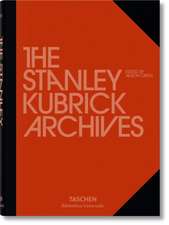 The Stanley Kubrick ArchivesAlison CastlePreț: 192.65 lei
 -
 -15%Preț: 520.91 lei612.84 lei
Cuprins
Preface and Acknowledgments
I. Prologue
1. The Last Modernist
2. Silence, Exile, and Cunning
3. Grotesque Aesthetics
II. Early Kubrick
1. No Other Country but the Mind
2. Dream City
III. Kubrick, Harris, Douglas
1. The Criminal and the Artist
2. Ant Hill
3. Dolores, Lady of Pain
IV. Stanley Kubrick Presents
1. Wargasm
2. Beyond the Stars
3. A Professional Piece of Sinny
4. Duellist
5. Horrorshow
V. Late Kubrick
1. Warriors
2. Lovers
VI. Epilogue
1. Afterthoughts
2. Love and Death in A. I. Artificial Intelligence
Filmography
Select Bibliography
Index
I. Prologue
1. The Last Modernist
2. Silence, Exile, and Cunning
3. Grotesque Aesthetics
II. Early Kubrick
1. No Other Country but the Mind
2. Dream City
III. Kubrick, Harris, Douglas
1. The Criminal and the Artist
2. Ant Hill
3. Dolores, Lady of Pain
IV. Stanley Kubrick Presents
1. Wargasm
2. Beyond the Stars
3. A Professional Piece of Sinny
4. Duellist
5. Horrorshow
V. Late Kubrick
1. Warriors
2. Lovers
VI. Epilogue
1. Afterthoughts
2. Love and Death in A. I. Artificial Intelligence
Filmography
Select Bibliography
Index