
Omoo
Autor Herman Melvilleen Paperback
Preț: 106.70 lei
Puncte Express: 160
Carte disponibilă
Livrare economică 06-20 noiembrie
Livrare prin curier în România Termenul estimat este afișat lângă disponibilitate.
Transport gratuit de la 400.00 lei Plată online sau ramburs, în funcție de opțiunile comenzii.
Retur gratuit în 14 zile Comandă securizată și suport în română.
Specificații
ISBN-13: 9781490933009
ISBN-10: 149093300X
Pagini: 244
Dimensiuni: 152 x 229 x 14 mm
Greutate: 0.36 kg
Editura: CREATESPACE
ISBN-10: 149093300X
Pagini: 244
Dimensiuni: 152 x 229 x 14 mm
Greutate: 0.36 kg
Editura: CREATESPACE
V-ar putea interesa
-
 Robinson CrusoeDaniel DefoePreț: 28.01 lei
 -
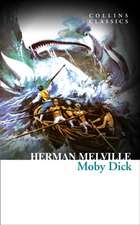 Moby DickHerman MelvillePreț: 24.60 lei
 -
 Herman Melville: A Very Short IntroductionMaurice S. Lee-20%Preț: 56.65 lei70.82 lei
 -
 Billy Budd, Sailor (An Inside Narrative)Herman MelvillePreț: 145.50 lei
 -
 Storyteller: The Life of Robert Louis StevensonLeo DamroschPreț: 222.91 lei
 -
 Melville's Short NovelsHerman MelvillePreț: 123.11 lei
 -
 Heart of DarknessJoseph Conrad-19%Preț: 23.12 lei28.58 lei
 -
 TypeeHerman MelvillePreț: 52.01 lei
 -
 Moby-DickHerman Melville-30%Preț: 34.37 lei49.00 lei
 -
 Moby Dick; Or, the WhaleHerman MelvillePreț: 68.36 lei
 -
 -26%Preț: 67.83 lei92.14 lei
 -
 The Piazza TalesHerman MelvillePreț: 42.87 lei
 -
 The Call of the WildJack LondonPreț: 34.41 lei
 -
 Preț: 72.03 lei
 -
 Oliver TwistCharles DickensPreț: 37.41 lei
 -
 UtopiaThomas MorePreț: 33.19 lei
 -
 Omoo Adventures In The South Seas Part IIHerman MelvillePreț: 91.03 lei
 -
 My First Voyage to Southern SeasW. H. G. KingstonPreț: 127.52 lei
Notă biografică
Herman Melville was born in August 1, 1819, in New York City, the son of a merchant. Only twelve when his father died bankrupt, young Herman tried work as a bank clerk, as a cabin-boy on a trip to Liverpool, and as an elementary schoolteacher, before shipping in January 1841 on the whaler Acushnet, bound for the Pacific. Deserting ship the following year in the Marquesas, he made his way to Tahiti and Honolulu, returning as ordinary seaman on the frigate United States to Boston, where he was discharged in October 1844. Books based on these adventures won him immediate success. By 1850 he was married, had acquired a farm near Pittsfield, Massachussetts (where he was the impetuous friend and neighbor of Nathaniel Hawthorne), and was hard at work on his masterpiece Moby-Dick.
Literary success soon faded; his complexity increasingly alienated readers. After a visit to the Holy Land in January 1857, he turned from writing prose fiction to poetry. In 1863, during the Civil War, he moved back to New York City, where from 1866-1885 he was a deputy inspector in the Custom House, and where, in 1891, he died. A draft of a final prose work, Billy Budd, Sailor, was left unfinished and uncollated, packed tidily away by his widow, where it remained until its rediscovery and publication in 1924.
Literary success soon faded; his complexity increasingly alienated readers. After a visit to the Holy Land in January 1857, he turned from writing prose fiction to poetry. In 1863, during the Civil War, he moved back to New York City, where from 1866-1885 he was a deputy inspector in the Custom House, and where, in 1891, he died. A draft of a final prose work, Billy Budd, Sailor, was left unfinished and uncollated, packed tidily away by his widow, where it remained until its rediscovery and publication in 1924.