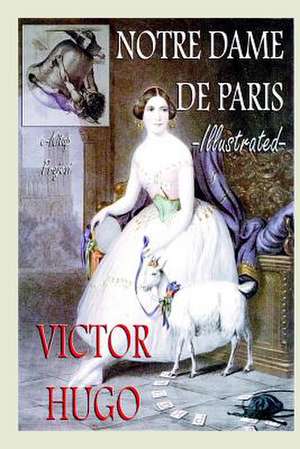
Notre-Dame de Paris
Autor Victor Hugo Ilustrat de Murat Ukray Traducere de Isabel F. Hapgooden Limba Engleză Paperback
Vocea narativă a lui Victor Hugo în Notre-Dame de Paris nu se mulțumește doar să spună o poveste de dragoste neîmplinită; ea devine un ghid erudit și pasionat prin labirintul Parisului medieval. Considerăm că forța acestui roman rezidă în modul în care autorul transformă arhitectura catedralei într-un personaj viu, martor tăcut al dramei umane. Structura narativă este una densă, evocatoare, pendulând între momente de o cruzime grotescă și pasaje de o sensibilitate profundă, totul sub semnul fatalității. Apreciem în mod deosebit traducerea lui John Sturrock, care reușește să păstreze cadența romantică originală, făcând accesibilă pledoaria lui Hugo pentru conservarea monumentelor istorice. Romanul amintește de The Phantom of the Opera de Gaston Leroux prin atmosfera sa gotică și prezența unei figuri marginalizate care trăiește în umbra unei structuri arhitecturale impunătoare, dar se diferențiază prin dimensiunea sa politică și socială mult mai vastă. În contextul operei sale, Notre-Dame de Paris (1831) prefigurează preocuparea pentru cei asupriți pe care Hugo o va rafina decenii mai târziu în Les Misérables. Dacă în marea sa epopee socială accentul cade pe justiție și mântuire, aici explorăm rădăcinile romantismului francez, unde estetica urâtului ascunde, în cazul lui Quasimodo, o puritate morală surprinzătoare. Este o lectură care cere răbdare pentru digresiunile sale istorice, dar care oferă în schimb o imagine vibrantă a unei lumi dispărute.
Preț: 172.59 lei
Carte indisponibilă temporar
Specificații
ISBN-10: 1503025691
Pagini: 658
Dimensiuni: 152 x 229 x 37 mm
Greutate: 0.95 kg
Editura: CREATESPACE
V-ar putea interesa
-
 Little WomenLouisa May AlcottPreț: 28.01 lei
 -
 The Phantom of the OperaGaston LerouxPreț: 28.01 lei
 -
 Preț: 28.01 lei
 -
 Three Gothic NovelsHorace Walpole-18%Preț: 78.04 lei94.71 lei
 -
 The Arabian Nights: Tales of 1,001 NightsMalcolm LyonsPreț: 136.25 lei
 -
 The Penguin Book of the British Short Story: 1Philip Hensher-27%Preț: 81.29 lei110.69 lei
 -
 Preț: 322.83 lei
 -
 Molloy, Malone Dies, the UnnamableSamuel BeckettPreț: 185.26 lei
 -
 Welcome to the Monkey HouseKurt VonnegutPreț: 106.12 lei
 -
 Cyrano de BergeracEdmond RostandPreț: 49.41 lei
 -
 The House of the DeadFyodor Dostoyevsky-38%Preț: 52.97 lei85.76 lei
 -
 The Hunchback of Notre DameVictor HugoPreț: 38.27 lei
 -
 The Scarlet PimpernelEmmuska OrczyPreț: 36.11 lei
 -
 Doctor ZhivagoBoris PasternakPreț: 209.89 lei
 -
 The OdysseyHomer Homer-30%Preț: 108.51 lei155.59 lei
 -
 The Memoirs of Victor HugoVictor HugoPreț: 52.86 lei
 -
 Notre-DameKen Follett-35%Preț: 60.06 lei92.52 lei
 -
 Preț: 225.86 lei
 -
 Of Human BondageW. Somerset MaughamPreț: 176.69 lei
 -
 Hugo, V: Les MiserablesVictor HugoPreț: 73.09 lei
 -
 The GargoyleAndrew DavidsonPreț: 80.93 lei
 -
 Les Misérables Volume TwoVictor HugoPreț: 38.00 lei
 -
 Hunchback of Notre-DameVictor HugoPreț: 38.68 lei
 -
 Les Misérables Volume OneVictor HugoPreț: 31.55 lei
 -
 Miss Pettigrew Lives for a DayHenrietta Twycross-MartinPreț: 124.28 lei
 -
 Classics Illustrated 7Victor HugoPreț: 57.23 lei
 -
 Les MisérablesVictor Hugo-33%Preț: 58.45 lei87.05 lei
 -
 The Man Who LaughsVictor HugoPreț: 57.30 lei
 -
 The Hunchback of Notre-DameMichael FordPreț: 47.47 lei
De ce să citești această carte
Recomandăm această ediție celor care doresc să descopere profunzimea dincolo de adaptările cinematografice. Cititorul va câștiga o înțelegere bogată a Parisului de secol XV și a filozofiei lui Hugo despre destin. Este o carte esențială pentru pasionații de literatură clasică și arhitectură, oferind o meditație asupra modului în care mediul construit reflectă spiritul uman și schimbările sociale.
Despre autor
Victor Hugo (1802–1885) a fost figura centrală a romantismului francez, un scriitor prolific a cărui carieră a întins peste șase decenii. Deși cunoscut la nivel internațional în principal pentru romanele sale monumentale precum Les Misérables și Notre-Dame de Paris, în Franța este venerat în egală măsură ca poet și dramaturg. Personalitate politică influentă, trecând de la regalism la un republicanism convins, Hugo a folosit literatura ca tribună pentru cauze sociale, militând inclusiv pentru abolirea pedepsei cu moartea. Exilat timp de aproape două decenii sub Napoleon al III-lea, s-a întors la Paris ca un erou național, opera sa rămânând un pilon al culturii europene.
Descriere scurtă
Notă biografică
Descriere
Three extraordinary characters caught in a web of fatal obsession are at the centre of Hugo's novel. The grotesque hunchback Quasimodo, bell-ringer of Notre-Dame, owes his life to the austere archdeacon, Claude Frollo, who in turn is bound by a hopeless passion to the gypsy dancer Esmeralda. She, meanwhile, is bewitched by a handsome, empty-headed officer, but by an unthinking act of kindness wins Quasimodo's selfless devotion. Behind the central figures moves a pageant of picturesque characters, ranging from the cruel, superstitious king, Louis XI, to the underworld of beggars and petty criminals. These disreputable truands' night-time assault on the cathedral is one of the most spectacular set-pieces of Romantic literature. Hugo vividly depicts medieval Paris, where all life is dominated by the massive cathedral. His passionate enthusiasm for Gothic architecture is set within the context of an epic view of mankind's history, to which he attaches even more importance than to the novel's compelling story. Alban Krailsheimer's new translation is a fresh approach to this monumental classic by France's most celebrated Romantic. ABOUT THE SERIES: For over 100 years Oxford World's Classics has made available the widest range of literature from around the globe. Each affordable volume reflects Oxford's commitment to scholarship, providing the most accurate text plus a wealth of other valuable features, including expert introductions by leading authorities, helpful notes to clarify the text, up-to-date bibliographies for further study, and much more.