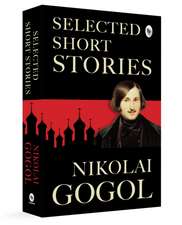
Nikolai Gogol (Deluxe Hardbound Edition)
Autor Nikolai Gogol
28 feb 2025
Hardback
Preț: 150.38 lei
3-5 săpt. | 10-14 zile
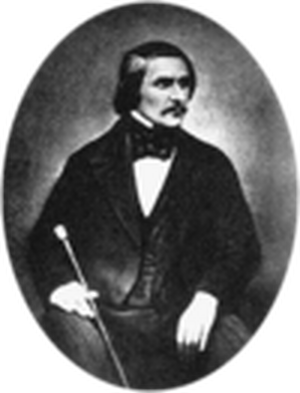
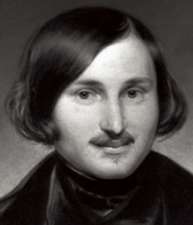
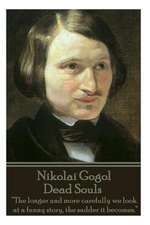
Nikolai Vasilyevich Gogol (; Russian: Никола́й Васи́льевич Го́голь, tr. Nikolay Vasil'yevich Gogol', IPA:[nʲɪkɐˈlaj vɐˈsʲilʲjɪvʲɪdʑ ˈɡoɡəlʲ]; Ukrainian: Мико́ла Васи́льович Го́голь, romanized:Mykola Vasyl'ovych Hohol'; 1 April [O.S. 20 March] 1809 – 4 March [O.S. 21 February] 1852) was a Russian novelist, short story writer and playwright of Ukrainian origin.
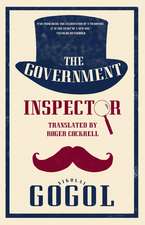
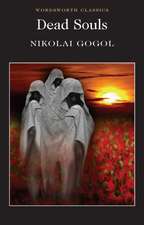
Gogol was one of the first to use the techniques of surrealism and the grotesque in his works ("The Nose", "Viy", "The Overcoat", "Nevsky Prospekt"). According to Viktor Shklovsky, Gogol's strange style of writing resembles the "ostranenie" technique. His early works, such as Evenings on a Farm Near Dikanka, were influenced by his Ukrainian upbringing, Ukrainian culture and folklore. His later writing satirised political corruption in the Russian Empire (The Government Inspector, Dead Souls). The novel Taras Bulba (1835) and the play Marriage (1842), along with the short stories "Diary of a Madman", "The Tale of How Ivan Ivanovich Quarreled with Ivan Nikiforovich", "The Portrait" and "The Carriage", are also among his best-known works.
Many writers and critics have recognized Gogol's huge influence on Russian and world literature. Gogol's influence was acknowledged by Mikhail Bulgakov, Fyodor Dostoevsky, Ryūnosuke Akutagawa, Mikhail Saltykov-Shchedrin, Flannery O'Connor, Franz Kafka and others.