
Nano-Optomechanics: Principles and Applications: de Gruyter Textbook
Autor Wolfram Pernice, Kurt Buschen Limba Engleză Electronic book text – 30 sep 2017
This graduate textbook gives a coherent overview of the field, including background knowledge on open quantum systems and nanophotonics. The author team -- consisting of a theoretic and and experimental physicist -- then discusses a multi-faceted overview of principles and effects arising from optical forces and cooling in such systems including theoretical perspectives, experimental techniques, actual implementations, as well as design, simulation, and manufacturing issues.
Din seria de Gruyter Textbook
-
 Preț: 460.33 lei
 - 8%
 Preț: 453.97 lei
 -
 Preț: 287.69 lei
 -
 Preț: 341.60 lei
 -
 Preț: 366.26 lei
 - 9%
 Preț: 585.86 lei
 - 9%
 Preț: 786.87 lei
 - 9%
 Preț: 608.88 lei
 - 8%
 Preț: 535.56 lei
 - 23%
 Preț: 392.09 lei
 -
 Preț: 351.71 lei
 -
 Preț: 365.30 lei
 - 23%
 Preț: 467.14 lei
 - 23%
 Preț: 543.57 lei
 -
 Preț: 253.41 lei
 -
 Preț: 253.77 lei
 - 5%
 Preț: 482.05 lei
 - 23%
 Preț: 551.86 lei
 - 27%
 Preț: 660.23 lei
 - 27%
 Preț: 4643.95 lei
 - 27%
 Preț: 5420.03 lei
 - nou
 Preț: 449.58 lei
 - 23%
 Preț: 549.03 lei
 -
 Preț: 294.75 lei
 - nou
 Preț: 3874.75 lei
 -
 Preț: 500.34 lei
 - 23%
 Preț: 619.98 lei
 -
 Preț: 253.41 lei
 - 24%
 Preț: 424.21 lei
 -
 Preț: 358.55 lei
 - nou
 Preț: 6189.24 lei
 -
 Preț: 441.21 lei
 -
 Preț: 507.43 lei
 - 23%
 Preț: 619.98 lei
 - 27%
 Preț: 4643.95 lei
 - 23%
 Preț: 549.03 lei
 - 23%
 Preț: 619.98 lei
 - nou
 Preț: 5420.03 lei
 -
 Preț: 330.19 lei
 - 27%
 Preț: 5420.03 lei
 - nou
 Preț: 4898.62 lei
 -
 Preț: 408.18 lei
 -
 Preț: 408.18 lei
 -
 Preț: 217.96 lei
Preț: 450.72 lei
Preț vechi: 585.35 lei
-23% Precomandă
Puncte Express: 676
Nepublicat încă
Livrare prin curier în România Precomanda se expediază când titlul devine disponibil.
Transport gratuit pentru acest produs Plată online sau ramburs, în funcție de opțiunile comenzii.
Retur gratuit în 14 zile Comandă securizată și suport în română.
Doresc să fiu notificat când acest titlu va fi disponibil:
Se trimite...
Specificații
ISBN-13: 9783110335408
ISBN-10: 3110335409
Pagini: 370
Editura: De Gruyter
Colecția De Gruyter
Seria de Gruyter Textbook
Locul publicării:Berlin/Boston
ISBN-10: 3110335409
Pagini: 370
Editura: De Gruyter
Colecția De Gruyter
Seria de Gruyter Textbook
Locul publicării:Berlin/Boston
V-ar putea interesa
-
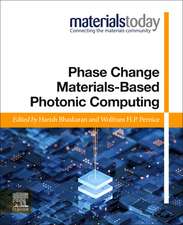 Phase Change Materials-Based Photonic ComputingHarish Bhaskaran-30%Preț: 1007.00 lei1436.47 lei
 -
 Preț: 377.48 lei
Notă biografică
Wolfram Hans Peter Pernice, KIT, Institute for Nanotechnology, Germany; Kurt Busch, Institute of Physics, HU Berlin, Germany.
Descriere
Optomechanics is a quickly evolving research field investigating systems where light is coupled to mechanical degrees of freedom of micro- and nanostructures. Artificially designing such structures gives rise to applications in extremely sensitive sensing devices and quantum information processing. On the other hand, such systems can be used as models in the examination of solid state and open quantum systems, as well as foundational questions in quantum mechanics.
This graduate textbook gives a coherent overview of the field, including background knowledge on open quantum systems and nanophotonics. The author team -- consisting of a theoretic and and experimental physicist -- then discusses a multi-faceted overview of principles and effects arising from optical forces and cooling in such systems including theoretical perspectives, experimental techniques, actual implementations, as well as design, simulation, and manufacturing issues.
This graduate textbook gives a coherent overview of the field, including background knowledge on open quantum systems and nanophotonics. The author team -- consisting of a theoretic and and experimental physicist -- then discusses a multi-faceted overview of principles and effects arising from optical forces and cooling in such systems including theoretical perspectives, experimental techniques, actual implementations, as well as design, simulation, and manufacturing issues.