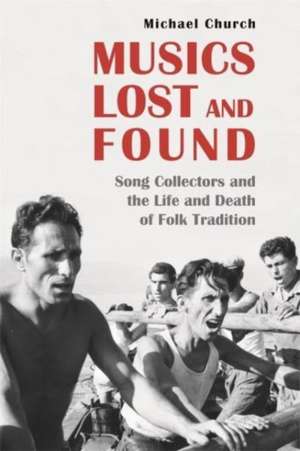
Musics Lost and Found
Autor Michael Churchen Limba Engleză Hardback – 15 oct 2021
Descoperim în Musics Lost and Found o cronică fascinantă a eroilor anonimi care au salvat patrimoniul sonor al umanității. Michael Church propune o metodologie narativă ce îmbină etnomuzicologia cu biografia istorică, documentând eforturile unor figuri diverse — de la preotul armean Komitas, care și-a dedicat viața salvării cântecelor populare în timpul genocidului din 1915, până la cântăreți britanici care au sfidat interdicțiile regimului taliban în Afganistan. Structura cărții este organizată cronologic și geografic, purtându-ne din Beijingul secolului al XVIII-lea până în penitenciarele din Mississippi, oferind o perspectivă enciclopedică asupra modului în care muzica supraviețuiește opresiunii. Remarcăm modul în care autorul poziționează această lucrare ca o continuare naturală a volumului său anterior, The Other Classical Musics. Dacă în lucrările sale din domeniul psihologiei, precum The Honorable Self, Church se concentra pe mecanismele de adaptare la stres, aici el analizează reziliența culturală prin prisma muzicii. Ca și This Thing Called Music, acest volum explorează complexitatea formelor muzicale globale, însă Church pune un accent mult mai puternic pe latura umană și politică a colectării de date, transformând cercetarea academică într-o poveste de supraviețuire. În timp ce Music Endangerment de Catherine Grant oferă un cadru teoretic pentru sustenabilitatea genurilor muzicale, Michael Church optează pentru o abordare istorică, avertizând că urbanizarea și globalizarea duc la o eroziune ireversibilă a diversității sonore.
Preț: 250.18 lei
Carte disponibilă
Livrare economică 06-20 noiembrie
Livrare express 22-28 octombrie pentru 51.88 lei
Specificații
ISBN-10: 178327607X
Pagini: 312
Dimensiuni: 164 x 237 x 32 mm
Greutate: 0.84 kg
Editura: Boydell & Brewer Ltd.
V-ar putea interesa
-
 Preț: 245.70 lei
 -
 -21%Preț: 147.50 lei185.79 lei
 -
 Music's OdysseyRobin HollowayPreț: 352.77 lei
 -
 Why Sound MattersDamon KrukowskiPreț: 133.91 lei
 -
 A Little History of MusicRobert PhilipPreț: 86.52 lei
 -
 Lament from EpirusChristopher C. KingPreț: 200.37 lei
 -
 Excavate!Bob StanleyPreț: 152.21 lei
 -
 Lit Up Inside / Keep 'Er LitVan MorrisonPreț: 194.85 lei
 -
 DuetEleanor ChanPreț: 160.38 lei
 -
 Princes Amongst Men: Journeys with Romani-Gypsy MusiciansGarth Cartwright-19%Preț: 97.81 lei121.29 lei
 -
 The Madman's OrchestraEdward Brooke-HitchingPreț: 197.06 leiRecomandat
 -
 Letters for the Ages Great MusiciansJames Drake-25%Preț: 108.15 lei143.93 lei
 -
 -27%Preț: 78.63 lei107.51 lei
 -
 Sound TracksGraeme LawsonPreț: 94.08 lei
 -
 A History of the World in 50 PiecesTom ServicePreț: 192.10 lei
 -
 Brave New MusicGary WestPreț: 145.37 lei
 -
 Archiving Gaza in the PresentDina MatarPreț: 209.67 lei
 -
 UNKNOWN: JAMES MARTIN DESSERTSUnknown-15%Preț: 59.12 lei69.76 lei
 -
 -16%Preț: 242.12 lei288.06 lei
 -
 Preț: 82.06 lei
De ce să citești această carte
Recomandăm această carte cititorilor pasionați de etnomuzicologie și istorie culturală care doresc să înțeleagă cum au fost salvate tradițiile orale de la dispariție. Este o lectură esențială pentru a descoperi legătura dintre identitatea națională și arhivele sonore, oferind un inventar prețios al muzicilor pe care riscăm să le pierdem definitiv în era digitală.
Despre autor
Michael Church este un autor polivalent, cunoscut atât pentru contribuțiile sale în domeniul psihologiei, fiind profesor asociat la King's College din Pennsylvania, cât și pentru activitatea sa remarcabilă de critic muzical și etnomuzicolog. Experiența sa diversă se reflectă în abordarea multidisciplinară a lucrărilor sale, trecând de la analize despre stresul cotidian în The Honorable Self la studii despre procesele geomorfologice în Gravel Bed Rivers. În domeniul muzical, Church s-a impus prin documentarea riguroasă a tradițiilor non-vestice, volumul său anterior fiind distins cu premii importante pentru modul în care a redefinit conceptul de muzică clasică dincolo de canonul european.