
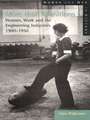
More than Munitions: Women, Work and the Engineering Industries, 1900-1950: Women And Men In History
Autor Clare Wightmanen Limba Engleză Hardback – 26 apr 2017
Din seria Women And Men In History
- 14%
 Preț: 567.50 lei
 -
 Preț: 340.50 lei
 - 15%
 Preț: 454.86 lei
 - 15%
 Preț: 454.56 lei
 - 15%
 Preț: 475.49 lei
 - 15%
 Preț: 448.83 lei
 - 15%
 Preț: 436.00 lei
 - 15%
 Preț: 441.25 lei
 - 15%
 Preț: 440.15 lei
 -
 Preț: 238.79 lei
 - 15%
 Preț: 620.32 lei
 - 15%
 Preț: 442.69 lei
 - 15%
 Preț: 452.08 lei
 - 15%
 Preț: 440.88 lei
 - 15%
 Preț: 620.58 lei
 - 15%
 Preț: 440.88 lei
 - 15%
 Preț: 486.50 lei
 - 15%
 Preț: 434.89 lei
 - 15%
 Preț: 490.85 lei
 - 15%
 Preț: 529.65 lei
 - 24%
 Preț: 523.58 lei
 - 21%
 Preț: 383.70 lei
 - 25%
 Preț: 549.82 lei
 - 32%
 Preț: 1128.45 lei
Preț: 437.63 lei
Puncte Express: 656
Carte tipărită la comandă
Livrare economică 27 noiembrie-11 decembrie
Livrare prin curier în România Termenul estimat este afișat lângă disponibilitate.
Transport gratuit pentru acest produs Plată online sau ramburs, în funcție de opțiunile comenzii.
Retur gratuit în 14 zile Comandă securizată și suport în română.
Specificații
ISBN-13: 9781138164710
ISBN-10: 1138164712
Pagini: 216
Dimensiuni: 138 x 216 mm
Greutate: 0.45 kg
Ediția:1
Editura: Taylor & Francis
Colecția Routledge
Seria Women And Men In History
Locul publicării:Oxford, United Kingdom
ISBN-10: 1138164712
Pagini: 216
Dimensiuni: 138 x 216 mm
Greutate: 0.45 kg
Ediția:1
Editura: Taylor & Francis
Colecția Routledge
Seria Women And Men In History
Locul publicării:Oxford, United Kingdom
V-ar putea interesa
-
 The Woman's Encyclopedia of Myths and SecretsBarbara G WalkerPreț: 263.48 lei
 -
 How To Be a WomanCaitlin Moran-18%Preț: 59.23 lei72.36 lei
 -
 Charity and Sylvia: A Same-Sex Marriage in Early AmericaRachel Hope Cleves-22%Preț: 120.67 lei155.38 lei
 -
 -20%Preț: 143.12 lei178.02 lei
 -
 Preț: 205.32 lei
 -
 -15%Preț: 486.12 lei571.92 lei
 -
 -15%Preț: 620.32 lei729.79 lei
 -
 Preț: 466.97 lei
 -
 Re-presenting the Past: Women and HistoryAnn-Marie Gallagher-15%Preț: 439.07 lei516.55 lei
 -
 Gender and the HistorianJohanna AlbertiPreț: 446.18 lei
 -
 The Making of Modern WomanLynn Abrams-15%Preț: 465.81 lei548.02 lei
 -
 Gender Lens InvestingJoseph QuinlanPreț: 197.17 lei
 -
 Words of Wisdom from Women to WatchBusiness InsurancePreț: 136.22 lei
 -
 -35%Preț: 37.44 lei57.64 lei
 -
 Bad Girls Throughout HistoryAnn Shen-21%Preț: 105.97 lei134.72 lei
 -
 Rise Sister RiseRebecca Campbell-18%Preț: 88.02 lei107.40 lei
Public țintă
UndergraduateCuprins
Women's employment, 1900-1950; the engineering industry, 1900-1950; World War I - munitions work and its impact, 1914-1919; women's employment between the wars; disputes - the significance of collective bargaining, 1919-1939; "a specialized line" - women and trade unions, 1919-1939; World War II - dilution, "an arrangement for men"?; would women stay? the effects of war work; post-war divisions of labour.
Descriere
Clare Wightman explores the key issue of gender in explaining the experience of men and women at work. She uses women's employment in the engineering industries between 1900 and 1950 to confront many of the contentious debates in women's history. She shows that the two World Wars did not produce radical changes for women at work.