
Mind, Meaning and Metaphysics: Primary Sources in Phenomenology, cartea 3
Editat de K. Mulliganen Limba Engleză Paperback – 3 ian 2012

Preț: 1385.84 lei
Preț vechi: 1690.04 lei
-18%
Puncte Express: 2079
Carte tipărită la comandă
Livrare economică 05-19 decembrie
Livrare prin curier în România Termenul estimat este afișat lângă disponibilitate.
Transport gratuit pentru acest produs Plată online sau ramburs, în funcție de opțiunile comenzii.
Retur gratuit în 14 zile Comandă securizată și suport în română.
Specificații
ISBN-13: 9789401067133
ISBN-10: 9401067139
Pagini: 304
Ilustrații: XII, 292 p.
Dimensiuni: 155 x 235 x 17 mm
Greutate: 0.43 kg
Ediția:Softcover reprint of the original 1st ed. 1990
Editura: Springer
Colecția Primary Sources in Phenomenology
Seria Primary Sources in Phenomenology
Locul publicării:Dordrecht, Netherlands
ISBN-10: 9401067139
Pagini: 304
Ilustrații: XII, 292 p.
Dimensiuni: 155 x 235 x 17 mm
Greutate: 0.43 kg
Ediția:Softcover reprint of the original 1st ed. 1990
Editura: Springer
Colecția Primary Sources in Phenomenology
Seria Primary Sources in Phenomenology
Locul publicării:Dordrecht, Netherlands
V-ar putea interesa
-
 -20%Preț: 362.81 lei454.82 lei
 -
 Machines and Thought: The Legacy of Alan Turing, Volume IPeter Millican-35%Preț: 315.62 lei485.20 lei
 -
 Moral ParticularismBrad Hooker-27%Preț: 454.55 lei624.13 lei
 -
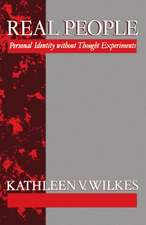 Real People: Personal Identity without Thought ExperimentsKathleen V. Wilkes-27%Preț: 417.06 lei574.89 lei
 -
 The Significance of Philosophical ScepticismBarry Stroud-19%Preț: 358.80 lei444.94 lei
 -
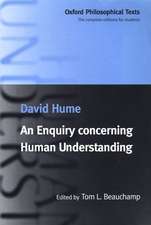 An Enquiry concerning Human UnderstandingDavid HumePreț: 266.87 lei
 -
 Epistemic LuckDuncan Pritchard-27%Preț: 366.27 lei501.36 lei
 -
 Tracking Truth: Knowledge, Evidence, and ScienceSherrilyn Roush-18%Preț: 333.64 lei406.07 lei
 -
 The Conception of ValuePaul Grice-28%Preț: 381.73 lei526.86 lei
 -
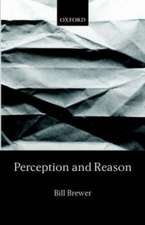 Perception and ReasonBill Brewer-18%Preț: 364.34 lei443.94 lei
 -
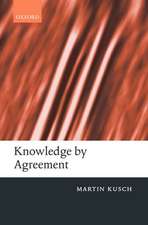 -28%Preț: 406.73 lei566.82 lei
 -
 Understanding Human Knowledge: Philosophical EssaysBarry Stroud-19%Preț: 379.14 lei470.34 lei
 -
 Contextualism in Philosophy: Knowledge, Meaning, and TruthGerhard Preyer-27%Preț: 409.98 lei559.74 lei
 -
 Bayesian EpistemologyLuc Bovens-18%Preț: 359.62 lei438.12 lei
 -
 Epistemology FuturesStephen Hetherington-18%Preț: 394.47 lei481.51 lei
 -
 Thought as a System: Second editionDavid BohmPreț: 386.60 lei
 -
 Preț: 256.32 lei
 -
 Epistemic Cultures – How the Sciences Make Knowledge (Paper)Karin Knorr KnorrPreț: 350.73 lei
 -
 Epistemology - An Anthology 2eErnest SosaPreț: 287.31 lei
Public țintă
ResearchCuprins
Brentano and Marty on Content: A Synthesis suggested by Brentano.- 1 Brentano’s Final View.- 2 Attribution in Modo Recto and in Modo Obliquo.- 3 Object and Content.- 4 Other Intentional Attitudes.- 5 Immanent Objects and Transcendent Objects.- 6 Conclusion.- Marty’s Philosophical Grammar.- 1 Introduction.- 2 The Descriptive Psychology of Meaning: Linguistic Functions.- 3 Propositions Show What would be the Case were they True.- 4 Vagueness.- 5 Meaning Change, Inner Form and Universals.- 6 Marty and Wittgenstein: Two Conceptions of Philosophical Grammar.- Meaning and Expression: Marty and Grice on Intentional Semantics.- 1 Introduction.- 2 Philosophy of Language as a General Theory.- 3 Natural and Non-Natural Meaning.- 4 Primary and Secondary Intentions.- 5 Auto-Semantic Language Devices.- 6 Conclusion.- Marty on Form and Content in Language.- 1 Inner Speech Form in some of Marty’s Early Works.- 2 Logic, Grammar and Psychology.- 3 Form and Content in Marty’s Later Works.- 4 Some Fundamental Tenets of Universal Grammar.- Why a Proper Name has a Meaning: Marty and Landgrebe vs. Kripke.- 1 Preliminaries.- 2 Kripke’s View.- 3 The Question of the Semantic Status of Proper Names.- 4 Meaning and Lexical Meaning.- 5 Reference and Meaning in Marty.- 6 Ambiguity and Vagueness.- 7 Landgrebe’s Solution.- 8 Conclusion.- The Categorical and the Thetic Judgement Reconsidered.- 1 Marty and Transformational Grammar.- 2 Categorical and Thetic Judgements.- 3 Reinterpreting the Categorical-Thetic Distinction.- 4 Conclusion.- Classical and Modern Work on Universals: The Philosophical Background and Marty’s Contribution.- 1 Categories of Meaning vs. Categories of Expression.- 2 Relativism and Colour.- 3 Natural Non-Absolute Universals.- Marty and Magnus on Colours.- Brentano andMarty: An Inquiry into Being and Truth.- 1 Aristotle and Brentano.- 2 Existence and Reality.- 3 Bases and Operations.- 4 Collectives are Non-Real.- 5 Relations are Non-Real.- 6 Space is Non-Real.- 7 States of Affairs are Non-Real.- 8 On the Origins of our Concepts of Existence and Truth.- 9 A Correspondence Theory of Intentionality.- 10 The Ontology of Truth.- 11 Wertverhalte or Value-Contents.- 12 A Postscript on Martian Aesthetics.- Marty on Grounded Relations.- Marty on Time.- 1 Introduction.- 2 Tasks of a Philosophy of Time.- 3 Marty on the Ontology of Time.- 4 Marty on the Consciousness of Time.- 5 Conclusion.- Marty’s Theory of Space.- 1 Introduction.- 2 Marty’s Two Basic Metaphysical Theses.- 3 A Sketch of Marty’s Argument.- 4 Conclusion.- Judgement-Contents.- 1 Preliminary Remark.- 2 Conceptual Framework.- 3 Marty’s Judgement-Contents.- 4 Comments.- 5 Final Remark.- of Consciousness and States of Affairs: Daubert and Marty.- 1 Phenomenologists and Brentanists.- 2 Marty on Subjectless Sentences.- 3 Daubert’s Discussion of Marty.- 4 Shortcomings in Marty.- 5 Marty’s Theory in Phenomenological Perspective.- Marty and the Lvov-Warsaw School.- Two Letters from Marty to Husserl.- A Bibliography of Works by and on Anton Marty.- 1 Works by Marty.- 2 Works on Marty.- Index of Names.- Index of Subjects.