
Militant Islamists: Terrorists without Frontiers: Praeger Security International
Autor Nozar Alaolmolkien Limba Engleză Hardback – 30 mai 2009
Din seria Praeger Security International
- 30%
 Preț: 407.30 lei
 - 34%
 Preț: 382.83 lei
 - 21%
 Preț: 361.02 lei
 - 22%
 Preț: 345.89 lei
 - 29%
 Preț: 413.54 lei
 - 31%
 Preț: 388.13 lei
 - 28%
 Preț: 432.56 lei
 - 21%
 Preț: 345.39 lei
 - 42%
 Preț: 617.10 lei
 - 30%
 Preț: 348.62 lei
 - 21%
 Preț: 363.36 lei
 - 21%
 Preț: 347.50 lei
 - 21%
 Preț: 347.45 lei
 - 30%
 Preț: 395.83 lei
 - 21%
 Preț: 346.12 lei
 - 21%
 Preț: 346.24 lei
 - 21%
 Preț: 346.86 lei
 - 17%
 Preț: 362.86 lei
 - 22%
 Preț: 366.32 lei
 - 17%
 Preț: 361.94 lei
 - 40%
 Preț: 438.46 lei
 - 20%
 Preț: 348.78 lei
 - 30%
 Preț: 406.62 lei
 - 21%
 Preț: 346.52 lei
 - 20%
 Preț: 365.11 lei
 - 37%
 Preț: 295.16 lei
 - 20%
 Preț: 370.58 lei
 - 22%
 Preț: 332.50 lei
 - 20%
 Preț: 280.33 lei
 - 42%
 Preț: 617.29 lei
 - 19%
 Preț: 343.43 lei
 - 20%
 Preț: 333.71 lei
 - 21%
 Preț: 381.17 lei
 - 29%
 Preț: 418.84 lei
 - 20%
 Preț: 326.96 lei
 - 17%
 Preț: 360.61 lei
 - 20%
 Preț: 351.85 lei
 - 27%
 Preț: 365.68 lei
 - 37%
 Preț: 447.93 lei
 - 21%
 Preț: 382.95 lei
 - 31%
 Preț: 281.46 lei
 - 21%
 Preț: 382.42 lei
 - 21%
 Preț: 361.12 lei
 - 17%
 Preț: 326.87 lei
 - 29%
 Preț: 411.30 lei
 - 22%
 Preț: 331.27 lei
 - 20%
 Preț: 341.76 lei
 - 20%
 Preț: 380.06 lei
 - 21%
 Preț: 346.52 lei
 - 20%
 Preț: 392.24 lei
Preț: 446.29 lei
Preț vechi: 643.62 lei
-31%
Puncte Express: 669
Carte tipărită la comandă
Livrare economică 04-18 decembrie
Livrare prin curier în România Termenul estimat este afișat lângă disponibilitate.
Transport gratuit pentru acest produs Plată online sau ramburs, în funcție de opțiunile comenzii.
Retur gratuit în 14 zile Comandă securizată și suport în română.
Specificații
ISBN-13: 9780313372216
ISBN-10: 0313372217
Pagini: 232
Dimensiuni: 156 x 235 x 28 mm
Greutate: 0.5 kg
Editura: Bloomsbury Publishing
Colecția Praeger
Seria Praeger Security International
Locul publicării:New York, United States
ISBN-10: 0313372217
Pagini: 232
Dimensiuni: 156 x 235 x 28 mm
Greutate: 0.5 kg
Editura: Bloomsbury Publishing
Colecția Praeger
Seria Praeger Security International
Locul publicării:New York, United States
V-ar putea interesa
-
 Covering IslamEdward W. Said-20%Preț: 74.57 lei92.64 lei
 -
 Inside the Jihad: My Life with Al QaedaOmar NasiriPreț: 75.42 lei
 -
 Medieval Islamic Political ThoughtPatricia Crone-11%Preț: 213.14 lei240.59 lei
 -
 Toward an Islamic ReformationAbdullahi An Na'imPreț: 114.45 lei
 -
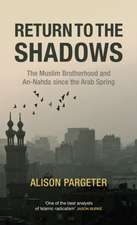 Return to the ShadowsAlison PargeterPreț: 130.24 lei
 -
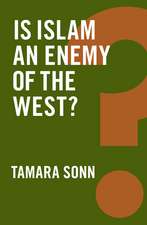 Is Islam an Enemy of the West?Tamara SonnPreț: 152.04 lei
 -
 My Journey Into the Heart of TerrorJürgen TodenhöferPreț: 159.04 lei
 -
 Jihadi JohnRobert VerkaikPreț: 72.04 lei
 -
 50 Islam Ideas You Really Need to KnowMona Siddiqui-23%Preț: 75.10 lei97.14 lei
 -
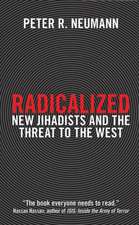 Radicalized: New Jihadists and the Threat to the WestPeter R. Neumann-20%Preț: 130.61 lei163.65 lei
 -
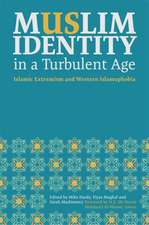 -25%Preț: 205.22 lei273.88 lei
 -
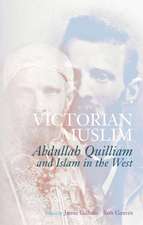 -24%Preț: 157.98 lei208.16 lei
 -
 Law and Power in the Islamic WorldSami Zubaida-21%Preț: 165.95 lei209.91 lei
Recenzii
Alaolmolki (political science, Hiram College, Ohio) analyzes transnational militant Islam at domestic, regional and global levels, noting that the driving force in political violence cannot be isolated to a single source or ideology. Written for students and scholars interested in Islamic extremism, this volume examines the causes for the expansion of these movements such as the predominance of poverty and lack of democracy in Arab and Muslim nations, historic conflicts in the Middle East and Asia and interventions from the Western world. The author also discusses the shift in Islamic beliefs since 9/11, the consequences of the Iraqi invasion and the need for non-military solutions for extremist activity.
This is a good introduction to a very complex subject, and unlike many other books on militant Islam, it includes a wide
geographical focus and examines movements that are difficult to classify in traditional political science categories (e.g.,
al Qaeda) as well as others that have evolved into political parties in their respective locales (e.g., Hamas and
Hezbollah). The book takes the reader across Europe, Caucasus, Central Asia, and the Middle East to examine most
Islamist terrorist and radical groups. Moreover, Alaolmolki (Hiram College) provides sufficient historical background
and discussion of contemporary developments to enable readers to understand current militant tendencies in the
Muslim world. . . . Recommended. Upper-division undergraduates and above.
This is a good introduction to a very complex subject, and unlike many other books on militant Islam, it includes a wide
geographical focus and examines movements that are difficult to classify in traditional political science categories (e.g.,
al Qaeda) as well as others that have evolved into political parties in their respective locales (e.g., Hamas and
Hezbollah). The book takes the reader across Europe, Caucasus, Central Asia, and the Middle East to examine most
Islamist terrorist and radical groups. Moreover, Alaolmolki (Hiram College) provides sufficient historical background
and discussion of contemporary developments to enable readers to understand current militant tendencies in the
Muslim world. . . . Recommended. Upper-division undergraduates and above.