
Metamorphoses Reimagined
Autor Michael Marderen Limba Engleză Paperback – 30 sep 2025
În volumul Metamorphoses Reimagined, Michael Marder propune o abordare experimentală care transformă textul clasic al lui Ovidiu într-un laborator de reflecție postumanistă. Ceea ce aduce nou această lucrare față de exegeza tradițională este fragmentarea și multiplicarea vocilor narative; nu mai avem de-a face cu o simplă analiză critică, ci cu o reconstrucție literară ce folosește scrisori, jurnale intime și meditații filozofice pentru a chestiona granițele dintre uman, animal și vegetal. Apreciem modul în care autorul refuză să vadă metamorfoza ca pe un punct final, alegând în schimb să exploreze „dimineața de după” transformare, oferind continuitate unor figuri precum Licaon sau Arachne. Această lucrare extinde cadrul propus de Ovid's Metamorphoses and the Environmental Imagination de Giulia Sissa cu date noi din perspectiva fenomenologiei contemporane. Dacă studiul lui Sissa se concentra pe fundamentarea gândirii ecologice prin hibriditatea corpurilor, Marder merge mai departe, explorând disonanța cognitivă a minților umane captive în forme non-umane. Considerăm că structura polifonică a cărții — care include de la știri de actualitate la rugăciuni — oferă o dinamică de lectură rară în mediul academic, transformând rigoarea filozofică într-o experiență intertextuală vie. Metamorphoses Reimagined se distanțează de analizele pur istorice, poziționând poemul lui Ovidiu ca pe un manifest actual împotriva ordinii ierarhice a ființei și a separării rigide dintre natură și cultură, teme esențiale în filozofia occidentală de după 1900.
Preț: 215.28 lei
Carte disponibilă
Livrare economică 16-30 noiembrie
Livrare express 30 octombrie-05 noiembrie pentru 36.26 lei
Specificații
ISBN-10: 0231212550
Pagini: 344
Dimensiuni: 155 x 232 x 20 mm
Greutate: 0.53 kg
Editura: Columbia University Press
V-ar putea interesa
-
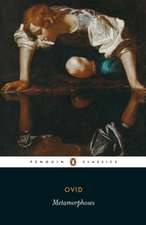 MetamorphosesOvid-25%Preț: 60.23 lei79.80 lei
 -
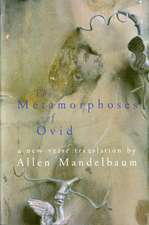 Preț: 148.81 lei
 -
 Homer Vol. IV. Odyssey (Books XIII-XXIV)D. B. Monro-25%Preț: 169.28 lei225.44 lei
 -
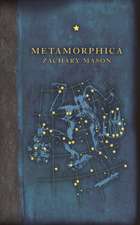 MetamorphicaZachary Mason-18%Preț: 100.32 lei122.53 lei
 -
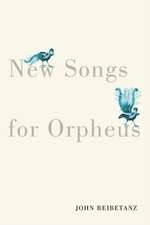 New Songs for OrpheusJohn ReibetanzPreț: 83.38 lei
 -
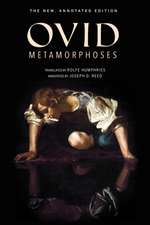 MetamorphosesOvidPreț: 73.47 lei
 -
 Ovid's MetamorphosesC Luke SoucyPreț: 114.94 lei
 -
 Tales from OvidTed HughesPreț: 77.87 lei
 -
 Preț: 230.21 lei
 -
 Metamorphosis: A Natural and Human HistoryOren Harman-29%Preț: 137.78 lei194.18 lei
 -
 No Friend to This HouseNatalie Haynes-32%Preț: 75.29 lei110.17 lei
 -
 Ancient Myths and Legends Without MenMara GoldPreț: 161.51 lei
 -
 -17%Preț: 74.34 lei89.78 lei
 -
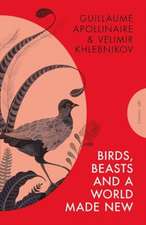 Birds, Beasts and a World Made NewGuillaume ApollinairePreț: 79.40 lei
 -
 I, MedusaAyana GrayPreț: 118.53 lei
 -
 Girl Meets BoyAli SmithPreț: 71.08 lei
 -
 MetamorphosesLaura LomasPreț: 76.66 lei
 -
 Transformation and other stories (Legend Classics)Mary Shelley-12%Preț: 62.67 lei71.08 lei
De ce să citești această carte
Recomandăm această carte cititorilor interesați de filozofie și literatură clasică care doresc o perspectivă proaspătă asupra mitologiei. Michael Marder reușește să demonstreze relevanța lui Ovidiu în dezbaterile actuale despre postumanism și ecologie. Veți câștiga o înțelegere profundă a modului în care identitatea și conștiința pot fi redefinite dincolo de limitele corpului uman, printr-o lectură ce îmbină creativitatea literară cu rigoarea fenomenologică.