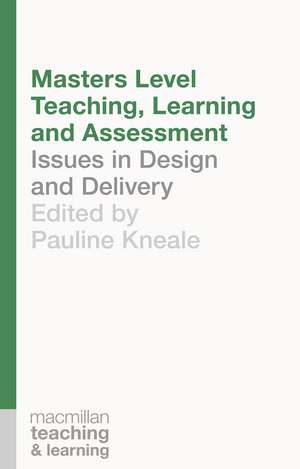
Masters Level Teaching, Learning and Assessment: Issues in Design and Delivery: Teaching and Learning
Autor Pauline Knealeen Limba Engleză Paperback – 11 sep 2015
Ideal for newly qualified and experienced staff alike, this book covers everything you need to know to develop effective practices in Masters teaching, including designing, managing and reviewing a curriculum, and delivering effective student support. The text brings together contributions from a wide range of academics who have extensive practical experience of teaching at Masters level nationally and internationally.
Through sharing examples of innovative practice and student-centred learning advice, this book provides thought-provoking support for all those working to develop and enhance Masters programmes.
Preț: 329.93 lei
Puncte Express: 495
Carte tipărită la comandă
Livrare economică 30 noiembrie-14 decembrie
Livrare prin curier în România Termenul estimat este afișat lângă disponibilitate.
Transport gratuit de la 400.00 lei Plată online sau ramburs, în funcție de opțiunile comenzii.
Retur gratuit în 14 zile Comandă securizată și suport în română.
Specificații
ISBN-13: 9781137399366
ISBN-10: 1137399368
Pagini: 304
Ilustrații: 3 figures, 9 b/w tables
Dimensiuni: 138 x 138 x 18 mm
Greutate: 0.39 kg
Ediția:1st ed. 2015
Editura: Bloomsbury Publishing
Colecția Red Globe Press
Seria Teaching and Learning
Locul publicării:London, United Kingdom
ISBN-10: 1137399368
Pagini: 304
Ilustrații: 3 figures, 9 b/w tables
Dimensiuni: 138 x 138 x 18 mm
Greutate: 0.39 kg
Ediția:1st ed. 2015
Editura: Bloomsbury Publishing
Colecția Red Globe Press
Seria Teaching and Learning
Locul publicării:London, United Kingdom
V-ar putea interesa
-
 Learning Development in Higher EducationPeter Hartley-23%Preț: 285.17 lei371.05 lei
 -
 -19%Preț: 264.28 lei326.81 lei
 -
 Planning Your PhDKate Williams-21%Preț: 58.33 lei73.39 lei
 -
 Preț: 284.32 lei
 -
 Putting Students First PBraskampPreț: 292.23 lei
 -
 Preț: 194.69 lei
 -
 Landlord and Tenant LawMargaret Wilkie-23%Preț: 287.67 lei372.60 lei
 -
 The Slow ProfessorMaggie BergPreț: 190.19 lei
Cuprins
Foreword; Pauline Kneale
Series Editor's Preface; Sally Brown
Abbreviations
PART I: THE MASTER'S EXPERIENCE
1. Master's Perspectives
1.1. Being A Student And Teacher; Bill Lindquist
1.2. My Masters Experience As Student And Teacher; Valerie Huggins
1.3. Researching The Master's Student Experience; Louise Winfield
1.4. Understanding Students Needs In Theatre Practice; Sue Mayo and Katharine Low
1.5. Defining Issues For Mastery; Pauline Kneale
2. The Diversity Of Masters Provision; Pauline Kneale
3. Aspects Of Mastership
3.1. Master's Education In China Danqing Liu; Jinghua Liu
3.2. The Master's Experience In Canada; Celia Popovic
3.3. The Influence Of Bologna On The Student Experience, A Case Study From Portugal; Ana Vitoria Baptista and Ana Cabral
3.4. Exploring The Experience And Support Needs Of Part-Time Master's Students; Julie Anderson, Valerie Huggins and Louise Winfield
PART II: TRANSITION MATTERS
4. Transition Issues For Course Designers
4.1. Transition To Postgraduate Study: Overlooked And Underestimated; Jane Tobbell and Victoria O'Donnell
4.2. Principles For Reviewing The Taught Postgraduate Induction Curricula; Julie Rattray and Jan Smith
4.3. Effective Interventions For Maintaining Master's Student Motivation; Michelle Reid, Sonia Hood and Kim Shahabudin
4.4. Issues And Resources For Transition: A Personal Reflection; Pauline Deutz
5. Effective Induction
5.1. Belonging Cube: An Induction Activity To Recognise And Celebrate Diversity; Mark Sutcliffe and Ruth Matheson
5.2. Using Formative Assessment During Induction; Ruth Cross
5.3. Exploring Critical Thinking With Chinese Students During Induction; Rong Huang
5.4. Study Skills For Masters' Level 'Through The Looking Glass' Of Chinese Students; Marina Orsini-Jones, Ying Zhao and Xuemei Wang
PART III: EFFECTIVE EXPERIENTIAL LEARNING
7. International Learner Development Across The Business School Curriculum; Gillian Byrne and Halina Harvey Writing Matters
7.1. Supporting Students To Develop Master's Level Writing Skills; Clare Furneaux
7.2. Reflective Writing With Students On An LLM For Practising Lawyers; Jane Ching
7.3. Teacher Student Experiences Of Collaborative Writing At Master's Level; Emily Beaumont and Ken Gale
8. Integrating University-Wide Support
8.1. Central Support For Masters Student Dissertation Work; Tina Ramkalawan and Emily Danvers
8.2. Employability Skills For Masters Students; Debbi Marais
9. Problem-Based Learning In Practice
9.1. Using Problem-Based Learning In M-Level Computing Module; Chris Beaumont
9.2. 'Real World' Student Experience At Masters Level In Art And Design: Case Studies From Glass And Ceramics; Kevin Petrie, Andrew Livingstone, Jeffery Sarmiento and Cate Watkinson
9.3. Issues For Professional Masters: Bringing The Real World Into The Classroom; Joanna Drugan
PART IV: ASSESSMENT
10. Assessing Well At Masters Level; Sally Brown
11. Creative Assessments
11.1. Using Blogs When Assessing M-Level Childhood And Youth Studies Students To Foster Skills And Confidence; Emma Bond and Stuart Agnew
11.2. Using Portfolios To Assess M-Level Music Performance Students; Laura Ritchie,
11.3. Authentic Assessment In An Med Psychology Of Education; Sue PalmerConn
11.4. A Group Work Assessment For Distance Learners On An Msc Facilities Management Programme; Chris Garbett
11.5. Patchwork Portfolio Assessment; Mark Sutcliffe and Ruth Matheson
11.6. Managing Student Diversity And Learning Through Group Formative Assessment; Adam Ritchie and Emma Plugge
PART V: CURRICULUM DESIGN
12. Curriculum Design To Provide Learning In A Social Practice; Andrew Cramp
13. Lessons Learned From Distance Learning; Helen Durham and.
Series Editor's Preface; Sally Brown
Abbreviations
PART I: THE MASTER'S EXPERIENCE
1. Master's Perspectives
1.1. Being A Student And Teacher; Bill Lindquist
1.2. My Masters Experience As Student And Teacher; Valerie Huggins
1.3. Researching The Master's Student Experience; Louise Winfield
1.4. Understanding Students Needs In Theatre Practice; Sue Mayo and Katharine Low
1.5. Defining Issues For Mastery; Pauline Kneale
2. The Diversity Of Masters Provision; Pauline Kneale
3. Aspects Of Mastership
3.1. Master's Education In China Danqing Liu; Jinghua Liu
3.2. The Master's Experience In Canada; Celia Popovic
3.3. The Influence Of Bologna On The Student Experience, A Case Study From Portugal; Ana Vitoria Baptista and Ana Cabral
3.4. Exploring The Experience And Support Needs Of Part-Time Master's Students; Julie Anderson, Valerie Huggins and Louise Winfield
PART II: TRANSITION MATTERS
4. Transition Issues For Course Designers
4.1. Transition To Postgraduate Study: Overlooked And Underestimated; Jane Tobbell and Victoria O'Donnell
4.2. Principles For Reviewing The Taught Postgraduate Induction Curricula; Julie Rattray and Jan Smith
4.3. Effective Interventions For Maintaining Master's Student Motivation; Michelle Reid, Sonia Hood and Kim Shahabudin
4.4. Issues And Resources For Transition: A Personal Reflection; Pauline Deutz
5. Effective Induction
5.1. Belonging Cube: An Induction Activity To Recognise And Celebrate Diversity; Mark Sutcliffe and Ruth Matheson
5.2. Using Formative Assessment During Induction; Ruth Cross
5.3. Exploring Critical Thinking With Chinese Students During Induction; Rong Huang
5.4. Study Skills For Masters' Level 'Through The Looking Glass' Of Chinese Students; Marina Orsini-Jones, Ying Zhao and Xuemei Wang
PART III: EFFECTIVE EXPERIENTIAL LEARNING
7. International Learner Development Across The Business School Curriculum; Gillian Byrne and Halina Harvey Writing Matters
7.1. Supporting Students To Develop Master's Level Writing Skills; Clare Furneaux
7.2. Reflective Writing With Students On An LLM For Practising Lawyers; Jane Ching
7.3. Teacher Student Experiences Of Collaborative Writing At Master's Level; Emily Beaumont and Ken Gale
8. Integrating University-Wide Support
8.1. Central Support For Masters Student Dissertation Work; Tina Ramkalawan and Emily Danvers
8.2. Employability Skills For Masters Students; Debbi Marais
9. Problem-Based Learning In Practice
9.1. Using Problem-Based Learning In M-Level Computing Module; Chris Beaumont
9.2. 'Real World' Student Experience At Masters Level In Art And Design: Case Studies From Glass And Ceramics; Kevin Petrie, Andrew Livingstone, Jeffery Sarmiento and Cate Watkinson
9.3. Issues For Professional Masters: Bringing The Real World Into The Classroom; Joanna Drugan
PART IV: ASSESSMENT
10. Assessing Well At Masters Level; Sally Brown
11. Creative Assessments
11.1. Using Blogs When Assessing M-Level Childhood And Youth Studies Students To Foster Skills And Confidence; Emma Bond and Stuart Agnew
11.2. Using Portfolios To Assess M-Level Music Performance Students; Laura Ritchie,
11.3. Authentic Assessment In An Med Psychology Of Education; Sue PalmerConn
11.4. A Group Work Assessment For Distance Learners On An Msc Facilities Management Programme; Chris Garbett
11.5. Patchwork Portfolio Assessment; Mark Sutcliffe and Ruth Matheson
11.6. Managing Student Diversity And Learning Through Group Formative Assessment; Adam Ritchie and Emma Plugge
PART V: CURRICULUM DESIGN
12. Curriculum Design To Provide Learning In A Social Practice; Andrew Cramp
13. Lessons Learned From Distance Learning; Helen Durham and.
Notă biografică
Pauline Kneale is Director of the Pedagogic Research Institute and Observatory, Plymouth University, UK.