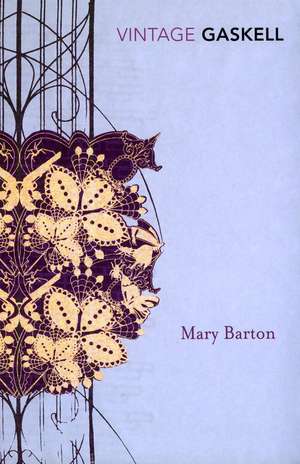
Mary Barton
Autor Elizabeth Gaskellen Limba Engleză Paperback – 6 mar 2008
Imaginea de deschidere a acestui roman ne poartă în Manchesterul anilor 1840, un oraș marcat de contrastul brutal dintre fumul fabricilor și sărăcia lucie a cartierelor muncitorești. Subliniem modul în care Elizabeth Gaskell reușește, încă de la primele pagini, să transforme statistica socială în suferință umană palpabilă. Mary, o tânără care speră la o viață mai bună prin căsătoria cu fiul unui industriaș, devine centrul unui conflict ce depășește sfera domesticului. În tradiția lui George Eliot, în special prin temele din „The Mill on the Floss”, acest roman explorează modul în care alegerile individuale sunt zdrobite de mecanismele rigide ale clasei sociale, însă Gaskell adaugă o dimensiune politică mult mai ascuțită prin figura tatălui, John Barton. Reținem că această operă de debut nu este doar o dramă romantică, ci un document istoric viu. Structura cărții, completată de apendicele ce includ perspective contemporane de la Friedrich Engels sau Thomas Carlyle, transformă lectura într-o experiență imersivă în epoca industrializării. Față de North and South, unde conflictul dintre Nord și Sud este mediat prin dialog, în Mary Barton tensiunea este mult mai viscerală, culminând cu un act de violență care forțează cititorul să privească direct în abisul inegalității. Credem că forța narațiunii rezidă în onestitatea cu care autoarea refuză soluțiile simple, preferând să exploreze dilemele morale ale unei societăți aflate în plină transformare.
Preț: 56.79 lei
Preț vechi: 74.11 lei
-23%
Carte disponibilă
Livrare economică 13-24 noiembrie
Specificații
ISBN-10: 0099511479
Pagini: 496
Dimensiuni: 129 x 197 x 30 mm
Greutate: 0.37 kg
Editura: Random House
V-ar putea interesa
-
 CLASSICS NORTH AND SOUTHElizabeth GaskellPreț: 28.01 lei
 -
 Physics DeMYSTiFieD, Second EditionStan Gibilisco-26%Preț: 131.90 lei178.27 lei
 -
 North and SouthElizabeth Gaskell-14%Preț: 52.59 lei60.96 lei
 -
 Wives and DaughtersElizabeth Gaskell-16%Preț: 62.00 lei73.58 lei
 -
 The Condition of the Working Class in EnglandFriedrich Engels-19%Preț: 70.41 lei86.45 lei
 -
 North and SouthElizabeth GaskellPreț: 109.66 lei
 -
 The Making of the English Working ClassE. P. ThompsonPreț: 161.69 lei
 -
 Elizabeth GaskellJenny UglowPreț: 127.29 lei
 -
 CranfordElizabeth Cleghorn GaskellPreț: 43.05 lei
 -
 The Moorland CottageElizabeth Cleghorn GaskellPreț: 40.29 lei
 -
 Wives and DaughtersElizabeth Cleghorn GaskellPreț: 88.76 lei
 -
 Mary BartonElizabeth Cleghorn GaskellPreț: 58.31 lei
 -
 CranfordElizabeth GaskellPreț: 43.46 lei
 -
 Das Ewige LichtKarl August Von HeigelPreț: 68.66 lei
 -
 HaschischOscar a. H. SchmitzPreț: 50.33 lei
 -
 MelusineOscar a. H. SchmitzPreț: 89.12 lei
 -
 Die Sohne Des SenatorsTheodor StormPreț: 37.13 lei
 -
 AbseitsTheodor StormPreț: 36.35 lei
 -
 Abseits (Grodruck)Theodor StormPreț: 37.32 lei
 -
 A Lancashire LassLibby AshworthPreț: 133.53 lei
 -
 -25%Preț: 48.35 lei64.75 lei
 -
 Wives and DaughtersElizabeth GaskellPreț: 39.82 lei
 -
 The Ragged Trousered PhilanthropistsRobert TressellPreț: 28.01 lei
 -
 North and SouthElizabeth GaskellPreț: 58.22 lei
De ce să citești această carte
Recomandăm acest volum celor care doresc să descopere rădăcinile romanului social victorian. Dincolo de povestea de dragoste tensionată, cititorul câștigă o înțelegere profundă a condiției umane în fața progresului tehnologic nemilos. Este o lectură esențială pentru pasionații de istorie și literatură clasică, oferind un portret autentic al Manchesterului, dublat de un aparat critic deosebit care explică contextul mișcării chartiste.
Despre autor
Elizabeth Gaskell (1810-1865), cunoscută și sub numele de Mrs. Gaskell, a fost o figură centrală a literaturii victoriene, renumită pentru capacitatea de a portretiza cu empatie toate straturile societății. Crescută în nordul Angliei, ea a observat direct transformările aduse de revoluția industrială. Debutul său cu Mary Barton i-a adus admirația lui Charles Dickens, în ale cărui publicații și-a tipărit ulterior mare parte din proză. Prietenă apropiată a lui Charlotte Brontë, Gaskell a scris și prima biografie a acesteia. Opera sa, care include titluri precum Cranford și Wives and Daughters, rămâne o sursă inestimabilă pentru istoricii sociali și iubitorii de beletristică deopotrivă.
Descriere scurtă
Recenzii
–Sunday Telegraph
Elizabeth Gaskell was born on 29 September 1810 in London. She was brought up in Knutsford, Cheshire by her aunt after her mother died when she was two years old. In 1832 she married William Gaskell, who was a Unitarian minister like her father. After their marriage they lived in Manchester with their children. Elizabeth Gaskell published her first novel, Mary Barton, in 1848 to great success. She went on to publish much of her work in Charles Dickens's magazines, Household Words and All the Year Round. Along with short stories and a biography of Charlotte Bronte, she published five more novels including North and South (1855) and Wives and Daughters (1866). Wives and Daughters is unfinished as Elizabeth Gaskell died suddenly of heart failure on 12 November 1865.
Notă biografică
Descriere
'It's the masters as has wrought this woe; it's the masters as should pay for it.'Set in Manchester in the 1840s - a period of industrial unrest and extreme deprivation - Mary Barton depicts the effects of economic and physical hardship upon the city's working-class community. Paralleling the novel's treatment of the relationship between masters and men, the suffering of the poor, and the workmen's angry response, is the story of Mary herself: a factory-worker's daughter who attracts the attentions of the mill-owner's son, she becomes caught up in the violence of class conflict when a brutal murder forces her to confront her true feelings and allegiances. Mary Barton was praised by contemporary critics for its vivid realism, its convincing characters and its deep sympathy with the poor, and it still has the power to engage and move readers today. This edition reproduces the last edition of the novel supervised by Elizabeth Gaskell and includes her husband's two lectures on the Lancashire dialect. ABOUT THE SERIES: For over 100 years Oxford World's Classics has made available the widest range of literature from around the globe. Each affordable volume reflects Oxford's commitment to scholarship, providing the most accurate text plus a wealth of other valuable features, including expert introductions by leading authorities, helpful notes to clarify the text, up-to-date bibliographies for further study, and much more.
Cuprins
Introduction
Elizabeth Gaskell: A Brief Chronology
A Note on the Text
Mary Barton
Appendix A:
The Composition of the Novel
- Excerpts from Gaskell’s Letters
- Parable of Dives and Lazarus
Contemporary Reviews of the Novel
- Athenaeum (21 October 1848)
- Examiner (4 November 1848)
- Christian Examiner (March 1849)
- Edinburgh Review (April 1849)
- Fraser’s Magazine (April 1849)
Social Commentary on Industrialization
- Thomas Carlyle, Chapter I, Chartism (1840)
- “Emigration—Report of the Poor-Law Commissioners on the Subject,” Chambers’ Edinburgh Journal (15 February 1840)
- Joseph Adshead, Distress in Manchester. Evidence (Tabular and Otherwise) of the State of the Labouring Classes in 1840-42 (1842)
- Leon Faucher, Manchester in 1844: Its PresentCondition and Future Prospects (1844)
- Ralph Barnes Grindrod, The Slaves of the Needle(1844)
- Friedrich Engels, The Condition of the Working Class in England (1845)
- Charles Kingsley, Appeal to the Chartists (12 April 1848)
- Caroline Norton, Letters to the Mob (1848)
- Morning Chronicle (Thursday, 1 November 1849)
- William Rathbone Greg, Employers and Employed (1853)
Related Fiction and Poetry
- Thomas Hood, “Song of the Shirt” (1843)
- Charlotte Brontë, Chapters 8 and 19, Shirley (1849)
- Charles Dickens, Chapter 4, Hard Times (1854)
- George Eliot, Chapter 31, Felix Holt (1866)
Chartism and Free Trade
Select Bibliography