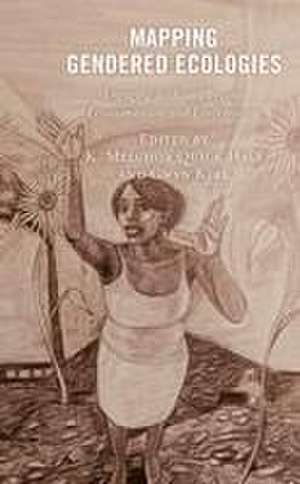
Mapping Gendered Ecologies: Engaging with and beyond Ecowomanism and Ecofeminism: Environment and Religion in Feminist-Womanist, Queer, and Indigenous Perspectives
Editat de K. Melchor Quick Hall, Gwyn Kirk Contribuţii de Judith Atamba, Tatyana Bakhmetyeva, Ruth Bottomley, Yvonne Braun, Dannie Brice, Ravá Shelyn Chapman, Nuria Costa Leonardo, Susan Cundiff, Christina Holmes, Linh Hua, Aurora Levins Morales, Stephanie Morningstar, Margo Okazawa-Rey, Frances Roberts-Gregoryen Limba Engleză Paperback – feb 2023





Preț: 222.24 lei
Preț vechi: 307.73 lei
-28%
Puncte Express: 333
Carte tipărită la comandă
Livrare economică 08-22 decembrie
Livrare prin curier în România Termenul estimat este afișat lângă disponibilitate.
Transport gratuit de la 400.00 lei Plată online sau ramburs, în funcție de opțiunile comenzii.
Retur gratuit în 14 zile Comandă securizată și suport în română.
Specificații
ISBN-13: 9781793639486
ISBN-10: 1793639485
Pagini: 272
Dimensiuni: 148 x 228 x 18 mm
Greutate: 0.4 kg
Editura: Bloomsbury Publishing
Colecția Lexington Books
Seria Environment and Religion in Feminist-Womanist, Queer, and Indigenous Perspectives
Locul publicării:New York, United States
ISBN-10: 1793639485
Pagini: 272
Dimensiuni: 148 x 228 x 18 mm
Greutate: 0.4 kg
Editura: Bloomsbury Publishing
Colecția Lexington Books
Seria Environment and Religion in Feminist-Womanist, Queer, and Indigenous Perspectives
Locul publicării:New York, United States
Cuprins
Chapter 1: Maps, Gardens, and Quilts
Chapter 2: Darkness All Around: Black Water, Land, Animals, and Sky
Chapter 3: Roots, Branches, and Wings
Chapter 4: Cultivating Intergenerational Gardens with Judith Atamba: An Ecowomanist Analysis of a Transnational Black Women's Gardening Collaboration
Chapter 5: Theorizing Ecofeminist Intersectionalities and their Implications for Feminist Teachers
Chapter 6: On Black Women's Spatial Resistance: Tracing Modes of Survival and Safe Spaces across the Atlantic
Chapter 7: Rematriation: A Climate Justice Migration
Chapter 8: A Conversation with Stephanie Morningstar, coordinator of the North East Farmers of Color (NEFOC) Land Trust
Chapter 9: Ecofeminism as Intersectional Pedagogy and Practice
Chapter 10: Climate Justice in the Wild n' Dirty South: An Autoethnographic Reflection on Ecowomanism as Engaged Scholar-Activist Praxis before and during COVID-19
Chapter 11: Lifelines: Repairing War on the Land
Chapter 12: Intimate Pedagogy, Melancholic Things
Chapter 13: Teaching and Learning Gendered Ecologies across the Curriculum
Chapter 14: A Word about Womanist Ecology: An Autoethnography of Understanding the Sacredness of Community Gardens for Africana Indigenous People in America
Chapter 15: A Conversation with Nuria Costa Leonardo: Feminist Visionary, Builder, Farmer, and Teacher
Chapter 2: Darkness All Around: Black Water, Land, Animals, and Sky
Chapter 3: Roots, Branches, and Wings
Chapter 4: Cultivating Intergenerational Gardens with Judith Atamba: An Ecowomanist Analysis of a Transnational Black Women's Gardening Collaboration
Chapter 5: Theorizing Ecofeminist Intersectionalities and their Implications for Feminist Teachers
Chapter 6: On Black Women's Spatial Resistance: Tracing Modes of Survival and Safe Spaces across the Atlantic
Chapter 7: Rematriation: A Climate Justice Migration
Chapter 8: A Conversation with Stephanie Morningstar, coordinator of the North East Farmers of Color (NEFOC) Land Trust
Chapter 9: Ecofeminism as Intersectional Pedagogy and Practice
Chapter 10: Climate Justice in the Wild n' Dirty South: An Autoethnographic Reflection on Ecowomanism as Engaged Scholar-Activist Praxis before and during COVID-19
Chapter 11: Lifelines: Repairing War on the Land
Chapter 12: Intimate Pedagogy, Melancholic Things
Chapter 13: Teaching and Learning Gendered Ecologies across the Curriculum
Chapter 14: A Word about Womanist Ecology: An Autoethnography of Understanding the Sacredness of Community Gardens for Africana Indigenous People in America
Chapter 15: A Conversation with Nuria Costa Leonardo: Feminist Visionary, Builder, Farmer, and Teacher
Recenzii
This exceptional book will make a great contribution to courses focusing on ecofeminism and ecowomanism, environmental justice, food security, and international and health studies. Many chapters review the most critical literature and other helpful and hands-on material for educators in the fields of ecofeminism and ecowomanism. The text is accessible for undergraduates, thought-inspiring for graduate students, and potentially life-altering for all its readers.
This edited volume from Hall and Kirk brings to light the connections, interactions, and entanglements of geography, gender, race, and sexuality. Collectively, the essays, written during the middle of the global COVID-19 pandemic, prompt readers to question their environs, who belongs there, and who has power and control over those localities. Contributing authors further encourage readers to question how the world could look different through a feminist approach to climate justice. The chapters center racial and queered ecofeminism theory, an intersectional approach needed to challenge the status quo in the fields of geography, ecology, social justice, and gender and queer studies. A thought-provoking contribution. Recommended.
Theorizing in the vernacular, these essays put ecowomanists and ecofeminists in conversation, addressing our shared commitments to climate justice and multispecies collaborations. Across generations, cultures and identities, our humanimal flourishing requires growing roots in our diverse herstories and letting them guide us in creating more just and sustainable futures.
K. Melchor Hall and Gwyn Kirk's Mapping Gendered Ecologies: Engaging with and beyond Ecowomanism and Ecofeminism is a celebration of diversity, of species, and cultures. It takes us beyond the inevitability of separation and monocultures of the mind to diversity through dialogue and collaboration.
Living up to its promise, Mapping Gendered Ecologies composts Euro-patriarchal academic frameworks as it immerses the reader in ecofeminist worldviews. Rooted in earth, water, stone, and living plants, we journey from Six Nations to Cambodia, Spain, Boriken, Haiti, and Mexico. We unearth our land and water-based traumas, decompose them, and build a more nourishing and rooted map of the world. We squirm in discomfort and delight in revelation as wisdom-keepers like Aurora Levins Morales and Stephanie Morningstar push us to question our colonial notions of land, life, and self. Drs. Hall and Kirk interrupt the ivory tower pandering to white comfort and invite us to upend notions that only some lives matter. Their anthology is essential reading for the thriving of humanity and all life on earth.
This edited volume from Hall and Kirk brings to light the connections, interactions, and entanglements of geography, gender, race, and sexuality. Collectively, the essays, written during the middle of the global COVID-19 pandemic, prompt readers to question their environs, who belongs there, and who has power and control over those localities. Contributing authors further encourage readers to question how the world could look different through a feminist approach to climate justice. The chapters center racial and queered ecofeminism theory, an intersectional approach needed to challenge the status quo in the fields of geography, ecology, social justice, and gender and queer studies. A thought-provoking contribution. Recommended.
Theorizing in the vernacular, these essays put ecowomanists and ecofeminists in conversation, addressing our shared commitments to climate justice and multispecies collaborations. Across generations, cultures and identities, our humanimal flourishing requires growing roots in our diverse herstories and letting them guide us in creating more just and sustainable futures.
K. Melchor Hall and Gwyn Kirk's Mapping Gendered Ecologies: Engaging with and beyond Ecowomanism and Ecofeminism is a celebration of diversity, of species, and cultures. It takes us beyond the inevitability of separation and monocultures of the mind to diversity through dialogue and collaboration.
Living up to its promise, Mapping Gendered Ecologies composts Euro-patriarchal academic frameworks as it immerses the reader in ecofeminist worldviews. Rooted in earth, water, stone, and living plants, we journey from Six Nations to Cambodia, Spain, Boriken, Haiti, and Mexico. We unearth our land and water-based traumas, decompose them, and build a more nourishing and rooted map of the world. We squirm in discomfort and delight in revelation as wisdom-keepers like Aurora Levins Morales and Stephanie Morningstar push us to question our colonial notions of land, life, and self. Drs. Hall and Kirk interrupt the ivory tower pandering to white comfort and invite us to upend notions that only some lives matter. Their anthology is essential reading for the thriving of humanity and all life on earth.