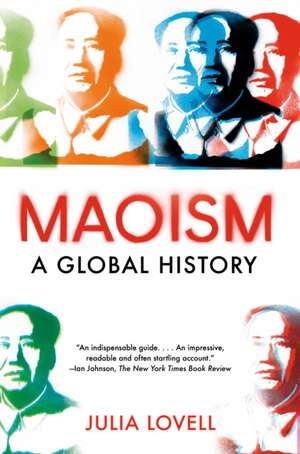
Maoism
Autor Julia Lovellen Limba Engleză Paperback – 25 aug 2020
Bazându-ne pe analiza detaliată a lucrării Maoism, publicată de Random House, remarcăm o schimbare fundamentală de paradigmă în istoriografia mișcărilor revoluționare. Julia Lovell demonstrează că, deși Occidentul a etichetat adesea maoismul drept un fenomen anacronic, ideologia a funcționat ca un motor crucial al Războiului Rece, cu ramificații surprinzătoare din Peru până în Tanzania. Ne-a atras atenția modul în care autoarea conectează geneza mișcării din nord-vestul Chinei anilor '30 cu „viețile ulterioare” violente ale acesteia în Asia de Sud și Europa. Subliniem rigoarea academică recunoscută prin premiul Cundill History Prize, care transformă această ediție într-o referință pentru studiul istoriei asiatice. Structura narativă este una extensivă, acoperind 606 pagini care documentează cum maoismul a alimentat de la rebeliunile studențești din Paris până la insurgențele din India și Nepal. Textul oferă o perspectivă interdisciplinară necesară pentru a înțelege legitimitatea actuală a guvernului comunist de la Beijing. În contextul literaturii de specialitate, Maoism acoperă aceeași arie tematică precum The Emergence of Global Maoism de Matthew Galway, dar cu o abordare mult mai vastă din punct de vedere geografic și temporal. În timp ce Galway se concentrează pe relația specifică dintre China și Cambodgia, Lovell propune o istorie globală ce include terorismul din Germania și Italia. Față de A Critical Introduction to Mao de Timothy Cheek, care este o evaluare critică a vieții liderului, lucrarea de față se concentrează pe exportul ideologic și pe adaptarea practică a maoismului în diverse contexte culturale.
Preț: 144.32 lei
Carte indisponibilă temporar
Specificații
ISBN-10: 0525565906
Pagini: 656
Dimensiuni: 153 x 230 x 34 mm
Greutate: 0.83 kg
Editura: Knopf Doubleday Publishing Group
V-ar putea interesa
-
 -18%Preț: 76.76 lei94.14 lei
 -
 Monkey King: Journey to the WestWu Ch'Eng-En-19%Preț: 127.29 lei157.01 lei
 -
 The Soul of AmericaJon Meacham-23%Preț: 107.19 lei139.25 lei
 -
 KillingsCalvin TrillinPreț: 129.54 lei
 -
 Preț: 308.22 lei
 -
 The Great WallJulia LovellPreț: 146.99 lei
 -
 Serve the People!Yan LiankePreț: 95.68 lei
 -
 Ritz and EscoffierLuke Barr-18%Preț: 70.82 lei86.87 lei
 -
 Paradise NowChris JenningsPreț: 138.32 lei
 -
 Sky BurialXinranPreț: 98.53 lei
 -
 An Impeccable Spy: Richard Sorge, Stalin’s Master AgentOwen Matthews-36%Preț: 60.23 lei93.47 lei
 -
 No More PeaceErnst TollerPreț: 171.37 lei
 -
 Preț: 313.53 lei
 -
 Princesses Behaving Badly: Real Stories from History Without the Fairy-Tale EndingsLinda Rodriguez McRobbiePreț: 119.26 lei
 -
 Preț: 193.79 lei
 -
 Die Eroberung der NaturDavid BlackbournPreț: 171.36 lei
De ce să citești această carte
Această carte este esențială pentru cititorii care doresc să înțeleagă ascensiunea Chinei contemporane și ecourile sale globale. Julia Lovell oferă o analiză lucidă a modului în care o ideologie considerată apusă continuă să modeleze geopolitica actuală. Veți câștiga o perspectivă clară asupra legăturii dintre trecutul revoluționar și capitalismul autoritar de astăzi, într-un volum premiat care se citește ca o cronică a transformărilor mondiale.
Despre autor
Julia Lovell este o figură proeminentă în sinologie, fiind profesoară de istorie și literatură chineză modernă la University of London. Experiența sa academică este dublată de o activitate intensă de traducător, aducând în limba engleză opere fundamentale precum Monkey King: Journey to the West sau scrierile lui Lu Xun. În cadrul operei sale, Maoism continuă explorarea temelor legate de identitatea și puterea Chinei, teme abordate anterior în The Great Wall: China Against the World și The Opium War. Colaborările sale cu publicații precum The Guardian și The Economist reflectă capacitatea de a sintetiza cercetarea istorică complexă pentru un public larg.
Descriere scurtă
SHORTLISTED FOR THE BAILLIE GIFFORD PRIZE FOR NON-FICTION 2019
SHORTLISTED FOR THE NAYEF AL-RODHAN PRIZE FOR GLOBAL UNDERSTANDING
SHORTLISTED FOR DEUTSCHER PRIZE
LONGLISTED FOR THE 2020 ORWELL PRIZE FOR POLITICAL WRITING***
'Revelatory and instructive... [a] beautifully written and accessible book' The Times For decades, the West has dismissed Maoism as an outdated historical and political phenomenon. Since the 1980s, China seems to have abandoned the utopian turmoil of Mao's revolution in favour of authoritarian capitalism. But Mao and his ideas remain central to the People's Republic and the legitimacy of its Communist government. With disagreements and conflicts between China and the West on the rise, the need to understand the political legacy of Mao is urgent and growing. The power and appeal of Maoism have extended far beyond China. Maoism was a crucial motor of the Cold War: it shaped the course of the Vietnam War (and the international youth rebellions that conflict triggered) and brought to power the murderous Khmer Rouge in Cambodia; it aided, and sometimes handed victory to, anti-colonial resistance movements in Africa; it inspired terrorism in Germany and Italy, and wars and insurgencies in Peru, India and Nepal, some of which are still with us today - more than forty years after the death of Mao. In this new history, Julia Lovell re-evaluates Maoism as both a Chinese and an international force, linking its evolution in China with its global legacy. It is a story that takes us from the tea plantations of north India to the sierras of the Andes, from Paris's fifth arrondissement to the fields of Tanzania, from the rice paddies of Cambodia to the terraces of Brixton. Starting with the birth of Mao's revolution in northwest China in the 1930s and concluding with its violent afterlives in South Asia and resurgence in the People's Republic today, this is a landmark history of global Maoism.
Notă biografică
Descriere
'A landmark work giving a global panorama of Mao's ideology filled with historic events and enlivened by striking characters' Jonathan FenbySince the 1980s, China seems to have abandoned the utopian turmoil of Mao's revolution in favour of authoritarian capitalism. But Mao and his ideas remain central to the People's Republic. With disagreements between China and the West on the rise, the need to understand the political legacy of Mao is urgent and growing.
A crucial motor of the Cold War: Maoism shaped the course of the Vietnam War and brought to power the Khmer Rouge in Cambodia; it aided anti-colonial resistance movements in Africa; it inspired terrorism in Germany and Italy, and wars and insurgencies in Peru, India and Nepal, some of which are still with us today. Starting with the birth of Mao's revolution in northwest China in the 1930s and concluding with its violent afterlives in South Asia and resurgence in the People's Republic today, Julia Lovell re-evaluates Maoism as both a Chinese and an international force, linking its evolution in China with its global legacy.