
Lolly Willowes
Autor Sylvia Townsend Warneren Limba Engleză Paperback – 18 mar 2020
Preț: 58.95 lei
Preț vechi: 82.58 lei
-29%
Puncte Express: 88
Carte disponibilă
Livrare economică 18-25 decembrie
Livrare prin curier în România Termenul estimat este afișat lângă disponibilitate.
Transport gratuit de la 400.00 lei Plată online sau ramburs, în funcție de opțiunile comenzii.
Retur gratuit în 14 zile Comandă securizată și suport în română.
Specificații
ISBN-13: 9780486843483
ISBN-10: 0486843483
Pagini: 160
Dimensiuni: 124 x 200 x 9 mm
Greutate: 0.18 kg
Editura: Dover Publications
V-ar putea interesa
-
 To the LighthouseVirginia WoolfPreț: 28.01 lei
-
 SpellfireAgatha WillowPreț: 71.98 lei
-
 A Magical Girl Retires (Nomad Edition)Park SeolyeonPreț: 78.13 lei
-
 Sylvia Townsend WarnerClaire HarmanPreț: 116.72 lei
-
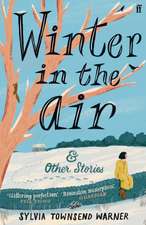 Winter in the AirSylvia Townsend WarnerPreț: 72.43 lei
-
 UncharmedLucy Jane WoodPreț: 108.78 lei
-
 -18%Preț: 89.13 lei108.85 leiRecomandat
-
 Preț: 72.38 leiRecomandat
-
 -25%Preț: 59.98 lei79.55 lei
-
 -22%Preț: 87.01 lei111.52 lei
-
 Femme Feral: OBSERVER DEBUT NOVELIST OF THE YEAR 2026Sam Beckbessinger-23%Preț: 84.62 lei110.12 lei
-
 -25%Preț: 48.93 lei64.99 lei
-
 The Witch of Willow SoundVanessa F. PenneyPreț: 122.13 lei
-
 A Circle OutsideLinda RosewoodPreț: 73.68 lei
-
 Big Kiss, Bye-ByeClaire-Louise BennettPreț: 93.07 lei
-
 RagwortSam K. Horton-17%Preț: 114.86 lei138.01 leiRecomandat
-
 This SlaveryScarlett RickardPreț: 143.96 lei
-
 Kingdoms of ElfinSylvia Townsend WarnerPreț: 97.84 lei
Notă biografică
Sylvia Townsend Warner (1892 - 1978) was a novelist, poet and musicologist. The only child of George and Nora Townsend Warner, Sylvia was a precocious child who studied under her father. Beginning with her first novel, Lolly Willowes; Or The Loving Huntsman (1926), Warner embarked on a writing career that embraced themes of subversion, female empowerment and a rejection of Christian practice and philosophies. Inspired by her partner, Valentine Achland¿and inspired by fellow author David Garnett, Warner went on to publish several novels including Mr. Fortune¿s Maggot (1927), Summer Will Show (1936), and The Corner That Held Them (1948); as well as multiple short story collections and books of poetry. Remembered as a feminist and lesbian icon, her work was influential for a generation of British women writers to come.
Recenzii
Sylvia Townsend Warner’s brilliantly varied and self-possessed literary production never quite won her the flaming place in the heavens of repute that she deserved. In Lolly Willowes, her first novel, she moves with somber confidence into the realm of the supernatural, and her prose, in its simple, abrupt evocations, has something preternatural about it. This is the witty, eerie, tender but firm life history of a middle-class Englishwoman who politely declines to make the expected connection with the opposite sex and becomes a witch instead.
— John Updike
Silvia Townsend Warner…is perhaps the most unjustly neglected of all the modern masters of fiction. She is remembered as a writer of historical novels, but her novels are written with such extraordinary immediacy that they stretch the possibilities of long-disparaged genera and blur the distinction between historical fiction and serious literature….Like the controversial movie Thelma and Louise, Lolly Willowes is [a] Rorschach blot that might suggest liberation to some readers and folly to others. It is an edgy tale that suggests how taking control of one’s own life might entail losing control; it might even entail an inexorable drift toward an unknown and possibly disastrous fate. In short, Lolly Willowes would be an ideal book-club selection, sure to spark a rousing discussion.
— Tim Walker, News-Press