
Letters to a Young Poet
Autor Rainer Maria Rilkeen Limba Engleză Paperback – 8 mai 2024
Observăm că, în ciuda popularității imense a lui Rainer Maria Rilke, literatura academică a dus adesea lipsă de o ediție care să captureze nu doar sensul, ci și dimensiunea spirituală și lirică a prozei sale epistolare. Acest volum, publicat de Harvard University Press, vine să completeze această lacună, oferind o perspectivă proaspătă asupra celor zece scrisori trimise lui Franz Kappus între 1902 și 1908. Premisa este una de o onestitate rară: un tânăr cadet de nouăsprezece ani îi scrie unui poet de douăzeci și șase de ani, căutând nu doar validare literară, ci un sens într-o carieră militară pe care nu o dorea. Apreciem în mod deosebit traducerea realizată de Mark Harman, cunoscut pentru versiunile sale după Kafka, care reușește să păstreze cadența originală a gândirii rilkiene. Cartea este comparabilă cu Letters on Life în rigurozitate, dar este actualizată pentru nevoile cititorului contemporan prin introducerea care analizează dificultățile traducerii și contextul biografic specific. Spre deosebire de explorările metafizice din Sonnets to Orpheus sau intensitatea din Duino Elegies, acest volum prezintă un Rilke mult mai vulnerabil și direct. Dacă în alte lucrări el invocă imagini ale inefabilului, aici oferă sfaturi concrete despre singurătate ca forță creatoare, despre inutilitatea criticii și despre arta ca mod de a trăi. Suntem de părere că această ediție hardback reprezintă o sinteză esențială a filozofiei autorului, poziționându-se ca o punte între scrierile sale de tinerețe, precum Stories of God, și maturitatea sa poetică.
Preț: 80.16 lei
Carte tipărită la comandă
Livrare economică 02-08 iunie
Specificații
Pagini: 62
Dimensiuni: 152 x 229 x 4 mm
Greutate: 0.11 kg
Editura: Start Classics
V-ar putea interesa
-
 The Heart and the BottleOliver JeffersPreț: 55.72 lei
 -
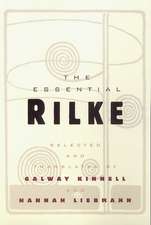 Essential Rilke, TheGalway KinnellPreț: 93.99 lei
 -
 London LoreSteve Roud-18%Preț: 86.89 lei105.72 lei
 -
 QuietSusan Cain-20%Preț: 60.89 lei75.80 lei
 -
 The Body Keeps the Score: Mind, Brain and Body in the Transformation of TraumaBessel van der Kolk-29%Preț: 73.77 lei103.92 leiRecomandat
 -
 How to Develop Emotional HealthOliver James-41%Preț: 44.21 lei74.93 lei
 -
 My Life Had Stood a Loaded GunEmily Dickinson-40%Preț: 16.31 lei27.12 lei
 -
 Anecdotes of the CynicsRobert Dobbin-40%Preț: 16.31 lei27.12 lei
 -
 -40%Preț: 16.31 lei27.12 lei
 -
 Ways of CuratingHans Ulrich ObristPreț: 74.43 lei
 -
 The GoldfinchDonna Tartt-23%Preț: 71.76 lei93.46 lei
 -
 Songs of Innocence and Songs of ExperienceWilliam BlakePreț: 23.78 lei
 -
 The Curator's HandbookAdrian GeorgePreț: 162.27 lei
 -
 I Remember Nothing: And other reflectionsNora Ephron-20%Preț: 54.92 lei68.66 lei
 -
 Art in Theory 1900 - 2000Charles HarrisonPreț: 291.89 lei
 -
 Everyday Super FoodJamie Oliver-21%Preț: 156.69 lei199.40 lei
 -
 Fantastically Great Women Who Changed The WorldKate Pankhurst-36%Preț: 35.79 lei55.86 lei
 -
 The Tales of Beedle the Bard: New EditionJ. K. Rowling-28%Preț: 39.17 lei54.50 lei
 -
 Milk and HoneyRupi Kaur-21%Preț: 69.99 lei88.41 lei
 -
 How to Be a WildflowerKatie Daisy-11%Preț: 94.31 lei105.61 lei
 -
 If You Find MeEmily Murdoch-26%Preț: 41.29 lei55.77 lei
De ce să citești această carte
Recomandăm această carte oricărui tânăr aflat la început de drum sau cititorilor care caută o ancoră morală în perioade de incertitudine. Este un volum care transformă corespondența privată într-un ghid universal despre reziliență și autenticitate. Cititorul câștigă o înțelegere profundă a procesului creativ, învățând că răspunsurile la marile întrebări ale vieții se găsesc adesea în acceptarea singurătății și a introspecției.
Despre autor
Rainer Maria Rilke (1875–1926) este recunoscut drept unul dintre cei mai intenși poeți de limbă germană, un maestru al lirismului care a navigat între tradiție și modernism. Opera sa, marcată de o sensibilitate mistică, explorează dificultatea comuniunii umane într-o epocă a anxietății. Cunoscut publicului larg pentru Duino Elegies și Sonnets to Orpheus, Rilke a fost și un scriitor epistolar prodigios, lăsând în urmă mii de scrisori care sunt considerate astăzi opere de artă în sine. Viața sa, marcată de călătorii prin Europa și o căutare constantă a divinului, se reflectă în această corespondență prin sfaturile oferite tinerilor aspiranți.
Notă biografică
Rainer Maria Rilke ist einer der bedeutendsten Lyriker deutscher Sprache. Seit dem Jahr 1900 ist er Autor des Insel Verlages, sein Werk wird hier geschlossen betreut.
Ulrich Baer lehrt Deutsche Literatur an der New York University. Seine jüngste Veröffentlichung The Poet’s Guide to Life: The Wisdom of Rilke ist in den USA ein großer Erfolg.
Ulrich Baer lehrt Deutsche Literatur an der New York University. Seine jüngste Veröffentlichung The Poet’s Guide to Life: The Wisdom of Rilke ist in den USA ein großer Erfolg.
Descriere scurtă
Becoming an artist is an apprenticeship in solitude, seeking, and suffering. When initially asked by Herr Kappus whether his verses are good, Rilke counters with the dismissal of all such outward concerns, and an admonition to go inside oneself, to discover whether one's poetic motives reach to the hidden recesses of the heart. For the artist is on his own, alone, centered in his innermost depths. Rilke next speaks of surrounding oneself with books, in which one may enter worlds of inconceivable greatness. In a subsequent letter he writes of the artist's vocation as one of growing into the spirit of childhood, where everything that happens is forever a beginning. And he writes of moments of sorrow as a new thing entering us; and, unnoticed, becoming a part of our very life-blood.
For Rilke, art is a way of living: becoming a poet or an artist is not so much about learning one's craft as about becoming a certain kind of person. Act is preceded by being, so that an unrestrained devotion to the creative process must proceed from the nurturing of patience and a deepening of one's interior life. An immense inner stillness, reaching through time, rightly precedes all efforts of artistic creation. Developing as an artist is not measured by time or any external markers: "Being an artist means, not reckoning and counting, but ripening like the tree, which does not force its sap, and stands confident in the storms of spring without the fear that after them will come no summer. It does come. But it comes only to the patient, who are there as though eternity lay before them...."
This is a book to encounter in youth and remain with into old age, a vade mecum in the school of artistic being and thoughtful living.
Descriere
In 1902, a nineteen-year-old aspiring poet named Franz Kappus wrote to Rilke, then twenty-six, seeking advice on his poetry. Kappus, a student at a military academy in Vienna similar to the one Rilke had attended, was about to embark on a career as an officer, for which he had little inclination. Touched by the innocence and forthrightness of the student, Rilke responded to Kappus' letter and began an intermittent correspondence that would last until 1908.
Letters to a Young Poet collects the ten letters that Rilke wrote to Kappus. A book often encountered in adolescence, it speaks directly to the young. Rilke offers unguarded thoughts on such diverse subjects as creativity, solitude, self-reliance, living with uncertainty, the shallowness of irony, the uselessness of criticism, career choices, sex, love, God, and art. Letters to a Young Poet is, finally, a life manual. Art, Rilke tells the young poet in his final letter to him, is only another way of living.
With the same artistry that marks his widely acclaimed translations of Kafka's The Castle and Amerika: The Missing Person, Mark Harman captures the lyrical and spiritual dimensions of Rilke's prose. In his introduction, he provides biographical contexts for the reader and discusses the challenges of translating Rilke. This lovely hardcover edition makes a perfect gift for any young person starting out in life or for those interested in finding a clear articulation of Rilke's thoughts on life and art.
Recenzii
“I cannot think of a better book to put into the hands of any young would-be poet, as an inspirational guide to poetry and to surviving as a poet in a hostile world.”
—Harry Fainlight, The Times (London)
“I read Rilke’s Letters to a Young Poet every day.”
—Lady Gaga