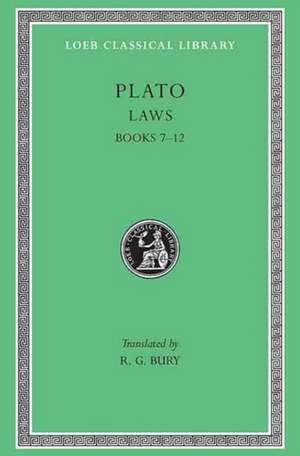
Laws, Volume II - Books 7-12: Loeb Classical Library
Autor Plato Traducere de R. G. Buryen Limba Engleză Hardback – 1926
Publicul format din studenți în drept, cercetători în filozofie politică și practicieni ai administrației publice va găsi în Laws, Volume II un instrument de analiză indispensabil pentru înțelegerea fundamentelor juridice occidentale. Această ediție din Loeb Classical Library, tradusă de R. G. Bury, păstrează rigoarea academică necesară studiului aprofundat, oferind textul grecesc în oglindă cu cel englez. Reținem că acest volum nu este doar o continuare a tratatului, ci o aprofundare a mecanismelor prin care filozofia se traduce în norme sociale concrete. Elementul distinctiv al acestei lucrări este realismul politic. Dacă în Republic Platon explora cetatea ideală sub conducerea regilor-filozofi, în Laws, Volume II ne confruntăm cu o perspectivă mult mai pragmatică asupra statului de drept. Absența lui Socrate marchează o schimbare de ton: nu mai asistăm la o căutare dialectică a definițiilor, ci la o construcție legislativă metodică. Această operă completează perspectiva oferită de Theaetetus. Sophist, adăugând o dimensiune practică și administrativă speculațiilor metafizice despre cunoaștere și existență regăsite în acele dialoguri. În contextul operei sale, volumul se distanțează de idealismul din Plato Symposium, unde accentul cădea pe natura iubirii și a formelor, orientându-se către stabilitatea instituțională. Observăm cum Platon, ajuns la maturitate deplină, încearcă să ofere grecilor un set de principii aplicabile, anticipând structurile juridice ce aveau să influențeze milenii de jurisprudență. Ritmul este dens, specific unui text legislativ comentat, dar structura în douăsprezece cărți permite o parcurgere modulară a temelor abordate.
Din seria Loeb Classical Library
-
 Preț: 231.47 lei
 -
 Preț: 230.81 lei
 -
 Preț: 230.49 lei
 -
 Preț: 228.84 lei
 -
 Preț: 229.13 lei
 -
 Preț: 227.27 lei
 -
 Preț: 223.05 lei
 -
 Preț: 230.08 lei
 -
 Preț: 230.50 lei
 -
 Preț: 230.50 lei
 -
 Preț: 233.88 lei
 -
 Preț: 230.11 lei
 -
 Preț: 230.48 lei
 -
 Preț: 224.18 lei
 -
 Preț: 228.66 lei
 -
 Preț: 221.63 lei
 -
 Preț: 231.08 lei
 -
 Preț: 229.08 lei
 -
 Preț: 229.77 lei
 -
 Preț: 230.79 lei
 -
 Preț: 229.78 lei
 -
 Preț: 229.98 lei
 -
 Preț: 228.98 lei
 -
 Preț: 229.34 lei
 -
 Preț: 228.66 lei
 -
 Preț: 224.02 lei
 -
 Preț: 223.20 lei
 -
 Preț: 230.15 lei
 - 5%
 Preț: 218.16 lei
 -
 Preț: 228.78 lei
 -
 Preț: 229.46 lei
 -
 Preț: 228.42 lei
 -
 Preț: 229.51 lei
 -
 Preț: 230.85 lei
 -
 Preț: 230.10 lei
 -
 Preț: 224.02 lei
 - 5%
 Preț: 218.88 lei
 -
 Preț: 225.60 lei
 -
 Preț: 229.87 lei
 -
 Preț: 224.71 lei
 -
 Preț: 231.66 lei
 -
 Preț: 230.01 lei
 -
 Preț: 229.76 lei
 -
 Preț: 229.99 lei
 -
 Preț: 220.98 lei
 -
 Preț: 228.64 lei
 -
 Preț: 224.86 lei
 -
 Preț: 229.22 lei
 -
 Preț: 229.04 lei
 -
 Preț: 224.13 lei
Preț: 230.85 lei
Carte disponibilă
Livrare economică 31 octombrie-14 noiembrie
Livrare express 20-24 octombrie pentru 28.07 lei
Specificații
ISBN-10: 0674992113
Pagini: 592
Dimensiuni: 119 x 170 x 28 mm
Greutate: 0.37 kg
Editura: Harvard University Press
Colecția Loeb Classical Library
Seria Loeb Classical Library
V-ar putea interesa
-
 Protagoras and MenoPlato-32%Preț: 62.66 lei92.15 lei
 -
 Timaeus and CritiasPlato-32%Preț: 62.68 lei92.03 lei
 -
 Timaeus and CritiasPlato-19%Preț: 63.45 lei78.59 lei
 -
 -29%Preț: 402.95 lei564.60 lei
 -
 -31%Preț: 530.89 lei769.91 lei
 -
 Plato on Pleasure and the Good LifeDaniel Russell-19%Preț: 324.24 lei399.80 lei
 -
 Aristotle on TeleologyMonte Ransome Johnson-21%Preț: 395.89 lei500.79 lei
 -
 Topics in Stoic PhilosophyKaterina Ierodiakonou-28%Preț: 358.64 lei500.62 lei
 -
 Order in Multiplicity: Homonymy in the Philosophy of AristotleChristopher Shields-28%Preț: 425.69 lei594.22 lei
 -
 -13%Preț: 269.99 lei309.51 lei
 -
 -20%Preț: 50.18 lei63.10 lei
 -
 Preț: 262.38 lei
 -
 Lives of Eminent Philosophers, Volume I - Books 1-5Diogenes LaertiusPreț: 233.64 lei
 -
 Preț: 231.77 lei
 -
 Plato: Complete WorksPlato-23%Preț: 461.83 lei598.18 lei
 -
 Plato's UniverseGregory VlastosPreț: 211.27 lei
De ce să citești această carte
Cititorul câștigă acces la testamentul politic al lui Platon, o lucrare esențială pentru oricine dorește să înțeleagă tranziția de la teoria idealistă la practica guvernării. Este o recomandare certă pentru cei care studiază istoria dreptului sau filozofia antică, oferind o bază documentară solidă prin textul bilingv. Veți descoperi aici un Platon pragmatic, preocupat de stabilitatea cetății și de aplicabilitatea legii în lumea reală.
Despre autor
Plato (cca. 427–347 î.Hr.), filozof atenian de o influență colosală, este fondatorul Academiei din Atena, prima instituție de învățământ superior din lumea occidentală. Elev al lui Socrate și mentor al lui Aristotel, el a pus bazele metafizicii, eticii și filozofiei politice europene. Cunoscut pentru inovația dialogului scris, Platon a explorat prin personajul Socrate natura dreptății, a cunoașterii și a sufletului. Lucrarea sa finală, „Legile”, reflectă experiența unei vieți dedicate gândirii critice și observației politice, rămânând un pilon al tradiției intelectuale până în prezent.
Descriere scurtă
Plato, the great philosopher of Athens, was born in 427 BCE. In early manhood an admirer of Socrates, he later founded the famous school of philosophy in the grove Academus. Much else recorded of his life is uncertain; that he left Athens for a time after Socrates' execution is probable; that later he went to Cyrene, Egypt, and Sicily is possible; that he was wealthy is likely; that he was critical of 'advanced' democracy is obvious. He lived to be 80 years old. Linguistic tests including those of computer science still try to establish the order of his extant philosophical dialogues, written in splendid prose and revealing Socrates' mind fused with Plato's thought.
In Laches, Charmides, and Lysis, Socrates and others discuss separate ethical conceptions. Protagoras, Ion, and Meno discuss whether righteousness can be taught. In Gorgias, Socrates is estranged from his city's thought, and his fate is impending. The Apology (not a dialogue), Crito, Euthyphro, and the unforgettable Phaedo relate the trial and death of Socrates and propound the immortality of the soul. In the famous Symposium and Phaedrus, written when Socrates was still alive, we find the origin and meaning of love. Cratylus discusses the nature of language. The great masterpiece in ten books, the Republic, concerns righteousness (and involves education, equality of the sexes, the structure of society, and abolition of slavery). Of the six so-called dialectical dialogues Euthydemus deals with philosophy; metaphysical Parmenides is about general concepts and absolute being; Theaetetus reasons about the theory of knowledge. Of its sequels, Sophist deals with not-being; Politicus with good and bad statesmanship and governments; Philebus with what is good. The Timaeus seeks the origin of the visible universe out of abstract geometrical elements. The unfinished Critias treats of lost Atlantis. Unfinished also is Plato's last work of the twelve books of Laws (Socrates is absent from it), a critical discussion of principles of law which Plato thought the Greeks might accept. The Loeb Classical Library edition of Plato is in twelve volumes.
Descriere
The great Athenian philosopher Plato was born in 427 BCE and lived to be eighty. Acknowledged masterpieces among his works are the Symposium, which explores love in its many aspects, from physical desire to pursuit of the beautiful and the good, and the Republic, which concerns righteousness and also treats education, gender, society, and slavery.