
Laughter, Power, and the Unconscious: Researching Emotional Responses in a Contemporary Audience Spectating Early Modern Comedy at Shakespeare's Globe: Audience Research
Autor Maria Grazia Turri, Bridget Escolmeen Limba Engleză Hardback – 31 oct 2025
The text explores three key domains: firstly, it establishes and evaluates the theory in comparison to Freud's work in Jokes and their Relation to the Unconscious, while positioning it within major humour frameworks; secondly, it demonstrates the theory's application to Renaissance comedy, examining characters like Malvolio from Twelfth Night alongside stock figures of cuckolds and madmen in both English theatrical traditions and commedia dell'arte; finally, it investigates the theory's broader sociopolitical relevance by analysing war-related humour and racist jokes while addressing comedy's dual capacity to both challenge and reinforce existing power structures.
This volume will appeal to the scholars and students of theatre and performance studies, psychology, literary theory and cultural studies interested in the sociopolitical implications of humour.


Preț: 1069.85 lei
Preț vechi: 1304.69 lei
-18%
Puncte Express: 1605
Carte tipărită la comandă
Livrare economică 08-22 iunie
Livrare express 02-08 mai pentru 128.14 lei
Specificații
ISBN-13: 9780367633172
ISBN-10: 0367633175
Pagini: 276
Ilustrații: 44
Dimensiuni: 156 x 234 x 20 mm
Greutate: 0.57 kg
Ediția:1
Editura: Taylor & Francis
Colecția Routledge
Seria Audience Research
Locul publicării:Oxford, United Kingdom
ISBN-10: 0367633175
Pagini: 276
Ilustrații: 44
Dimensiuni: 156 x 234 x 20 mm
Greutate: 0.57 kg
Ediția:1
Editura: Taylor & Francis
Colecția Routledge
Seria Audience Research
Locul publicării:Oxford, United Kingdom
V-ar putea interesa
-
 The Joke and Its Relation to the UnconsciousSigmund Freud-21%Preț: 70.29 lei88.58 lei
 -
 The Oxford Handbook of Screen ComedyPeter C. Kunze-33%Preț: 800.58 lei1191.59 lei
 -
 Funny Moves: Dance Humor PoliticsMarta E. Savigliano-26%Preț: 206.13 lei280.10 lei
 -
 Comedy: A Very Short IntroductionMatthew Bevis-21%Preț: 53.32 lei67.70 lei
 -
 HumourTerry EagletonPreț: 75.60 lei
 -
 The Routledge Comedy Studies ReaderIan WilkiePreț: 349.49 lei
 -
 The Psychology of ComedyG. Neil MartinPreț: 125.00 lei
 -
 Love's LabourStephen GroszPreț: 114.96 lei
 -
 Making Each Other LaughAndrew CowellPreț: 322.89 lei
 -
 Funnier: A New Theory for the Practice of ComedyAnne LiberaPreț: 168.65 lei
 -
 Preț: 351.45 leiRecomandat
 -
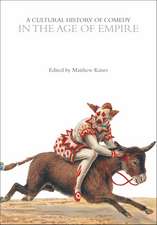 A Cultural History of Comedy in the Age of EmpireMatthew Kaiser-49%Preț: 129.40 lei253.92 lei
 -
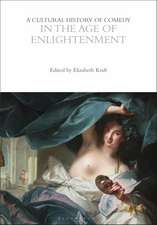 A Cultural History of Comedy in the Age of EnlightenmentElizabeth Kraft-49%Preț: 129.39 lei253.91 lei
 -
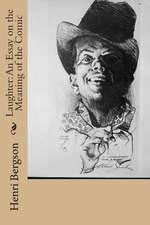 LaughterHenri BergsonPreț: 39.89 lei
 -
 Life with LacanCatherine MillotPreț: 73.90 lei
 -
 Post-ComedyAlfie BownPreț: 80.55 lei
 -
 Wit and Its Relation to the UnconsciousSigmund FreudPreț: 252.15 lei
 -
 DefySunita SahPreț: 118.63 lei
 -
 Preț: 104.57 lei
 -
 The Importance of Being EarnestOscar WildePreț: 31.83 lei
Public țintă
AcademicNotă biografică
Maria Grazia Turri is Senior Lecturer in Creative Arts and Mental Health at Queen Mary University of London, UK. She is a former psychiatrist and psychoanalytic psychotherapist.
Bridget Escolme is Professor of Theatre and Performance at Queen Mary University of London. She is co-convenor of Queen Mary’s MSc Creative Arts and Mental Health.
Bridget Escolme is Professor of Theatre and Performance at Queen Mary University of London. She is co-convenor of Queen Mary’s MSc Creative Arts and Mental Health.
Cuprins
List of figures
List of tables
Acknowledgements
1. Introduction: the Research in Action audience experiment at Shakespeare’s Globe
Bridget Escolme and Maria Grazia Turri
2. Psychoanalytic rationale of the audience experiment
Maria Grazia Turri
3. Researching unconscious responses to early modern characters at Shakespeare’s Globe: results
Maria Grazia Turri
4. A new theory of humour as manic defence
Maria Grazia Turri
5. Reading theories of humour through the manic defence
Maria Grazia Turri
6. The ecology of laughter and humour at the intersection of culture and biology
Maria Grazia Turri
7. New insights into the socio-politics of humour
Maria Grazia Turri
8. The historicised subject: psychoanalytic discourse, Cultural Materialism, laughter and power
Bridget Escolme
9. Cuckolds and madmen: comic strength in the notoriously weak
Bridget Escolme
10. Laughing with the ‘whole pack’ of us: Shakespeare’s Twelfth Night and comic strength in contemporary production of early modern drama
Bridget Escolme
11. Reading comedy as genre through the manic defence
Maria Grazia Turri
12. Elements of unconscious emotional processes for a socio-politics of comedy
Maria Grazia Turri
Conclusions: a dialogue
Index
List of tables
Acknowledgements
1. Introduction: the Research in Action audience experiment at Shakespeare’s Globe
Bridget Escolme and Maria Grazia Turri
2. Psychoanalytic rationale of the audience experiment
Maria Grazia Turri
3. Researching unconscious responses to early modern characters at Shakespeare’s Globe: results
Maria Grazia Turri
4. A new theory of humour as manic defence
Maria Grazia Turri
5. Reading theories of humour through the manic defence
Maria Grazia Turri
6. The ecology of laughter and humour at the intersection of culture and biology
Maria Grazia Turri
7. New insights into the socio-politics of humour
Maria Grazia Turri
8. The historicised subject: psychoanalytic discourse, Cultural Materialism, laughter and power
Bridget Escolme
9. Cuckolds and madmen: comic strength in the notoriously weak
Bridget Escolme
10. Laughing with the ‘whole pack’ of us: Shakespeare’s Twelfth Night and comic strength in contemporary production of early modern drama
Bridget Escolme
11. Reading comedy as genre through the manic defence
Maria Grazia Turri
12. Elements of unconscious emotional processes for a socio-politics of comedy
Maria Grazia Turri
Conclusions: a dialogue
Index
Descriere
Laughter, Power, and the Unconscious presents groundbreaking research on humor's psychological and sociopolitical aspects. Based on Shakespeare's Globe experiments, it proposes humor as "manic defence," challenging Freudian theory while examining Renaissance comedy and exploring how humor both subverts and reinforces power structures.