
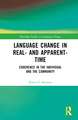
Language Change in Real- and Apparent-Time: Routledge Studies in Language Change
Autor Karen V. Beamanen Limba Engleză Paperback – 30 iul 2025
| Toate formatele și edițiile | Preț | Express |
|---|---|---|
| Paperback (1) | 389.04 lei 6-8 săpt. | |
| Routledge – 30 iul 2025 | 389.04 lei 6-8 săpt. | |
| Hardback (1) | 1019.21 lei 6-8 săpt. | |
| Taylor & Francis – 27 mar 2024 | 1019.21 lei 6-8 săpt. |


Preț: 389.04 lei
Nou
Puncte Express: 584
Preț estimativ în valută:
68.84€ • 80.73$ • 60.46£
68.84€ • 80.73$ • 60.46£
Carte tipărită la comandă
Livrare economică 16 februarie-02 martie
Preluare comenzi: 021 569.72.76
Specificații
ISBN-13: 9781032212197
ISBN-10: 1032212195
Pagini: 336
Dimensiuni: 152 x 229 x 18 mm
Greutate: 0.49 kg
Editura: Routledge
Seria Routledge Studies in Language Change
ISBN-10: 1032212195
Pagini: 336
Dimensiuni: 152 x 229 x 18 mm
Greutate: 0.49 kg
Editura: Routledge
Seria Routledge Studies in Language Change
Cuprins
Contents
List of figures
List of tables
Acknowledgments
Symbols and conventions
Codes and abbreviations
CHAPTER 1. INTRODUCTION TO LIFESPAN AND COMMUNITY CHANGE
1.1. Introduction
1.2. Challenges to the critical-period hypothesis
1.3. Approaches to studying language change
1.4. Individual and community patterns of linguistic change
1.5. Theoretical underpinnings and methodological framework for this book
1.6. Structure and contributions of this book
CHAPTER 2. METHODS FOR THE STUDY OF REAL- AND APPARENT-TIME LANGUAGE CHANGE
2.1. Introduction
2.2. The Swabian language and people
2.3. The corpus
2.4. Data collection and preparation
2.4.1 Step 1: Sample selection
2.4.2 Step 2: Sociolinguistic interview
2.4.3 Step 3: Recording
2.4.4 Step 4: Transcription
2.4.5 Step 5: Validation
2.4.6 Step 6: Annotation
2.5. The linguistic variable(s)
2.5.1 Phonological variables
2.5.1 Morphosyntactic variables
2.6. Measuring dialect density
2.7. Socio-demographic factors of language change
2.7.1 Speaker community
2.7.2 Speaker gender
2.7.3 Speaker age
2.7.4 Speaker education
2.7.5 Speaker social class
2.8. Change in real- and apparent-time
2.9. Change across the lifespan
2.10. Individual and community change
2.11. Summary
CHAPTER 3. THE SPEECH COMMUNITY AND URBAN–RURAL DIVIDE
3.1. Introduction
3.2. Speech communities
3.2.1 Stuttgart
3.2.2 Schwäbisch Gmünd
3.3. Urbanity and rurality
3.3.1 Regionality and dialect use
3.3.2 Community differences over time
3.3.3 The impact of higher education
3.4. The role of social networks
3.5. Coherence in the speech community
3.5.1 Covariation analysis
3.5.2 Measuring community coherence
3.5.3 Variable weightings
3.6. Summary
CHAPTER 4. DIALECT CONTACT, LEVELING AND SUPRAREGIONALIZATION
4.1. Introduction
4.2. Dialect contact and leveling
4.3. Rise of supralocal and supraregional varieties
4.4. Standard language convergence
4.5. Dialect levelling in Swabia
4.5.1 Frequency distributional analysis
4.5.2 Lifespan and community change
4.5.3 Interactions between the linguistic and social
4.6. Indexicalities of linguistic variables
4.6.1 Variable family
4.6.2 Variable salience
4.6.3 Variable stigma
4.6.4 Variable status
4.7. Supraregionalization in Swabia
4.8. Summary
CHAPTER 5. INDEXICALITIES OF IDENTITY, ACCOMMODATION, AND MOBILITY
5.1. Introduction
5.2. Linguistic accommodation
5.3. Local orientation and identity construction
5.4. Perpetual mobility and humanity
5.5. Cultural indices as indicators of dialect use
5.5.1 Local orientation
5.5.2 Interlocutor accommodation
5.5.3 Speaker mobility
5.6. Multivariate analysis
5.7. Summary
CHAPTER 6. LIFESPAN AND COMMUNITY CHANGE ACROSS THE LINGUISTIC ARCHITECTURE
6.1. Introduction
6.2. (ai) diphthong
6.2.1 Background
6.2.2 Measuring diphthong trajectories
6.2.3 Diphthong change in real- and apparent-time
6.2.4 Local orientation and loss of diphthong contrast
6.2.5 Internal linguistic factors and diphthong change
6.2.6 The interaction of the linguistic and social
6.2.7 Discussion
6.3. wo-relatives
6.3.1 Background
6.3.2 The Linguistic variable and the envelope of variation
6.3.3 Frequency distribution of wo-relatives
6.3.4 Multivariate analysis of wo-relatives
6.3.5 Discussion
6.4. Summary
CHAPTER 7. CONCLUSIONS AND LOOKING FORWARD
7.1. Introduction
7.2. Compatibility of combined panel and trend studies
7.3. Dialect leveling and supraregionalization in Swabian
7.4. Indexicalities and social meaning
7.5. Methodological and theoretical contributions to the field of sociolinguistics
7.6. Opportunities for future research
7.7. Summary
Appendices
Appendix A: Interview documents
Appendix B: Data transcription conventions
Appendix C: E2R data extraction and annotation process
Appendix D: Swabian-German Lexicon
References
Index
List of figures
List of tables
Acknowledgments
Symbols and conventions
Codes and abbreviations
CHAPTER 1. INTRODUCTION TO LIFESPAN AND COMMUNITY CHANGE
1.1. Introduction
1.2. Challenges to the critical-period hypothesis
1.3. Approaches to studying language change
1.4. Individual and community patterns of linguistic change
1.5. Theoretical underpinnings and methodological framework for this book
1.6. Structure and contributions of this book
CHAPTER 2. METHODS FOR THE STUDY OF REAL- AND APPARENT-TIME LANGUAGE CHANGE
2.1. Introduction
2.2. The Swabian language and people
2.3. The corpus
2.4. Data collection and preparation
2.4.1 Step 1: Sample selection
2.4.2 Step 2: Sociolinguistic interview
2.4.3 Step 3: Recording
2.4.4 Step 4: Transcription
2.4.5 Step 5: Validation
2.4.6 Step 6: Annotation
2.5. The linguistic variable(s)
2.5.1 Phonological variables
2.5.1 Morphosyntactic variables
2.6. Measuring dialect density
2.7. Socio-demographic factors of language change
2.7.1 Speaker community
2.7.2 Speaker gender
2.7.3 Speaker age
2.7.4 Speaker education
2.7.5 Speaker social class
2.8. Change in real- and apparent-time
2.9. Change across the lifespan
2.10. Individual and community change
2.11. Summary
CHAPTER 3. THE SPEECH COMMUNITY AND URBAN–RURAL DIVIDE
3.1. Introduction
3.2. Speech communities
3.2.1 Stuttgart
3.2.2 Schwäbisch Gmünd
3.3. Urbanity and rurality
3.3.1 Regionality and dialect use
3.3.2 Community differences over time
3.3.3 The impact of higher education
3.4. The role of social networks
3.5. Coherence in the speech community
3.5.1 Covariation analysis
3.5.2 Measuring community coherence
3.5.3 Variable weightings
3.6. Summary
CHAPTER 4. DIALECT CONTACT, LEVELING AND SUPRAREGIONALIZATION
4.1. Introduction
4.2. Dialect contact and leveling
4.3. Rise of supralocal and supraregional varieties
4.4. Standard language convergence
4.5. Dialect levelling in Swabia
4.5.1 Frequency distributional analysis
4.5.2 Lifespan and community change
4.5.3 Interactions between the linguistic and social
4.6. Indexicalities of linguistic variables
4.6.1 Variable family
4.6.2 Variable salience
4.6.3 Variable stigma
4.6.4 Variable status
4.7. Supraregionalization in Swabia
4.8. Summary
CHAPTER 5. INDEXICALITIES OF IDENTITY, ACCOMMODATION, AND MOBILITY
5.1. Introduction
5.2. Linguistic accommodation
5.3. Local orientation and identity construction
5.4. Perpetual mobility and humanity
5.5. Cultural indices as indicators of dialect use
5.5.1 Local orientation
5.5.2 Interlocutor accommodation
5.5.3 Speaker mobility
5.6. Multivariate analysis
5.7. Summary
CHAPTER 6. LIFESPAN AND COMMUNITY CHANGE ACROSS THE LINGUISTIC ARCHITECTURE
6.1. Introduction
6.2. (ai) diphthong
6.2.1 Background
6.2.2 Measuring diphthong trajectories
6.2.3 Diphthong change in real- and apparent-time
6.2.4 Local orientation and loss of diphthong contrast
6.2.5 Internal linguistic factors and diphthong change
6.2.6 The interaction of the linguistic and social
6.2.7 Discussion
6.3. wo-relatives
6.3.1 Background
6.3.2 The Linguistic variable and the envelope of variation
6.3.3 Frequency distribution of wo-relatives
6.3.4 Multivariate analysis of wo-relatives
6.3.5 Discussion
6.4. Summary
CHAPTER 7. CONCLUSIONS AND LOOKING FORWARD
7.1. Introduction
7.2. Compatibility of combined panel and trend studies
7.3. Dialect leveling and supraregionalization in Swabian
7.4. Indexicalities and social meaning
7.5. Methodological and theoretical contributions to the field of sociolinguistics
7.6. Opportunities for future research
7.7. Summary
Appendices
Appendix A: Interview documents
Appendix B: Data transcription conventions
Appendix C: E2R data extraction and annotation process
Appendix D: Swabian-German Lexicon
References
Index
Notă biografică
Karen V. Beaman is a lecturer of sociolinguistics at the University of Tübingen, Germany. Her primary research is a comparative study of Swabian, a dialect spoken in southwestern Germany, which combines a 35-year panel study with a five-generation trend study. Her work investigates language variation and change in both real- and apparent-time, with particular focus on how factors of identity, mobility, and social networks drive or inhibit change.